
If your child's skin is red, itchy, and cracked — and nothing you try seems to bring lasting relief — you are not alone, and you are not doing anything wrong. Atopic eczema in children is one of the most common chronic skin conditions of childhood, affecting up to one in five children before their fifth birthday. That statistic is worth pausing on: in an average primary school class of thirty, five or six children are dealing with this condition right now. The good news, which too few parents hear early enough, is that proper daily skincare — choosing the right products for the right phase of the condition — can transform your child's comfort, sleep quality, and overall wellbeing. This article will walk you through everything you need to know: what atopic eczema actually is, why your child developed it, how to recognise which phase the skin is in at any given moment, and exactly what to apply at each stage. We will also introduce you to gentle, evidence-based products designed specifically for young atopic skin, so you can move from confusion and worry to confident, informed daily care.
Essential takeaways if you're short on time
- Atopic eczema in children is a non-infectious inflammatory condition caused by a compromised skin barrier and immune overreaction — it is not contagious, and it is not caused by poor hygiene.
- Daily emollient use is the foundation of treatment at every stage, including symptom-free periods — European guidelines recommend moisturising two to three times a day, ideally within three minutes of bathing.
- Different phases require different approaches: mild dryness calls for rich emollients, mild inflammation needs intensified moisturising and sometimes medicated creams, while acute flare-ups and weeping eczema demand medical supervision.
- Product ingredients matter enormously — avoid fragrances, parabens, SLS, and other potential irritants; look for postbiotic formulations with ceramides that support natural barrier repair.
- 60–70% of children see significant improvement or complete resolution with age, especially when consistent daily care is maintained throughout childhood.
What is atopic eczema and how to recognise it in your child
Atopic eczema — also called atopic dermatitis — is a chronic, non-infectious inflammatory skin condition characterised by a defective skin barrier. In healthy skin, the outermost layer (the stratum corneum) functions like a tightly woven brick wall: skin cells are the bricks, and lipids (ceramides, cholesterol, and fatty acids) are the mortar holding everything together. This barrier keeps moisture in and irritants out. In a child with atopic eczema, the mortar is thin and full of gaps. Moisture escapes too quickly, the skin dries out, and environmental irritants, allergens, and microorganisms penetrate far more easily than they should. The immune system, already primed to overreact in atopic individuals, responds with inflammation — and inflammation produces the redness, swelling, and maddening itch that every parent of an eczematous child knows too well.
What makes atopic eczema in children particularly challenging is that it presents differently depending on the child's age. In infants under two, the eczema typically appears on the face, cheeks, scalp, and the outer surfaces of the arms and legs. The patches are often weepy and crusted, and parents sometimes mistake them for food allergies or cradle cap. In toddlers and pre-school children, the eczema migrates to the creases — the insides of the elbows, the backs of the knees, the wrists, the ankles, and the neck. The skin becomes thickened and lichenified (leathery) from repeated scratching. In older children and adolescents, the pattern continues in the flexures but may also affect the hands, eyelids, and the skin around the mouth. By this age, many children have developed a characteristic dry, rough skin texture even in areas that are not actively inflamed.
Recognising atopic eczema early is important because the sooner you establish a consistent skincare routine, the better you can control the condition and prevent the cycle of flare-ups, scratching, and skin damage that makes everything worse. If your child has persistently dry, itchy skin — particularly in the patterns described above — and there is a family history of eczema, asthma, or hay fever, atopic eczema is the most likely explanation.
What causes atopic eczema in children
Parents often blame themselves when their child develops atopic eczema, wondering whether they used the wrong soap, introduced foods too early, or made some other mistake. The truth is far more reassuring: atopic eczema in children is driven primarily by genetic and immunological factors that no parenting decision could have prevented.
The strongest risk factor is family history. If one parent has atopic eczema, asthma, or allergic rhinitis, the child's risk of developing atopic eczema roughly doubles. If both parents are affected, the risk rises to 60–80%. Research by Böhme and colleagues, published in Clinical & Experimental Allergy, found that parental atopy was the single most powerful predictor of eczema in their cohort, outweighing every environmental variable they measured. Much of this genetic risk traces back to mutations in the filaggrin gene (FLG), which encodes a protein essential for building the skin barrier. Children who carry filaggrin mutations produce less of this protein, resulting in a thinner, leakier skin barrier — the fundamental defect that underlies atopic eczema.
Beyond genetics, the immune system in atopic children is skewed toward what immunologists call a Th2-dominant response. This means that even mild environmental triggers can provoke a disproportionate inflammatory reaction. The skin barrier defect and the immune dysfunction feed each other in a vicious cycle: the leaky barrier lets allergens in, the immune system overreacts, inflammation damages the barrier further, and more allergens get through.
Environmental triggers do not cause the condition, but they can ignite flare-ups. Common culprits include house dust mites (whose allergenic proteins penetrate the compromised skin barrier with ease), pollen, pet dander, harsh soaps and detergents, synthetic fragrances, woollen clothing, temperature extremes, low humidity, and emotional stress. For children who are also sensitised to dust mite allergens, the bedroom becomes a particular concern. Reducing dust mite exposure with anti-allergen bedding can help children with atopic eczema sleep better and experience fewer night-time flare-ups triggered by allergen contact.
Tip: What is dust mite allergy — symptoms, causes, and treatment
The four phases of atopic eczema — and what to apply in each
One of the most common mistakes parents make is treating atopic eczema as a single, unchanging condition. In reality, the skin moves through distinct phases, and what works brilliantly in one phase may be inadequate or even counterproductive in another. Understanding these phases gives you the ability to respond appropriately, providing your child's skin with exactly what it needs at every moment. European dermatology guidelines emphasise that emollient therapy should continue at all stages of atopic dermatitis — but the intensity, type, and any additional treatments should adapt to the phase.
Phase 1: Dry skin without visible inflammation
This is the baseline state of atopic skin between flare-ups. The skin looks and feels dry, rough, and slightly scaly, but there is no redness, swelling, or open areas. Many parents make the mistake of relaxing their skincare routine during this phase, thinking the eczema has gone away. It has not. The underlying barrier defect remains, and without consistent moisturising, the skin will inevitably progress to the next phase.
Your primary tool in this phase is a rich emollient applied generously two to three times per day. For very young children under three, a simple, fragrance-free petroleum-based ointment provides excellent barrier protection without the risk of irritation from added ingredients. For children aged three and above, purpose-formulated emollients containing ceramides and postbiotics offer additional benefits by actively supporting barrier repair rather than merely sealing in moisture. The AtopCare Body Oil (€32.80) is particularly well suited to this phase — its 99% natural formulation with DEFENSIL®-PURE postbiotics nourishes atopic skin without any of the synthetic irritants that can trigger sensitivity. It is ideal for post-bath application, when the skin is still slightly damp and most receptive to moisture.
A 2025 study following 1,247 infants found that daily emollient application reduced the incidence of atopic dermatitis by 16% — a remarkable result for such a simple intervention. The PEBBLES pilot study went further, demonstrating that using a ceramide-containing emollient for six months not only reduced the development of atopic dermatitis but also decreased food sensitisation at twelve months. The science is clear: consistent moisturising during this quiet phase is not optional maintenance — it is active prevention.
Phase 2: Mild inflammation and redness
When the skin begins to show redness, slight swelling, or increased itchiness despite regular moisturising, the eczema has entered a mildly inflammatory phase. This is not yet a full flare-up, but it signals that the skin barrier has been breached and the immune system is beginning to respond. Acting quickly at this stage can often prevent a full-blown flare.
Continue your emollient routine but increase frequency — apply after every hand wash, every bath, and whenever the skin looks or feels dry. Your paediatrician or dermatologist may prescribe a mild topical corticosteroid (such as 1% hydrocortisone) for short-term use on inflamed areas. Follow their instructions precisely: apply the medicated cream first, wait fifteen to twenty minutes, then apply your emollient over the top. This two-layer approach treats the inflammation while reinforcing the barrier.
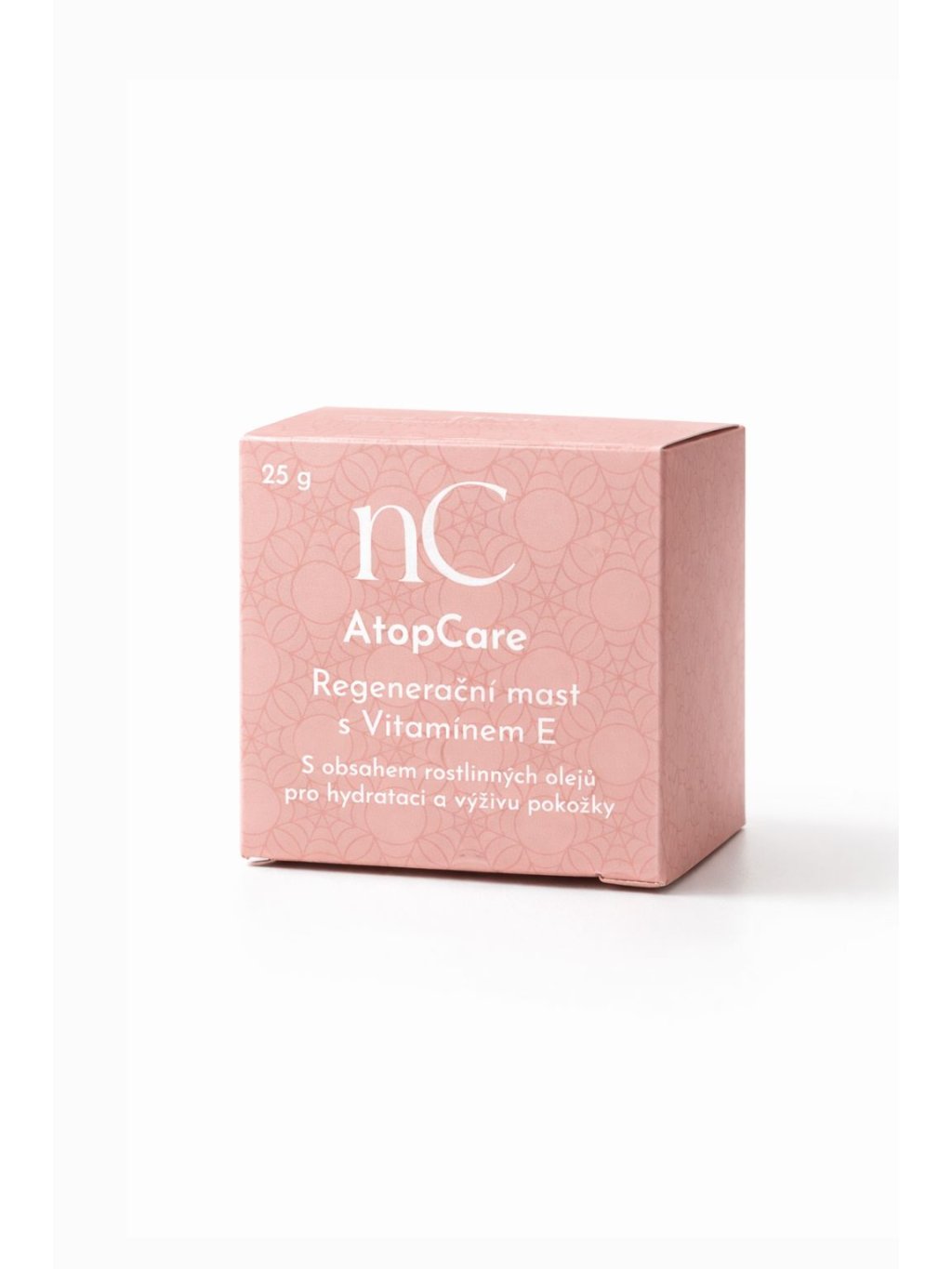
In addition to prescription treatments, supporting the skin's natural repair process becomes especially important. The Regenerating Ointment with Vitamin E AtopCare (€10) was developed for precisely this phase. Its concentrated vitamin E formulation supports cellular regeneration and helps restore the damaged barrier, complementing whatever medical treatment your doctor has prescribed. Apply it to areas that are healing or where the skin feels particularly compromised.
Tip: Anti-allergy bedding for children — how to protect your child's sleep
Phase 3: Acute flare-up
A full flare-up is unmistakable: the skin is intensely red, swollen, hot, and unbearably itchy. Your child may be unable to sleep, unable to concentrate, and visibly distressed. Scratching — which is almost impossible for a young child to resist — can break the skin surface, creating a risk of secondary bacterial infection.
This phase requires medical guidance. Your doctor may prescribe a moderate-potency topical corticosteroid, a calcineurin inhibitor (such as tacrolimus or pimecrolimus) for sensitive areas like the face and neck, or in severe cases a short course of oral medication. Do not attempt to manage acute flare-ups with emollients alone — they cannot suppress active inflammation, and delaying appropriate treatment allows the flare to worsen and potentially become infected.
What you can do at home is maintain comfort: keep the environment cool, dress your child in loose, soft cotton clothing, trim their fingernails short to minimise scratch damage, and apply cool (not cold) damp compresses to the worst-affected areas for temporary itch relief. As the acute inflammation subsides under medical treatment, gradually reintroduce your full emollient routine to rebuild the barrier and prevent the cycle from repeating.
Phase 4: Weeping eczema
Weeping or oozing eczema represents the most severe phase, where the skin surface has broken down and is producing clear or yellowish fluid. If the fluid becomes cloudy, has an unpleasant smell, or the surrounding skin is increasingly warm and red, bacterial infection is likely and requires urgent medical attention — your child may need topical or oral antibiotics.
Do not apply thick emollients or oils to actively weeping skin, as occlusive products can trap bacteria and worsen infection. Instead, follow your doctor's instructions, which may include wet-wrap therapy (applying a damp layer of tubular bandaging over medicated cream, then a dry layer on top) or medicated compresses. Once the weeping has stopped and the skin is drying and beginning to heal, you can gradually reintroduce gentle emollients — starting with lighter formulations and progressing to richer ones as the skin tolerates them. The goal is to return to the Phase 1 maintenance routine as smoothly as possible.
Daily skincare routine for children with atopic eczema
Consistency is everything. A well-designed daily routine is worth more than any single product, and the structure of that routine matters as much as what you put on the skin. Here is an evidence-based daily protocol for atopic children, adaptable to the current phase of their condition.
Start with bathing. Lukewarm water — never hot — for five to ten minutes, once daily or every other day. For children under three, plain water is often sufficient; adding any cleansing product to a very young child's bath can strip the already fragile skin barrier. For children aged three and above, use a gentle, soap-free cleanser designed for atopic skin. The AtopCare Cleansing Foam (€14) is formulated without SLS, parabens, or synthetic fragrances, making it suitable for daily use on sensitive and eczema-prone skin. Its moisturising base means the skin does not feel tight or stripped after washing — a common complaint with conventional cleansers.
After the bath, pat the skin gently with a soft towel — never rub. Leave the skin slightly damp. Now comes the single most important step in the entire routine: apply your emollient within three minutes. This narrow window matters because the residual moisture on the skin surface is trapped beneath the emollient layer, boosting hydration far more effectively than applying to completely dry skin. Use generous amounts — dermatologists recommend 250–500 grams of emollient per week for a child with moderate atopic eczema, which means you should be going through products quickly. If a tub lasts months, you are not using enough.
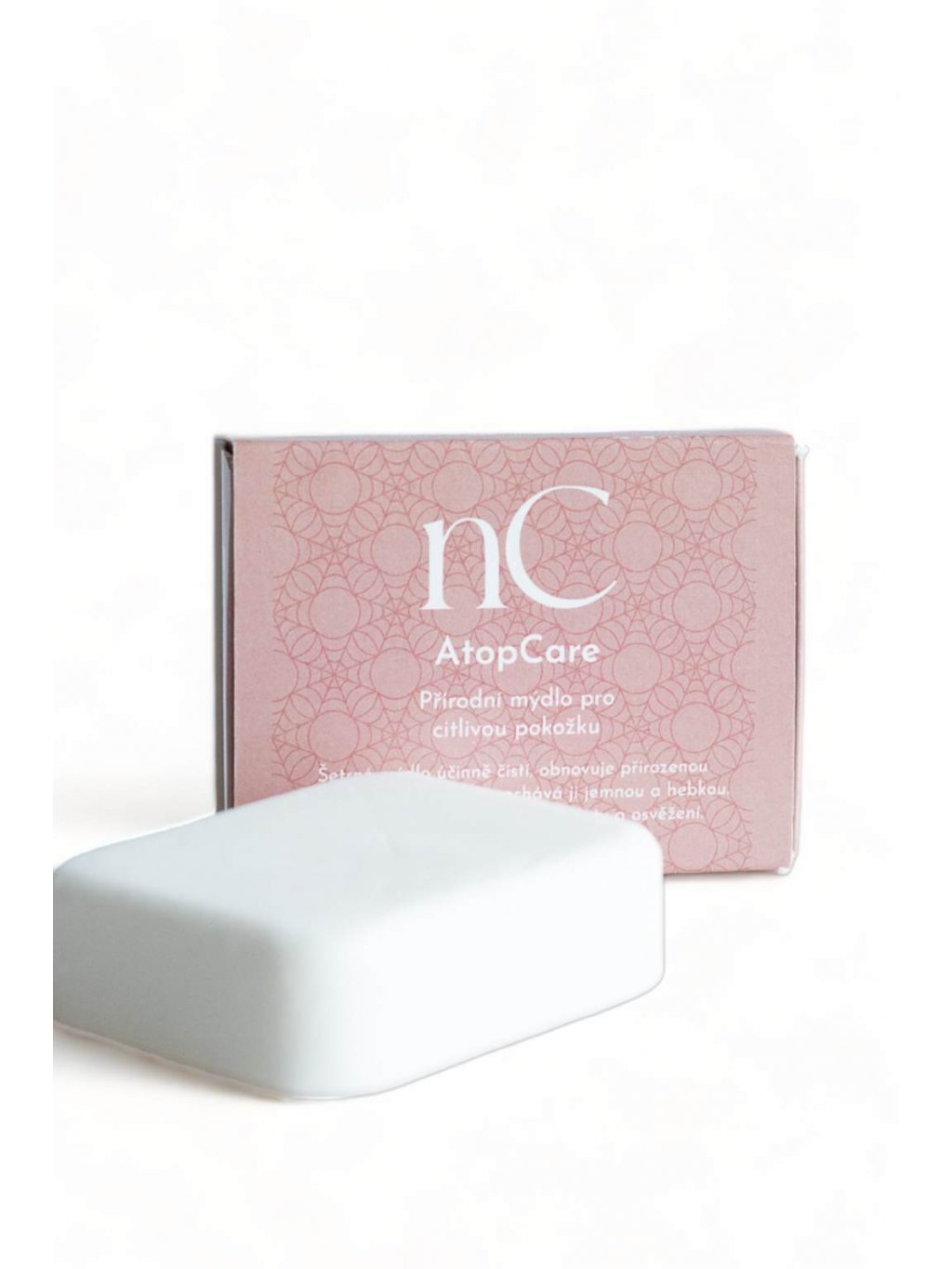
For older children who are beginning to wash their hands independently at school, a gentle hand-washing product prevents the damage that conventional school soaps inflict on atopic skin. The AtopCare Natural Soap (€10) provides a practical solution — small enough to keep in a school bag, gentle enough for daily use, and formulated with the same 99% natural, irritant-free philosophy as the rest of the AtopCare range. For children aged three and above, it replaces the harsh soaps that are so often responsible for hand eczema flares during the school year.
Throughout the day, reapply emollient to any areas that look dry or that your child is scratching. At bedtime, apply a final generous layer of emollient and ensure your child's pyjamas are soft cotton — avoid synthetic fabrics and wool, which can irritate atopic skin. If your child is also sensitised to dust mites, choosing the right bedding becomes doubly important, since dust mite allergens can trigger both respiratory symptoms and eczema flare-ups during the night.
Why the right products matter for atopic skin
Not all moisturisers are created equal, and for a child with atopic eczema, the wrong product can be worse than no product at all. The compromised skin barrier that defines the condition means that ingredients which healthy skin tolerates without issue can penetrate deeply into atopic skin and trigger irritation or allergic sensitisation. This is why dermatologists are increasingly specific about what should and should not be in products for atopic children.
The ingredients to avoid are well established: synthetic fragrances (the single most common cause of contact allergy in children), parabens, sodium lauryl sulfate (SLS) and sodium laureth sulfate (SLES), methylisothiazolinone and other preservatives in the isothiazolinone family, propylene glycol, and lanolin (which, despite its natural origin, causes contact allergy in a significant minority of eczema patients). If a product's ingredient list reads like a chemistry textbook, it is probably not suitable for atopic skin.
The AtopCare line from nanoSPACE Cosmetics was developed with precisely these restrictions in mind. Every product in the range is 99% natural, free from parabens, silicones, synthetic fragrances, PEGs, and SLS. The formulations are built around DEFENSIL®-PURE, a postbiotic active ingredient derived from Lactobacillus fermentation that has been clinically shown to calm irritated skin and support the skin's natural microbiome. Unlike live probiotics, postbiotics are stable, non-allergenic, and effective from the moment of application — making them ideal for the unpredictable, reactive skin of atopic children.
For parents who want a complete, coordinated approach rather than assembling products from different brands, the AtopCare Complete Set (€70) provides everything needed for daily eczema care in one package: natural soap, nourishing hand cream, body cream (330 ml), and body oil (200 ml). All four products share the same gentle, irritant-free formulation, which means no guesswork about ingredient compatibility. The set is suitable for children from three years of age.
Tip: How to choose bedding for allergy sufferers
The connection between atopic eczema in children and dust mite allergy
Atopic eczema rarely exists in isolation. The condition belongs to the so-called "atopic triad" alongside asthma and allergic rhinitis, and many children with eczema are also sensitised to common environmental allergens — most notably house dust mites. Studies suggest that between 50% and 80% of children with moderate-to-severe atopic eczema show positive skin-prick or blood tests for dust mite allergens. This matters because dust mite exposure does not merely trigger respiratory symptoms; the allergenic proteins (Der p 1 and Der p 2) can also directly penetrate the compromised skin barrier and trigger eczema flare-ups.
For a child sleeping eight to twelve hours per night on a mattress that — without barrier protection — harbours millions of dust mites and their faecal pellets, the nightly allergen exposure is enormous. The face, neck, and arm creases are in direct contact with the pillow and sheets, and these are precisely the areas where childhood eczema is most severe. Reducing this exposure is not about sterile environments or obsessive cleaning — it is about practical, targeted measures that make the most difference where it matters most.
Nanofibre barrier bedding provides continuous overnight protection by physically blocking allergens with pore sizes measured in nanometres — far too small for dust mite proteins to pass through. For children who have both atopic eczema and dust mite sensitisation, combining proper skincare with allergen-proof bedding addresses both the barrier defect and the environmental trigger simultaneously.
When to see a doctor
Mild atopic eczema in children can often be managed at home with consistent emollient use and trigger avoidance. However, certain situations require medical assessment. Consult your paediatrician or a dermatologist if your child's eczema is worsening despite consistent daily skincare, if the skin shows signs of infection (increased redness spreading beyond the eczema patches, warmth, swelling, pus, or crusting that is yellow rather than clear), if the eczema is weeping or oozing, if your child's sleep is severely disrupted by itching on most nights, or if the condition is affecting their emotional wellbeing, school performance, or social interactions.
Do not hesitate to seek help. Atopic eczema in children is extremely common, dermatologists and paediatric allergists see it daily, and there are effective prescription treatments for every phase of the condition. Early, appropriate medical intervention — combined with the daily skincare foundation you provide at home — gives your child the best possible chance of comfortable skin and the normal, active childhood they deserve.
AtopCare — gentle skincare for atopic children


Editor's pick
Nourishing Skincare Set for Sensitive Skin AtopCare
Complete AtopCare set for daily eczema care: natural soap, nourishing hand cream, body cream 330 ml, and body oil 200 ml. All products are 99% natural, free from parabens, silicones, and synthetic fragrances. Suitable for children from 3 years.
70 €
View productA condition that improves with time — and the right care
Here is something every worried parent needs to hear: atopic eczema in children is, for the majority of affected children, a condition that improves dramatically with age. Studies consistently show that 60–70% of children with atopic dermatitis see significant improvement or complete resolution by adolescence. The skin barrier matures, the immune system recalibrates, and the flare-ups become less frequent and less severe. Some children outgrow the condition entirely.
But — and this is the critical point — that natural improvement happens more smoothly and more completely when the skin is well cared for throughout childhood. Children who receive consistent daily emollient therapy, appropriate medical treatment during flare-ups, and protection from avoidable triggers tend to have fewer and milder episodes, less skin damage from scratching, and a better quality of life while they wait for the condition to ease. The daily routine you build now is not just about managing today's symptoms; it is an investment in your child's long-term skin health.
You are not powerless against atopic eczema. You cannot control your child's genetics or their immune system's tendency to overreact. But you can give their skin the support it needs every single day — gentle cleansing, generous moisturising, the right products for the right phase, and a sleeping environment free from the allergens that make everything worse. That daily commitment, unglamorous as it may seem, is the most powerful thing you can do for your child's comfort and confidence.
Frequently asked questions
Can atopic eczema in children be cured completely?
There is currently no permanent cure for atopic eczema, but the condition improves significantly or resolves entirely in 60–70% of children as they grow older. The underlying genetic predisposition remains, which means the skin may always tend toward dryness and sensitivity, but active eczema — with flare-ups, redness, and itching — often fades substantially by adolescence. Consistent daily skincare throughout childhood supports this natural improvement and reduces the severity and frequency of flare-ups in the meantime.
What helps atopic eczema in children?
The foundation of management is daily emollient therapy — moisturising two to three times a day, every day, even when the skin looks clear. Beyond this, avoiding known triggers (harsh soaps, synthetic fragrances, extreme temperatures, dust mites), using gentle soap-free cleansers, bathing in lukewarm water for no more than ten minutes, and applying moisturiser within three minutes of bathing all make a significant difference. During inflammatory phases, your doctor may prescribe topical corticosteroids or calcineurin inhibitors. Products designed specifically for atopic skin, such as those in the AtopCare range, minimise the risk of irritation from inappropriate ingredients.
How often should children with eczema bathe?
Current guidelines recommend bathing once daily or every other day, in lukewarm water (around 37°C), for five to ten minutes. Longer or hotter baths strip the skin's natural oils and worsen dryness. Use a soap-free cleanser rather than regular soap, and avoid bubble baths entirely. The most important step comes immediately after: pat the skin gently (never rub) and apply a generous layer of emollient within three minutes while the skin is still slightly damp. This "soak and seal" technique maximises hydration.
What is the difference between creams and oils for atopic skin?
Creams are water-based emulsions that absorb relatively quickly and are less greasy, making them practical for daytime use and application under clothing. Oils and ointments are more occlusive — they form a stronger barrier on the skin surface, locking in moisture more effectively. This makes them particularly useful for night-time application and for very dry or thickened skin. Many dermatologists recommend using a cream during the day and an oil or ointment at night. For post-bath application, an oil like the AtopCare Body Oil is ideal because it seals in the residual bath moisture extremely effectively.
Can diet affect atopic eczema in children?
In some children, certain foods can trigger or worsen eczema flare-ups. The most common culprits are cow's milk, eggs, peanuts, tree nuts, soy, and wheat. However, food triggers are far less common than many parents believe — studies suggest that genuine food-triggered eczema affects roughly 20–30% of children with moderate-to-severe atopic eczema, and a much smaller proportion of those with mild disease. Elimination diets should only be undertaken under medical supervision, ideally guided by allergy testing, because unnecessary dietary restrictions can lead to nutritional deficiencies in growing children.
From what age can AtopCare products be used?
AtopCare products are formulated for sensitive and atopic skin and are suitable for children from three years of age. For younger children (under three), dermatologists typically recommend simple, fragrance-free petroleum-based emollients and plain water bathing, as the very young skin barrier is still developing and benefits from the simplest possible care. From age three, the AtopCare range — including the cleansing foam, natural soap, body oil, body cream, and regenerating ointment — provides a comprehensive, 99% natural skincare routine specifically designed for atopic children.
Sources
- Page, M.J. et al. (2016) 'Atopic dermatitis in children', Australian Family Physician, 45(5), pp. 293–296.
- Lyons, J.J., Milner, J.D. and Stone, K.D. (2014) 'Atopic dermatitis in children: clinical features, pathophysiology, and treatment', Immunology and Allergy Clinics of North America, 35(1), pp. 161–183.
- Böhme, M. et al. (2003) 'Family history and risk of atopic dermatitis in children up to 4 years', Clinical & Experimental Allergy, 33(9), pp. 1226–1231.
- Skjerven, H.O. et al. (2025) 'Daily emollient application from birth reduces atopic dermatitis incidence: a randomised controlled trial in 1,247 infants', Journal of Allergy and Clinical Immunology (in press).
- Lowe, A.J. et al. (2018) 'PEBBLES pilot study: ceramide-containing emollient for prevention of atopic dermatitis and food sensitisation', Allergy, 73(6), pp. 1355–1364.