
You go to bed tired, yet you wake up feeling even more drained than the night before. Your nose is blocked, your eyes sting, your throat is scratchy, and the day begins with a fit of sneezing. If any of that sounds familiar, you probably don't need to look far for the culprit, because it's right there in bed with you. Dust mites have settled into your mattress, your pillow and your duvet, and you breathe in their allergens all night long. The good news? The right anti dust mite bedding can put a barrier between you and the mites—one their allergens simply cannot cross. In this guide, we'll show you how to choose the right bedding, what to look for, and where to invest first.
Dust mites aren't a sign of poor hygiene. They live everywhere, in spotless homes and less tidy ones alike. They feed on shed skin cells, they love warmth and humidity, and your bed offers them an ideal home. So the question is not whether they are in your bed, but how much of a toll they're taking on your health every single night and, most importantly, how to keep their allergens away from your airways.
The main points if you're short on time
- The principle is a barrier, not extermination. Anti dust mite bedding keeps mites and their allergens away from you rather than trying to kill them with chemicals or hot washing.
- Protect the whole bed. The mattress, pillow and duvet form one system. Covering only one part gives you limited protection.
- Start with the mattress. It is the largest allergen reservoir and you cannot wash it, so an anti-dust mite mattress encasement is the wisest first investment.
- The science backs it up. Studies confirm that barrier fabrics with pores smaller than 10 micrometres reliably hold back the Der p 1 mite allergen.
- Two routes to the same result. Either wrap your existing bedding in protective covers or replace it with duvets, pillows and sheets that already contain a nanofibre membrane.
Why ordinary bedding isn't enough for allergy sufferers
Let's start with what you're actually up against. Dust mites are microscopic arachnids that you will never spot with the naked eye. The mites themselves are harmless; the problem is their droppings and the remains of their bodies. These contain a protein called Der p 1, one of the most aggressive indoor allergens there is. It's what triggers a blocked nose, a chronic runny nose, coughing, recurring sinus infections and, in more sensitive people, even asthma attacks.
Mite allergens are extraordinarily small, measuring around 1,000 nanometres across. By comparison, the fibres in ordinary cotton or linen are woven to keep you warm and comfortable, not to filter anything out. To a mite allergen, the gaps between those fibres are a motorway. As you toss and turn at night, microscopic clouds of allergens rise from your pillow and duvet, and you then breathe them in for hours on end. By morning, your body reacts with swelling, sneezing and exhaustion.
Conventional bedding, therefore, does nothing to solve an allergy; at best, it doesn't make it worse. Genuine anti dust mite bedding has to do more. If you or your loved ones suffer from this sensitivity, it's worth paying close attention. We cover how to recognise a dust mite allergy and how to fight it in a separate article. Here, we'll focus on what you're sleeping on every night.
What actually works: a barrier, not a cull
Plenty of half-measures and myths surround dust mite allergy. One of the most stubborn is the idea that washing your bed linen at 60°C is enough to get rid of mites for good. Hot washing does reduce the number of mites in a fabric, but it misses the heart of the problem: you can't regularly put a mattress, a pillow filling or a duvet through the machine; the allergens inside persist, and the population quickly rebuilds. Washing is housekeeping, not protection.
The real solution is different and far more elegant: place a physical barrier between yourself and the allergens. Instead of waging an endless war on the mites, you simply leave them where they are and stop them from seeping through to you. Allergy specialists favour this approach because it requires no chemicals and no weekly deep clean. And, crucially, it's backed by research. This is one reason allergists recommend allergen-proof barrier covers as a primary measure for anyone with a dust mite allergy.
A study published in the Journal of Allergy and Clinical Immunology tested what pore size was needed to block mite allergens. The conclusion was unambiguous: materials with pores smaller than 10 micrometres reliably hold back the Der p 1 mite allergen. Reviews and clinical trials published in the New England Journal of Medicine confirm that barrier covers measurably reduce the amount of allergen a person is exposed to in bed. And this is exactly the principle on which anti dust mite bedding with a nanofibre membrane is built.
The secret of the nanofibre
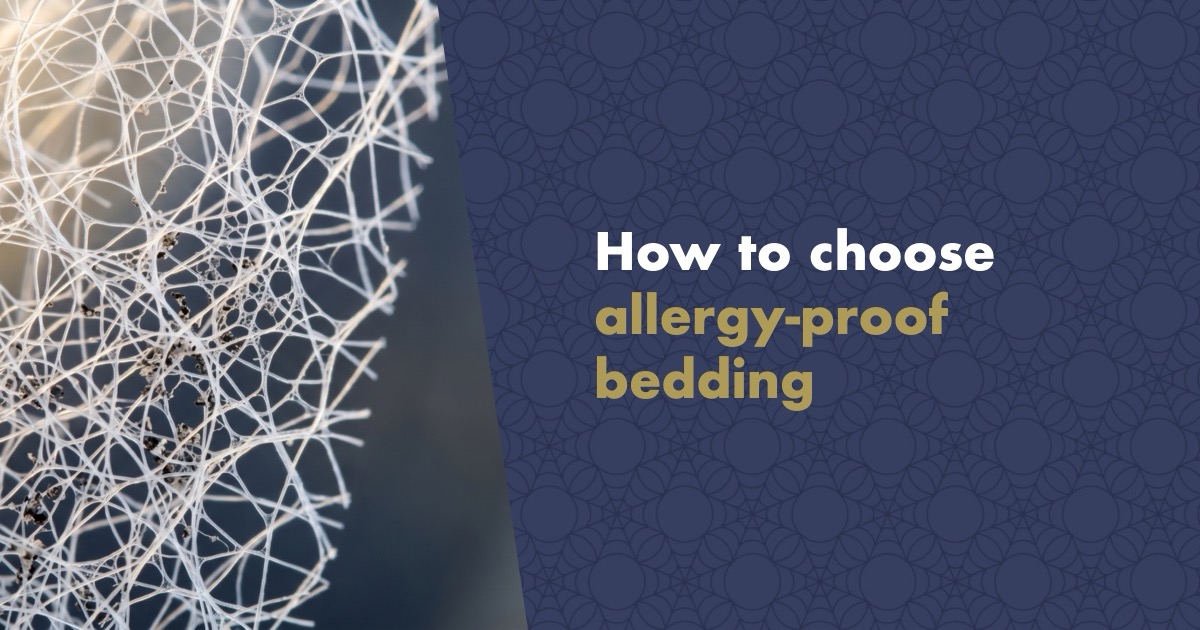
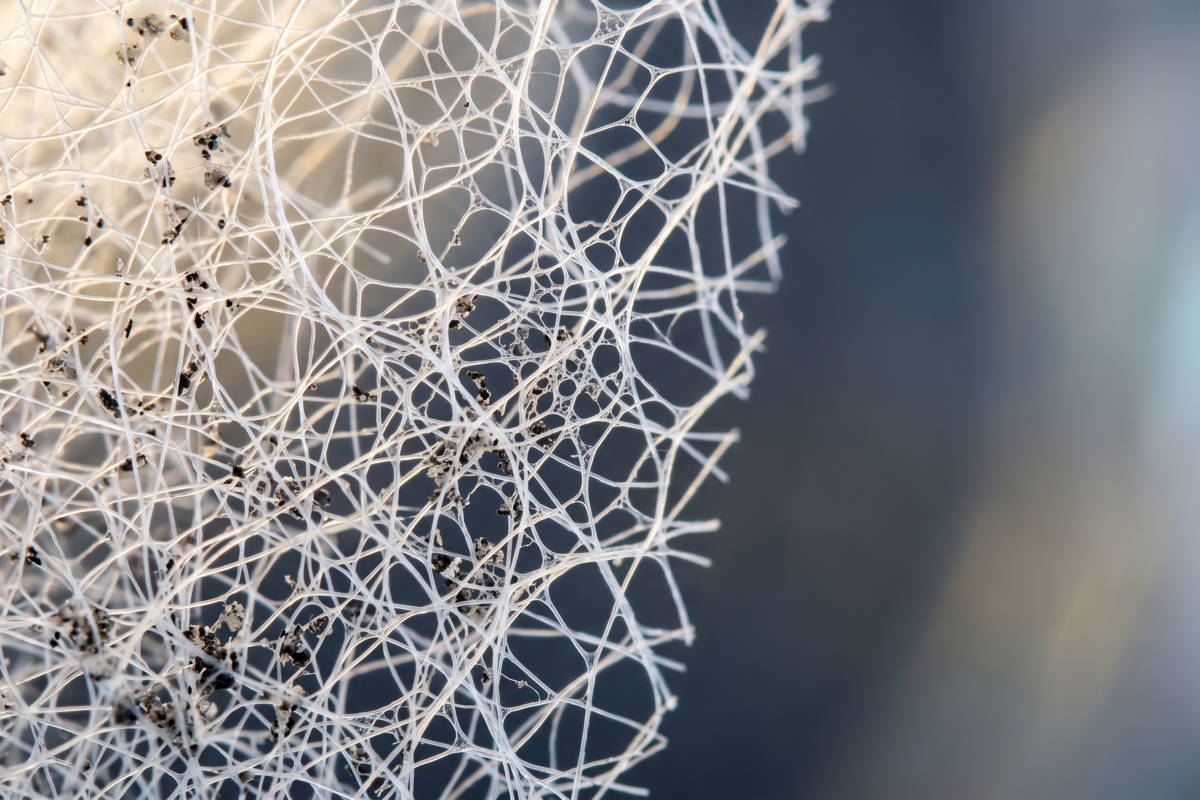
A nanofibre is an extremely thin fibre, just a few dozen nanometres in diameter. From these fibres, you can weave a membrane whose pores typically measure 100 to 150 nanometres, which is orders of magnitude smaller than that ten-micrometre threshold. Picture it as an invisibly fine spider's web whose holes are so tiny that neither the mite allergen (1,000 nm) nor the mite itself (around 420,000 nm) has the slightest chance of slipping through. If you would like the full story of how nanofibre is made and why it performs the way it does, we have written a dedicated piece on it.
It sounds like an airtight sheet of plastic, but the opposite is true. A nanofibre membrane is fully breathable: it lets water vapour and heat pass through, so you don't sweat beneath it and the bed stays comfortable. It's a purely mechanical barrier that works without a single drop of chemicals and lasts for years. nanoSPACE manufactures this membrane in the Czech Republic and builds it into a whole range of anti dust mite bedding, from protective covers to duvets, pillows and luxurious bed linen and sheets made from NanoCotton®.
How to kit out an allergy sufferer's bed, step by step
If you want the maximum effect, one simple rule applies: you need to protect the entire bed—the mattress, the pillow and the duvet alike. Mites don't care where you happen to be lying. If you protect only the mattress and keep an old pillow, you'll go on breathing allergens from it. The ideal solution, therefore, is a completely 'wrapped up' bed, from which nothing can reach you.
The good news is that there are two routes to achieving this, and you can mix them freely. That way you can put together your anti dust mite bedding to match your budget and your needs exactly. Either you wrap your existing, much-loved bedding in allergen-proof covers, or you replace it outright with a duvet, a pillow and a sheet that already contain a nanofibre membrane. Let's walk through both options for each part of the bed.
The mattress: start here
The mattress is the largest and most insidious mite reservoir in the entire home. You can't wash it, it's awkward to clean, and over the years millions of mites accumulate inside it along with billions of their allergens. If you have only a limited budget for protecting the bed, begin right here, because it brings the greatest relief for your money.
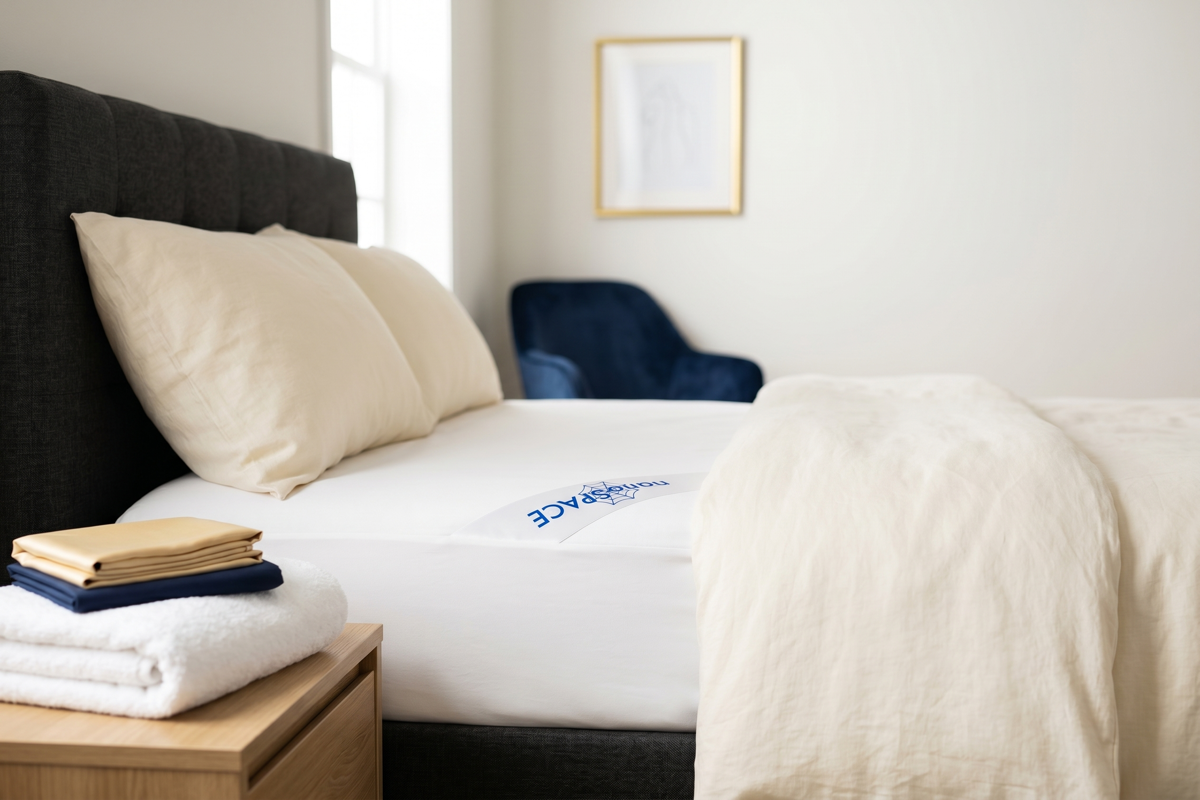
The most effective option is a zippered anti dust mite mattress encasement, which completely encases the mattress on all six sides. The mites stay trapped inside, cut off from your airways, and the membrane also stops them from breeding. You only need to wash it once or twice a year, and for the rest of the time you simply pull your usual fitted sheet over the top. UK buyers often ask for a full 360° wrap, and that is exactly what a zippered encasement delivers; you can also order it in a child's size for a cot mattress.
A simpler alternative is an anti dust mite fitted mattress protector with an elastic band. You pull it on like an ordinary fitted sheet, so you don't need to lift the whole mattress to zip it on. It protects the top surface you lie on, which is the one that matters most, and you can wash it more often as required. It's a comfortable compromise for anyone who would rather not fiddle with anything complicated.
Start by protecting the mattress


The pillow: what spends every night under your head
Of the whole bed, the pillow sits closest to your face and your airways. It too harbours millions of mites, and their allergens are quite literally under your nose. UK allergy advisers consistently name the pillow as the single most important item to cover, because it holds the highest density of mite allergen. Protecting the pillow therefore comes right after the mattress, and again you have two routes to choose from.
If you're happy with your current pillow, slip an anti dust mite pillow cover over it. It works just like the mattress encasement, creating an impassable wall between you and the mites and stopping them from breeding. You pull your usual pillowcase over the cover and wash it only once or twice a year. It comes in several sizes, so it fits both British and Continental pillow formats alike.
The other option is to go straight for an anti dust mite pillow with a nanofibre membrane. This suits you if you're thinking about a new pillow anyway, because you get protection and comfort in one. You can choose from a classic shape, a quilted zippered version or a travel 'horseshoe', so you stay protected even on holiday. The pillow is washed once or twice a year and needs nothing more than an ordinary pillowcase.
The duvet: don't underestimate it
The duvet keeps you warm and comfortable, but it's also home to millions of mites. Every time you turn over in the night, a little cloud of allergen-laden dust rises from it. That's why it's worth including the duvet in your protection plan, too.
As with the mattress and pillow, you can buy a cover with a nanofibre membrane for the duvet, pull an ordinary duvet cover over it and wash it only once or twice a year. If you're buying a new duvet anyway, reach straight for an anti dust mite duvet from nanoSPACE. It comes in all-year, summer, winter, thermo and duo versions, and there's a children's anti-allergy duvet too, because young airways are even more sensitive to allergens. Once your bed is sorted, our guide to caring for anti-allergy bedding with nanofibre will keep the membrane working perfectly for years.
Bed linen and sheets made from NanoCotton®
So far, we've been talking about invisible protection beneath the surface. NanoCotton® goes a step further: it marries the nanofibre membrane with a premium cotton sateen, so you get protection in a form that is a pleasure to look at and to touch. Anti-allergy bed linen made from NanoCotton® protects your airways while remaining soft, smooth and rich in colour even after many wash cycles. nanoSPACE was the first company in the world to bring it to market.
The same logic applies to the matching NanoCotton® sheet, which can take over the role of a mattress cover, and there's a children's range too. With bed linen we recommend buying two sets straight away, so you always have one to hand while the other is in the wash. You can read more about this material in our article on NanoCotton: the best bedding for allergy sufferers.
Add pillow and bed linen protection

Money-saving sets are worth it
When you want to protect the whole bed at once, you don't have to fill your basket item by item. nanoSPACE offers discounted bundles that work out cheaper than buying the individual products separately. You can pick up a set of pillow and duvet covers, or a duvet-and-pillow set, which can also include a mattress cover. For an allergy sufferer, it's the most convenient way to equip the bed completely and save money at the same time.
Who benefits from anti dust mite bedding?
Anti dust mite bedding makes the most sense for allergy sufferers and asthmatics, for whom it can literally bring back peaceful nights. Allergists recommend barrier covers as a primary measure against dust mite allergy precisely because they work without medication and without daily effort. But parents of small children, people with sensitive airways and anyone who simply wants to wake up fresh rather than congested will appreciate them too.
nanoSPACE is a Czech family company that has been going since 2012 and was the first manufacturer in the world to make anti-dust mite covers, duvets and pillows with a nanofibre membrane. It develops and produces the membrane in the Czech Republic, and customer satisfaction speaks for itself: a 98% satisfaction rating from more than 10,000 independent reviews. An investment in anti-dust mite bedding is higher than in ordinary bedding, but spread over years of sleep, it is one of the most cost-effective forms of daily relief an allergy sufferer can find.
Conclusion
Choosing anti-dust mite bedding isn't rocket science; you only need to remember a single principle: the barrier. Effective anti-dust mite bedding isn't about luxury materials; it's about smart technology. Don't try to wipe the mites out; just keep them away from you. Begin by protecting the mattress, add the pillow and the duvet, and gradually wrap the whole bed. Whether you choose covers for your existing bedding or go straight for a duvet, a pillow and bed linen with a nanofibre membrane, the result is the same: nights without sneezing and mornings when you finally wake up rested. Browse the full range of anti dust mite bedding and give your airways the peace they deserve.
Frequently asked questions
What is the best anti dust mite bedding?
The best anti dust mite bedding has a nanofibre membrane that forms a physical barrier against mites and their allergens. The membrane's pores are so small that the Der p 1 allergen cannot pass through, yet the fabric remains breathable. It works without chemicals and without the need for hot washing.
Where should I start if my budget is limited?
Start by protecting the mattress. It is the largest mite reservoir and cannot be washed, so an anti-dust mite mattress encasement brings the greatest relief for your money. You can add the pillow and the duvet later.
Isn't washing bed linen at 60°C enough?
Hot washing temporarily reduces the number of mites in a fabric, but it doesn't solve the root problem. You can't put a mattress or the filling of a pillow and duvet in the machine, and the population quickly rebuilds. The real solution is a barrier that keeps allergens away from your airways, not about killing the mites.
How often do you wash an anti-dust mite cover?
An anti-dust mite cover for the mattress, pillow or duvet only needs washing once or twice a year. For the rest of the time, you pull an ordinary sheet or pillowcase over it and wash that as usual.
Is nanofibre bedding breathable, or will I sweat under it?
Yes, it's fully breathable. A nanofibre membrane lets water vapour and heat pass through, so you don't sweat beneath it. It holds back only mites, their allergens, bacteria and viruses, while air and moisture move through freely.