
On a sweltering summer's day, there's nothing quite like slipping into the cool embrace of your garden pool or swimming pond. Picture yourself floating in crystal-clear water, free from algae, murkiness and harmful bacteria. The trouble is, that picture-perfect water rarely stays that way on its own — and for decades, the only answer was a cupboard full of harsh chemicals.
Fortunately, things have moved on. Thanks to nanotechnology, you can now learn how to clean a pool without chemicals and still enjoy water that's genuinely safe to swim in. Special chlorine-free products harness the power of light to keep water clear, and they deliver results that would have seemed impossible only a few years ago. One of them, FN NANO® AQUA, curbs the spread of microorganisms and reduces the organic pollution that fuels green water in the first place — so you can enjoy your pool or pond without reaching for aggressive chemicals.
Key takeaways if you're short on time
- You really can clean a pool without chemicals. Photocatalytic nanotechnology keeps water clear by physically removing the organic matter microorganisms feed on.
- Light is the engine. FN NANO® AQUA is activated by the UV component of daylight, so it works best in sunny, open pools.
- It's gentle on people. pH-neutral, odourless and non-toxic — a relief for sensitive skin, small children and allergy sufferers.
- Sand filtration is non-negotiable. The spent nanocrystals must be filtered out, which is why a sand filter (not a cartridge) is required.
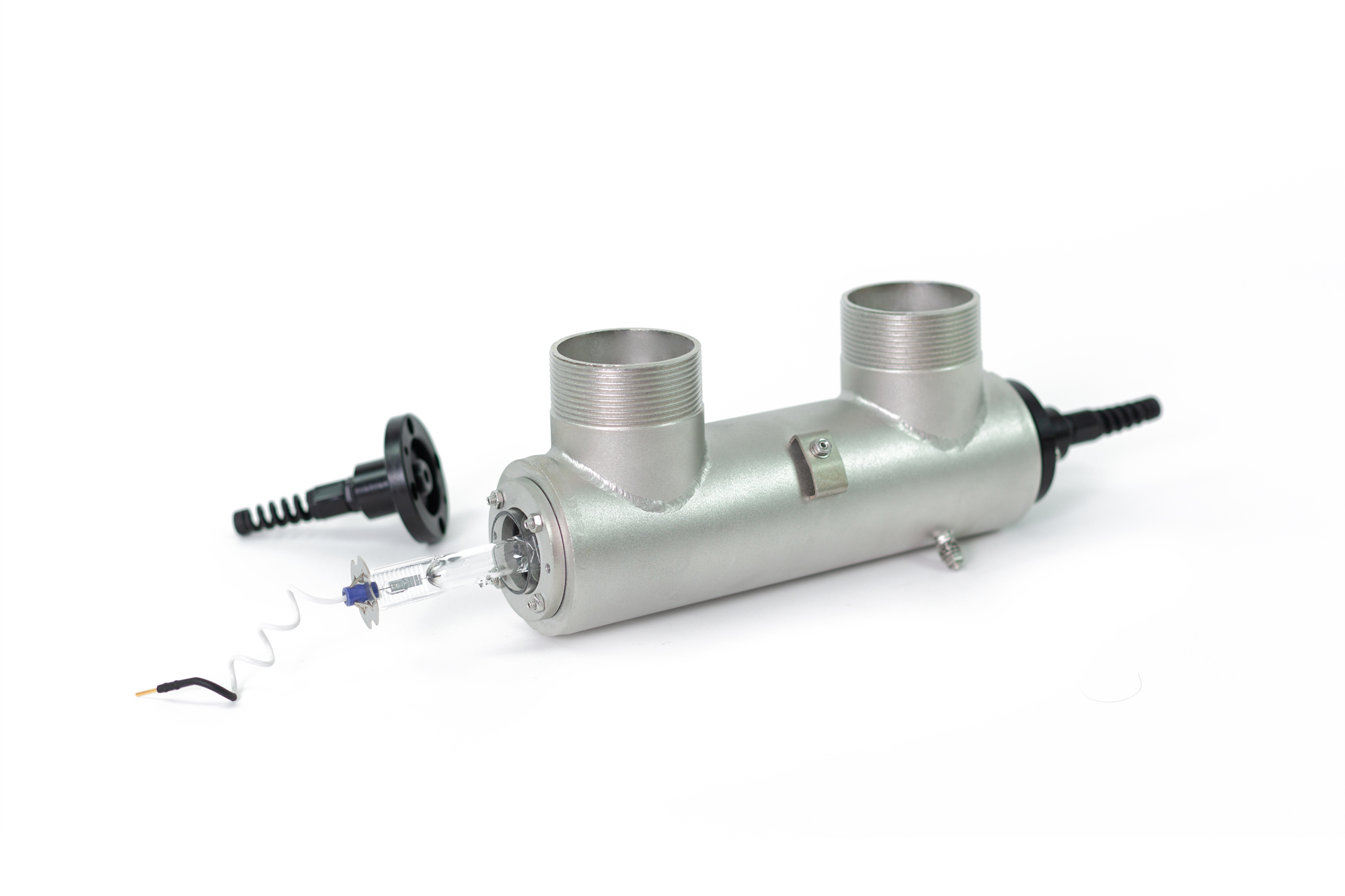
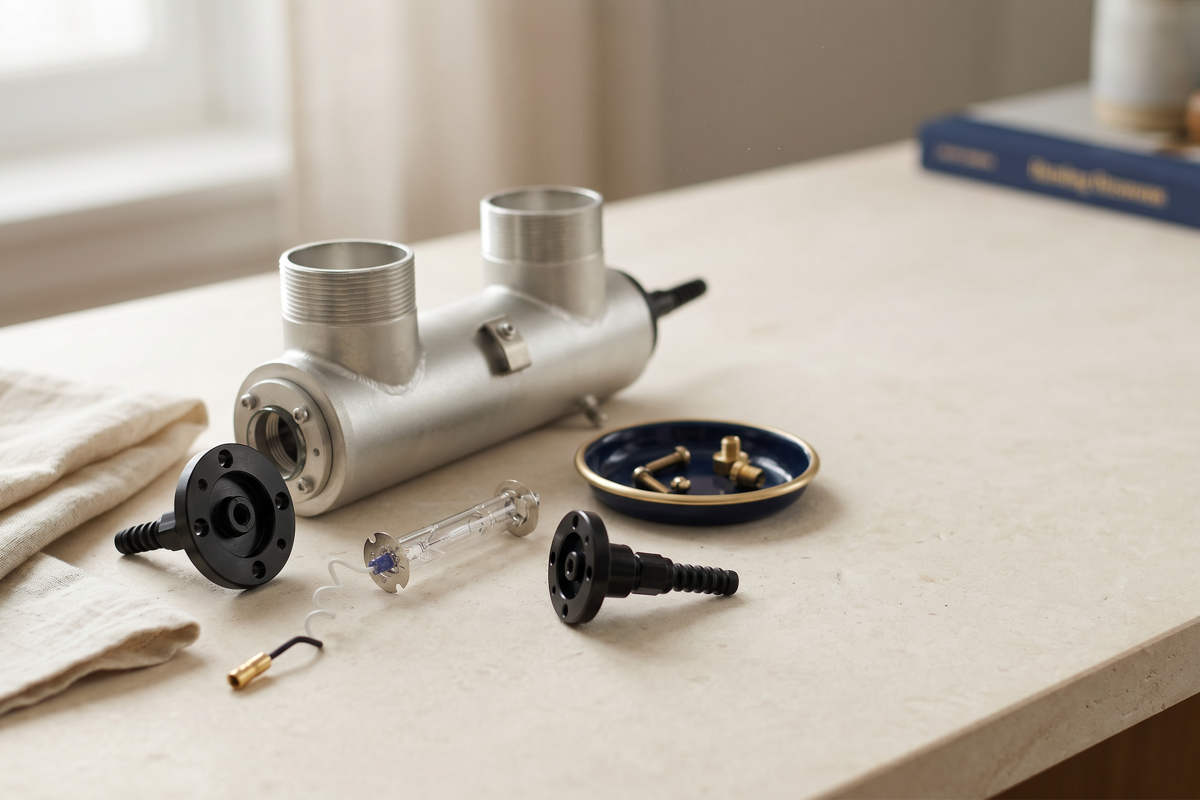
- Covered or indoor pools need a UV lamp. Where daylight cannot reach the water, a source such as the UV lamp LifeUVM03 supplies the radiation the technology needs.
The Unsuspecting Culprits Behind Pool Pollution
In every swimming pool, a host of factors quietly chips away at water quality. Even with a well-fitted pool cover, an array of impurities — leaves, insects, grass clippings, pollen, dust and other debris — still finds its way in. A sturdy cover offers real protection against these, but it will never eliminate the problem of water pollution entirely.
In fact, the most notorious source of contamination is also the most unsuspecting: the swimmers themselves. As we enjoy a refreshing dip, our bodies inadvertently pollute the water. Tiny particles of dead skin, sweat, sebum, and the remnants of sunscreen, cosmetics and soap all seep into the pool. Together, they create a fertile breeding ground for algae and a host of microorganisms.
And yes, as you've probably already guessed, it's nearly impossible to prevent this completely. Even a thorough shower before swimming won't rinse every potential contaminant from your body. Once the water is polluted, it becomes an ideal environment for harmful microorganisms to multiply, posing genuine health risks to swimmers. You'll often spot the decline as a shift in water colour, increasing cloudiness or an unpleasant odour.
What surprises most pool owners, however, is that the very chemicals meant to keep the water hygienic can sometimes drag its quality down, too. It sounds paradoxical, but it's an important point to weigh up in your quest for the perfect swim.
The Double-Edged Sword of Pool Chemistry
Pool chemicals are an almost universal part of keeping a swimming environment clean and safe. Yet these powerful substances can also bring their own health risks, which is exactly why so many owners start looking for ways to clean a pool without chemicals.
The basic chemical agents used for water treatment fall into a handful of families: chlorine-based products, peroxide-based products and various speciality treatments. One word of caution before you go any further — never combine these methods. Mixing chlorine with peroxide in particular can trigger a dangerous chemical reaction, so always use treatments separately and exactly as instructed.
The Trouble with Chlorine
Chlorine is usually the go-to agent for pool water treatment. It's inexpensive and widely available, but it comes with its fair share of drawbacks. One challenge is that its effectiveness drops sharply once the water's pH rises above 7.4 — though most owners learn to manage this with a little routine testing.
The more significant concern is the impact of chlorine and its compounds on human health. Swimming in chlorinated water can lead to skin irritation, red and stinging eyes, itching, gynaecological problems and various allergic reactions. There's also evidence that it can disrupt the protective function of the bronchial mucosa, potentially allowing more allergens into the body. Add the unmistakable, often unpleasant chlorine odour, and it's easy to see why a gentler approach, like learning how to clean a pool without chemicals, appeals to so many families.
Redefining Pool Cleaning with Nanotechnology: FN NANO® AQUA
Keeping a pool clean doesn't have to mean reaching for harsh chemicals. With the help of nanotechnology, FN NANO® AQUA offers an innovative, eco-friendly alternative — and it's one of the most practical answers to the question of how to clean a pool without chemicals.
An Ecological Approach
This nanotech suspension, developed by a leading Czech company, is a modern solution for chlorine-free pool maintenance. It's designed to inhibit the growth of green algae, bacteria and fungi in garden pools. Activated by light, FN NANO® AQUA works on a purely physical principle. This photocatalytic nanotechnology captures the energy of light and converts it into a powerful cleaning and antimicrobial effect.
"Over the course of one sunny day, the cyanobacteria are gradually killed off and the toxins decontaminated. You have, in practical terms, drinking water — without parasites, without bacteria, without chemistry," said Jan Procházka, describing the technology.
It's worth being honest about the limits, too. While the product is a real step forward for chlorine-free garden pool care, current legislation prevents its unsupervised use in public swimming pools, where thorough and consistent management is required.
How Does FN NANO® AQUA Work?
The FN NANO® AQUA suspension contains inert mineral substances that use the energy of UV light to clean pool water in the most eco-friendly way possible. That allows you to maintain crystal-clear, healthy water, demonstrating how to clean a pool without chemicals with minimal effort.
Understanding FN NANO® AQUA: A Threefold Mechanism of Action
To see why it works, it helps to look under the bonnet. FN NANO® AQUA relies on three complementary mechanisms to keep water clean and healthy:
- Photoprotection. Cyanobacteria, algae and other microorganisms depend on ultraviolet radiation to survive. FN NANO® AQUA forms an inorganic film around these organisms, blocking the UV they rely on and shutting down their photosynthesis-based processes — so they simply die off.
- Starvation of microorganisms. The suspension contains photoactive titanium dioxide (TiO2) crystals. When daylight or artificial UV light activates them, they physically break down the microscopic organic impurities that would otherwise feed microorganisms, effectively starving them out.
- Photocatalysis. Through this entirely natural process, FN NANO® AQUA decomposes organic molecules into carbon dioxide and air.
By combining these three effects, the product does more than prevent an algae bloom — it steadily reduces the build-up of organic matter that pollutes the pool in the first place. That's the practical heart of how to clean a pool without chemicals: instead of poisoning the water, you remove the food source that microorganisms need.
How to Clean a Pool Without Chemicals in Practice
With the right water composition, lighter bathing loads and a consistent routine, FN NANO® AQUA can deliver clean, healthy water with no chemicals at all. And if conditions ever demand it, the suspension can still be combined with commonly available chemicals or with active oxygen (ozone) — so you're never left without a backup plan.
The Benefits at a Glance
For families weighing up how to clean a pool without chemicals, the advantages are easy to summarise. In sunny weather, FN NANO® AQUA can clear a pool in just four to eight hours. It's pH-neutral and works at any pH level, so there's no chemistry to constantly balance. It provides a genuinely ecological way to clean water, destroying toxins, grease and dirt while preventing the overgrowth of unwanted microorganisms. It suits home pools, garden ponds and even aquariums, and because it's so gentle, it's especially appreciated by those with sensitive skin, small children and allergy sufferers. Best of all, it minimises — and often eliminates — the need for other cleaning chemicals, making it the ideal solution for anyone wondering how to clean a pool without chemicals.
The Honest Limitations
No technology is a silver bullet, and it's only fair to set out the trade-offs. FN NANO® AQUA requires sand filtration to capture the spent nanocrystals, the application takes a little more time and care than tossing in a chlorine tablet, and it's not suitable for hot tubs. It also needs a UV light source — either abundant daylight or, for indoor and covered outdoor pools, a dedicated UV lamp such as the medium-pressure UV lamp LifeUVM03.
Everything you need for a chemical-free pool

How to Apply FN NANO® AQUA: A Step-by-Step Guide
Getting the best results is all about following the routine carefully. Here's the process from start to finish.
First, shake the suspension thoroughly before every application to ensure an even mix — the insoluble TiO2 nanoparticles need to be distributed evenly to work. Next, dilute FN NANO® AQUA according to the instructions and blend it again with a stick blender. Then apply it: whether it's the first use of the season or routine maintenance, spray the suspension evenly across the pool's surface. A garden sprayer works beautifully, though a hand-pump sprayer is fine for smaller pools. Finally, wait — allow six to eight hours for the nanotechnology to do its work, ideally with the filtration off at first so daylight can act on the water.
For consistently clear, healthy water, the manufacturer recommends applying FN NANO® AQUA once every 10 to 14 days. If water quality starts to slip, increase the frequency to once every 7 to 10 days. It's a straightforward routine, and once you settle into it, you'll have mastered how to clean a pool without chemicals.
When Daylight Isn't Enough: Indoor and Covered Pools
The technology lives and dies by light. For an open-air pool in summer, the UV component of daylight is usually enough. But if your pool is indoors, in a conservatory or permanently roofed to retain heat, the radiation simply may not reach the water — ordinary double-glazed windows can block up to 80% of UV. In those cases, a permanent UV source like the UV lamp LifeUVM03 built into your filtration loop keeps FN NANO® AQUA working reliably, day or night.
If you're also thinking ahead to the off-season, it's worth reading our guide on how to prepare your pool for winter without aggressive chemicals, and our overview of the hidden health risks lurking in swimming pools — both pair naturally with a chemical-free approach. The same photocatalytic FN NANO technology even has applications beyond water; you can see it at work in our article on how a functional nano-coating triples the lifespan of a façade.
Conclusion
Learning how to clean a pool without chemicals is no longer wishful thinking — it's a practical, repeatable routine. By letting light and a thin film of mineral nanocrystals do the heavy lifting, FN NANO® AQUA tackles the root cause of green, cloudy water rather than masking it. Pair it with sand filtration and, where needed, a reliable UV source, and you can spend your summer swimming in clear, gentle water that's kinder to your skin, your children and the environment alike.
Frequently asked questions
How does FN NANO® AQUA actually clean the water?
FN NANO® AQUA purifies water and controls microorganisms using a purely physical principle, without toxic chemicals. For it to work, plenty of natural daylight — and especially its UV component — needs to reach the water, or you need a UV lamp such as the LifeUVM03 as part of your filtration system.
Is the product harmful to animals or humans?
No. FN NANO® AQUA isn't harmful to people or animals. The National Institute of Public Health (SZÚ) even tested it on aquarium fish, adding one litre of FN NANO® AQUA to a two-litre aquarium, and even that concentration caused no harm to the animals. It's also non-toxic in garden ponds with live fish.
Does it still work on cloudy days?
Yes, it works, but the photocatalytic process is more effective in clear weather. That's why it's best applied in the morning, so the FN NANO® AQUA suspension can start working quickly while the light is strongest. It's also unaffected by hard water and works at any water temperature.
Can I use it in a covered or indoor pool?
Yes, provided UV light can reach the water. You'll need either a roof that transmits UV radiation or a permanent UV lamp such as the UV lamp LifeUVM03 in your filtration loop. Without a UV source, the technology isn't suitable for fully enclosed pools.
What if my water is already completely green?
For heavily green water, try a shock treatment of 1 litre per 10–20 m³ of pool water, or repeat the full process. This isn't the most economical route, though, so for badly neglected water we recommend a one-off chlorine-based product first — or, if chemicals no longer help, simply changing the water — and then switching to regular FN NANO® AQUA maintenance. This is the best way to learn how to clean a pool without chemicals going forward.