
Your bedroom should be a sanctuary for rest and recovery, but for millions of allergy sufferers, it's actually the most dangerous room in the house. Dust mites—microscopic arachnids invisible to the naked eye—colonize nearly every fabric surface in your sleeping space, turning what should be a healing environment into an allergen assault zone that triggers symptoms night after night.
Understanding exactly where dust mites live in your bedroom is the critical first step toward effective management, because you cannot protect yourself from enemies you cannot locate. The average mattress contains between 100,000 to 10 million dust mites depending on its age and environment—more microscopic inhabitants than there are people in most cities.
But your mattress represents just one of multiple dust mite hotspots concentrated in bedrooms, with pillows harboring up to 10% of their weight in allergen-laden material, carpets concealing 100,000 mites per square yard, and curtains accumulating allergen levels comparable to mattresses. Identifying every location where these creatures thrive—and implementing targeted protection strategies like nanofiber barrier bedding from nanospace.store for the most critical exposure points—transforms your bedroom from an allergen reservoir that worsens your health into the restorative sleep environment it should be.
.jpg)
Summary for those short on time
- Roughly four out of five homes in the United States have dust mite allergens in at least one bed, with mattresses harboring 100,000 to 10 million mites depending on age and environmental conditions.
- Pillows can contain up to 10% of their weight in dust mite allergens after two years of use, making them the second-most critical hotspot where your face contacts concentrated allergens for 6-8 hours nightly.
- Bedroom carpets harbor up to 100,000 dust mites per square yard in deep pile fibers, while upholstered furniture, curtains, and soft toys create additional reservoirs throughout the room.
- Most exposure to dust mite allergens occurs while sleeping because allergens settle into bedding rather than remaining airborne, concentrating your highest-intensity exposure during the hours you spend in bed.
- Nanofiber barrier products from nanospace.store address the three most critical hotspots —mattresses (via Nanocotton® sheets), pillows (anti-allergy pillows), and duvets (barrier duvets)—blocking 99.9% of allergens from these primary exposure points.
Understanding Why Bedrooms Become Dust Mite Central
The Perfect Storm: Temperature, Humidity, and Food Supply
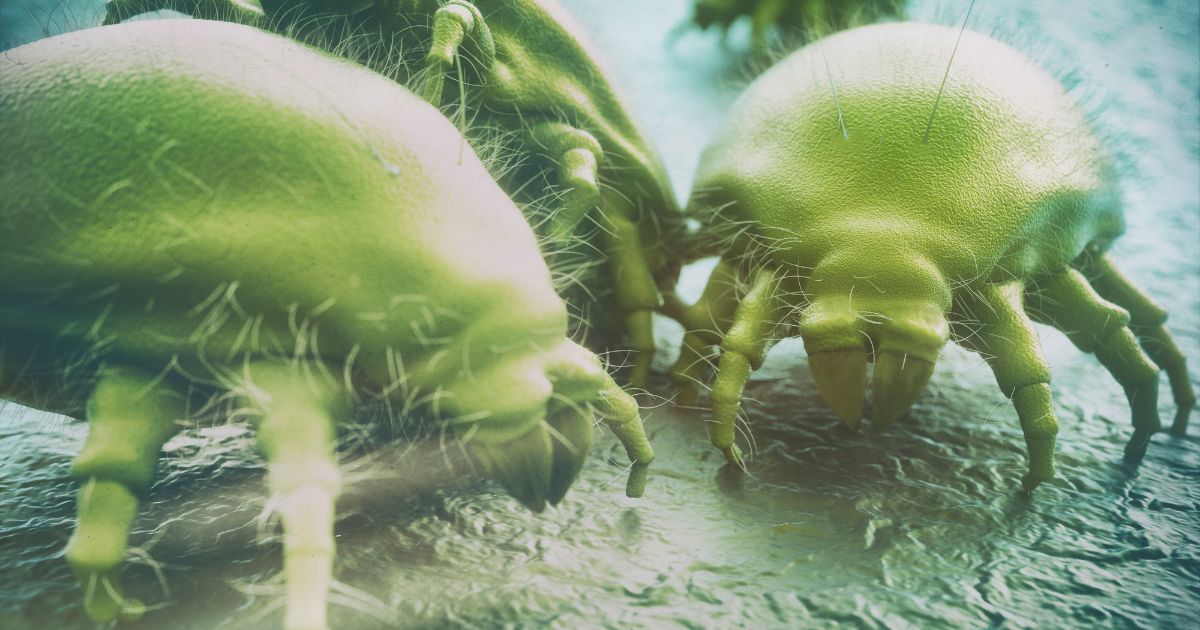
Dust mites are microscopic arachnids measuring about one-quarter to one-third of a millimeter—completely invisible to the naked eye. These creatures thrive in warm, humid environments with temperatures between 68-77°F and relative humidity levels above 50%. This makes bedrooms their ideal habitat, especially in humid climates where summer humidity often exceeds 70%. Humidity is the most important factor in determining whether a house has high levels of dust mites, because these creatures do not drink water like humans do—they absorb moisture from the air.
Read: Everything You Need to Know About Dust Mites and Their Impact on Health
Your bedroom provides the third critical element dust mites need: abundant food. Dust mites feed exclusively on shed human skin cells, which we naturally lose throughout the day and night. An average person sheds about 1.5 grams of skin daily—roughly the weight of a paperclip—enough to feed one million dust mites for months. Since we spend approximately one-third of our lives in bed and shed most of our skin cells during sleep, bedrooms accumulate the concentrated food supply that supports massive mite populations.
A single dust mite produces about 20 waste pellets daily, and it's these microscopic droppings that act as potent allergens, causing most allergic reactions. Unlike bed bugs, dust mites don't bite, but their waste products and decomposing body fragments contain proteins (Der p 1 and Der f 1) that trigger powerful immune responses in sensitive individuals. Under ideal conditions, dust mite populations can double every three weeks, explaining why even relatively new bedding can become heavily colonized within months.
Why the Bedroom Deserves Primary Focus
Clearly, exposure to dust mites can occur anywhere in the home, at school, or in the workplace. However, the bedroom is the primary focus both because we all spend a large proportion of our lives in bed, and also because it is easier to achieve major changes in exposure in the bedroom. Most exposure to dust mite allergens occurs while sleeping, as allergens settle quickly into dust or fabrics rather than staying airborne.
This concentrated nighttime exposure proves particularly problematic because it occurs when your body's natural anti-inflammatory mechanisms are weakest. During sleep, cortisol levels that help suppress allergic inflammation drop, making you more reactive to allergen exposure at night than during the day. The combination of prolonged exposure duration (6-8 hours continuously), high concentration (millions of mites in close proximity), and reduced physiological defenses creates the perfect storm for symptom development.
.jpg)
Read: Effective Ways to Get Rid of Dust Mites in Mattress and Upholstery
Additionally, the bedroom offers the most practical opportunity for dramatic allergen reduction. While you cannot easily control dust mite populations in carpeted offices, schools, or other people's homes, you have complete control over your own bedroom environment. Implementing comprehensive protection in this single room can reduce your total allergen exposure by 50% or more simply by addressing the location where you spend the longest uninterrupted period and where allergen concentrations are highest.
Hotspot #1: Your Mattress—The Ultimate Dust Mite Metropolis
The Shocking Numbers
Your bed is unquestionably the ultimate dust mite hotspot—a veritable five-star resort for these microscopic pests. Mattresses can harbor millions of dust mites, feeding on the approximately 500 million skin cells you shed during eight hours of sleep. Research shows that after just two years, an unprotected mattress can contain over 2 million dust mites. Over a decade, an unprotected mattress can significantly increase in weight due to accumulated dust mite waste, dead mites, shed skin cells, and other debris.
The depth and layered structure of mattresses create ideal conditions for mite colonization. Dust mites burrow deep into foam layers, padding, and spring structures where they remain protected from surface cleaning efforts. The warmth from your body heat maintains optimal temperatures throughout the mattress interior, while moisture from perspiration (you release approximately a pint of water vapor nightly through breathing and skin evaporation) keeps humidity at levels perfect for mite reproduction.
.jpg)
Read: Does Anti-Allergy Bedding Really Stop Dust Mites?
House dust mites are found in all homes but prefer warm, humid conditions, and they are found in mattresses and bedding as primary habitats. Dust mites occur naturally and can appear in nearly all homes; roughly four out of five homes in the United States have dust mite allergens in at least one bed. This means if you haven't taken specific protective measures, your mattress almost certainly harbors a thriving mite population right now.
Why Traditional Mattress Cleaning Falls Short
Many people believe that regular vacuuming or steam cleaning can control mattress dust mite populations. While these efforts help modestly, they cannot reach mites living deep within the mattress structure. Standard vacuum cleaners lack the suction power to extract mites from interior layers, removing only surface populations while leaving the vast majority undisturbed. Even HEPA vacuums may not remove all dust mite allergens from deep within mattress materials.
Steam cleaning kills mites through heat but doesn't remove their allergenic waste products or body fragments, which remain embedded in mattress materials and continue triggering symptoms. The moisture introduced by steam cleaning can actually worsen the problem temporarily by increasing humidity levels that promote rapid mite population recovery once conditions dry out. Additionally, mattresses take considerable time to dry after steam cleaning, and insufficient drying can promote mold growth—adding another allergen source.
Mattress replacement offers temporary relief but proves impractical as a long-term strategy. Even new mattresses begin accumulating mites within weeks of use, developing substantial populations within months. At costs ranging from hundreds to thousands of dollars, replacing mattresses every few years becomes economically unfeasible for most families. More importantly, it addresses the problem reactively rather than preventing colonization in the first place.
.jpg)
Read: Dust Mite Allergy Symptoms, Relief and Treatment
The Nanofiber Barrier Solution
Nanofiber barrier bed sheets from nanospace.store create an impermeable layer over your entire mattress, preventing the mites living deep within from reaching the surface where you sleep. Unlike full-encasement mattress covers that require completely wrapping the mattress in a zippered barrier—a process that's difficult to complete properly and that most people never repeat once installed—barrier sheets serve as your normal top sheet that you interact with and wash regularly.
Nanocotton® bed sheets combine 100% organic cotton satin on the surface with a nanofiber membrane in the middle layer featuring pore sizes of just 80-150 nanometers. These microscopic pores are approximately 5,000 times smaller than dust mites (420,000 nanometers), creating a physical impossibility for mites or their allergens to pass through. Testing by the Technical University of Liberec proved effective capture of dust particles at ≥99.9% —meaning essentially nothing gets through from the mattress below.
The beauty of this approach is that it works on any mattress, regardless of how heavily colonized it already is. You don't need to replace your existing mattress or attempt to clean it deeply—you simply seal the allergen reservoir beneath an impermeable barrier. The mites trapped inside the mattress are deprived of food (your skin cells now shed on top of the barrier where they can be washed away) and gradually die off, though the immediate benefit comes from blocking your exposure rather than eliminating the population. Over time, using barrier sheets actually cleans your mattress passively by starving the mite colonies.
#produkty#https://www.nanospace.store/nanocotton/
Hotspot #2: Pillows—Where Your Face Meets Concentrated Allergens
The Pillow Allergen Accumulation Problem
Pillows present equally alarming problems, with studies showing they can contain up to 10% of their weight in dust mite allergens after two years of use. That favorite pillow you've had for several years might weigh significantly more now than when you bought it—and not in a good way. The combination of close facial contact, moisture from breathing and drooling during sleep, warmth from your head, and continuous skin cell shedding creates conditions even more favorable for mite colonization than mattresses.
The danger of pillow allergens proves particularly acute because your nose and mouth rest directly against pillow surfaces for 6-8 hours nightly. Every breath you take passes over allergen-saturated fabric, delivering high concentrations of allergenic particles directly to your airways. For people with asthma or respiratory allergies, this prolonged close-range exposure can trigger nighttime symptoms including coughing, wheezing, chest tightness, and difficulty breathing that disrupts sleep and persists into morning.
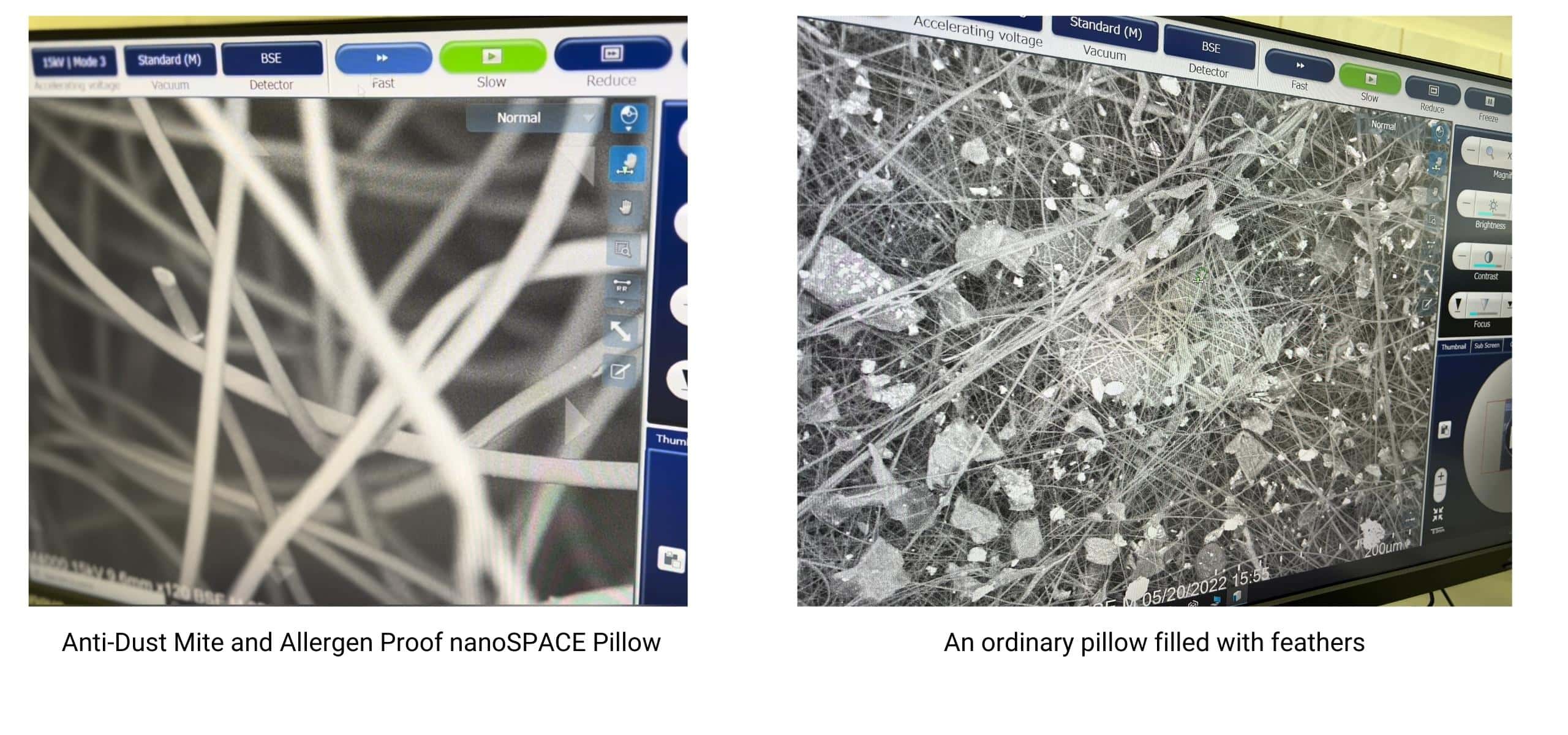
Traditional pillows—whether filled with down, feathers, foam, latex, or synthetic materials—all become dust mite habitats within months of use. Down and feather pillows are particularly problematic because the natural protein structures of feathers provide additional allergen sources beyond just dust mites. Foam and latex pillows trap body moisture and warmth while providing countless tiny spaces where mites can colonize protected from surface cleaning. Even synthetic fiber-filled pillows marketed as "hypoallergenic" simply mean the filling material itself doesn't trigger allergies—they offer zero protection against dust mite colonization.
Read: Best Bedding for Dust Mite Allergy: The Complete 2026 Guide Introduction
Why Washing Pillowcases Isn't Enough
Many people believe that regularly washing pillowcases provides adequate pillow hygiene. While clean pillowcases certainly help, they address only the outermost surface while leaving the allergen-saturated pillow interior completely unaffected. Standard cotton pillowcases have pore sizes around 420,000 nanometers—roughly equivalent to the size of dust mites themselves. This means mites and allergens pass freely between the pillow filling and the surface your face contacts, rendering clean pillowcases essentially meaningless for allergen protection.
Some people attempt to wash pillows themselves, but most filling materials don't withstand laundering well. Down and feather pillows often clump when washed, losing their support properties. Foam pillows degrade rapidly when subjected to agitation and heat. Even when washing is technically possible, achieving temperatures high enough to kill dust mites (60°C/140°F) often damages the pillow structure, and the moisture introduced by washing can promote mold growth if pillows don't dry completely and thoroughly.
Pillow replacement recommendations vary from every 1-2 years (for maximum hygiene) to every 3-5 years (for practical balance of cost and cleanliness). However, this reactive approach means you're repeatedly sleeping on progressively more allergen-laden pillows, then replacing them only to start the cycle again. New pillows begin accumulating allergens within weeks, developing substantial mite populations within months. You're constantly fighting a losing battle without addressing the fundamental problem: preventing mite colonization in the first place.
.jpg)
Read: Proper Pillow Washing Guide: Feather, Microfiber, and Hollow Fiber
Complete Anti-Allergy Pillows: Built-In Protection
Anti-allergy pillows with integrated nanofiber barriers from nanospace.store prevent dust mites from accessing the filling material regardless of what that filling contains. Unlike separate pillowcases that parents must remember to use and that children might remove when changing bedding, these pillows have protection built into their construction as a permanent, integral component.
The nanofiber membrane completely encases the filling material with the same 80-150 nanometer pores that block 99.9% of allergens. The filling remains clean and allergen-free indefinitely, maintaining its support properties better because dust mite waste products aren't degrading the materials. You can use any decorative pillowcase you want over the anti-allergy pillow—the protection doesn't depend on what covers you place over it.
For maximum bedroom protection, combining nanofiber barrier sheets (protecting the mattress) with complete anti-allergy pillows addresses the two most critical allergen exposure points. This coordinated approach ensures that both the surface you lie on and the surface your face rests against for hours nightly remain allergen-free, eliminating the primary sources of nighttime respiratory allergen exposure.
#produkty#https://www.nanospace.store/anti-dust-mite-pillows/
Hotspot #3: Duvets, Comforters, and Blankets
The Third Major Allergen Reservoir
Sheets and blankets trap warmth and moisture from your body, creating the perfect microclimate for dust mite reproduction, where populations can double every three weeks under ideal conditions. Duvets and comforters—particularly those filled with down, feathers, wool, or synthetic materials—become dust mite habitats over time, accumulating allergens throughout their filling material.
These bedding items present unique challenges because they cover your entire body during sleep, creating a warm, humid microenvironment between you and the blanket surface. The trapped body heat and moisture create conditions even more favorable for dust mite proliferation than ambient bedroom conditions. Skin cells shed during sleep settle onto the duvet surface and work their way into the filling through the fabric covering, providing concentrated food sources for mite colonies.

Read: How to Properly Wash Blankets and Duvets (Nanofiber, Hollow Fiber, and Feather)
Traditional duvet covers—even those made from high-quality cotton or other natural materials—provide no barrier whatsoever against dust mites. The large pore sizes in standard fabrics allow mites to move freely between the filling interior and the surfaces contacting your skin. Washing duvet covers addresses only the outer fabric while leaving the allergen-colonized interior completely untouched, much like washing pillowcases without addressing pillow filling.
Why Comforter Cleaning Proves Impractical
Most duvets and comforters are too large and bulky for home washing machines, requiring professional cleaning or trips to commercial laundromats with oversized washers. This inconvenience means duvets get cleaned infrequently—perhaps once or twice per year rather than the weekly or biweekly washing recommended for effective dust mite control. In the months between cleanings, mite populations thrive undisturbed, creating progressively higher allergen concentrations.
Even when professional cleaning occurs, it faces the same limitations as mattress cleaning: it may kill surface mites but doesn't remove all their waste products, and it cannot reach mites deep within dense filling materials. Down and feather duvets present particular challenges because high temperatures that kill mites can damage the natural oils giving down its loft and insulating properties, forcing a choice between effective mite control and maintaining the duvet's functional qualities.
The impracticality of frequent cleaning means that traditional duvets and comforters remain permanent dust mite reservoirs throughout their years of use. Even when you implement excellent mattress and pillow protection, sleeping under an allergen-laden blanket continues exposing you to dust mites all night, undermining the benefits from other protective measures.

Read: How Anti-Allergy Bedding Actually Works
Anti-Allergy Duvets: Completing the Protection System
Anti-allergy duvets with nanofiber barrier technology prevent dust mites from ever accessing the filling material. The barrier is integrated into the duvet construction, creating an impermeable seal around the filling. This means your duvet remains as allergen-free in year five as it was when new, assuming proper care and no physical damage to the barrier.
nanospace.store offers various anti-allergy duvet options designed for different seasonal needs—lightweight summer duvets, medium-weight options for spring and fall, and warm winter duvets, plus innovative 2-in-1 designs that adapt to changing temperatures. All incorporate the same nanofiber barrier technology that blocks 99.9% of allergens while maintaining breathability and comfort.
Using coordinated bedding systems where sheets, pillows, and duvets all incorporate nanofiber barriers creates comprehensive protection that addresses every potential fabric allergen source in your bed. This complete system approach ensures no gaps remain where dust mite exposure can continue undermining your sleep quality and respiratory health. Clinical studies showing the most dramatic symptom improvements typically involved comprehensive bedroom interventions rather than isolated use of single products.
#produkty#https://www.nanospace.store/anti-dust-mite-duvets/
Secondary Hotspots: The Hidden Allergen Reservoirs
Carpets and Rugs: The Massive Dust Mite Reservoirs
Bedroom carpets act like giant dust mite reservoirs, capable of harboring up to 100,000 dust mites per square yard. Deep pile carpets are especially problematic, offering countless hiding spots for mites and efficiently trapping skin cells, pet dander, and moisture like a biological sponge. That plush carpet that feels so comfortable under your bare feet is essentially a buffet and breeding ground rolled into one for dust mites.
Dust mite habitats typically include dust that occurs in carpeting found throughout the home, specifically those areas that are dark and infrequently disturbed by cleaning and vacuuming. Area rugs beside your bed collect skin cells as you get in and out of bed nightly, while regular foot traffic helps spread dust mites throughout the room like tiny, invisible tumbleweeds.
.jpg)
Read: Identifying and Managing Allergies in Infants and Children
Even with regular vacuuming, carpets remain one of the most challenging dust mite hotspots to manage because standard vacuums often lack the suction power to extract mites from deep within carpet fibers. Note that even HEPA vacuums may not remove all dust mite allergens from deep carpet fibers. The dust mite allergens cling to carpet fibers and settle deep into padding, where they remain largely unaffected by surface cleaning efforts.
The most effective long-term solution for carpet-related dust mite problems is removing carpeting entirely in favor of hard flooring—wood, tile, vinyl, or laminate. These smooth surfaces harbor far fewer mites than carpet, release captured skin cells more easily during cleaning, and can be damp-mopped to remove allergen particles rather than simply redistributing them as vacuuming sometimes does. For people with severe dust mite allergies or asthma, eliminating bedroom carpeting should be a high priority in comprehensive allergen reduction strategies.
Upholstered Furniture: Comfortable Mite Colonies
That cozy reading chair in your bedroom corner where you unwind each evening likely hosts its own thriving dust mite colony of thousands, if not millions, of residents. Upholstered furniture, including fabric-covered headboards, bedroom ottomans, and even that antique vanity bench, provides deep fibers where dust mites can burrow and thrive undisturbed.
The longer and denser the fabric fibers, the more protection dust mites have from vacuuming and cleaning efforts. Velvet, chenille, and other plush fabrics create particularly favorable habitats, combining dense fiber structures with the capacity to trap moisture and warmth. Furniture upholstery rarely gets the frequent washing that bedding receives, allowing mite populations to establish and grow over years without significant disruption.
Dust mites are found where their main food source accumulates, such as in upholstered furniture where skin cells settle and accumulate over time. Every time you sit on upholstered furniture, you shed skin cells that work their way into the fabric structure, providing food that supports resident mite populations. For bedrooms, minimizing upholstered furniture or choosing pieces with leather, vinyl, or other non-fabric surfaces reduces allergen reservoirs that nanofiber bedding cannot address.
.jpg)
Read: Cotton Satin Bedding: The Ultimate Choice for a Good Night's Sleep
Curtains and Drapes: The Vertical Allergen Collectors
Curtains and drapes hanging near your bed collect dust continuously and provide substantial vertical surfaces where dust mites can establish thriving colonies. Heavy fabrics like velvet or thick cotton are particularly problematic, as they're rarely washed—sometimes going years without proper cleaning—and can trap humidity from window condensation during temperature changes.
One study found that bedroom curtains can contain dust mite allergen levels comparable to those found in mattresses. This surprising finding reflects the reality that curtains accumulate dust and skin cells continuously through air circulation patterns that carry particles throughout the room. The vertical surface area of full-length curtains rivals or exceeds the surface area of your bed, creating a similarly massive allergen reservoir.
The allergens cling to curtains and serve as nests for dust mites. Unlike bedding that receives regular washing, curtains often go months or years between cleanings. The combination of continuous allergen accumulation and infrequent cleaning allows curtain mite populations to reach levels comparable to heavily colonized bedding.
For bedrooms, consider replacing heavy curtains with washable alternatives (lightweight cotton curtains that can be machine washed monthly) or non-fabric window coverings like blinds, shades, or shutters that can be wiped clean with damp cloths. If you must have fabric curtains, wash them monthly during allergy season and at least quarterly year-round to prevent excessive allergen buildup.
Soft Toys and Decorative Pillows: Mobile Mite Hotels
Children's bedrooms face additional challenges, with stuffed animals serving as mobile dust mite hotels with vacancy signs always lit. These beloved toys spend hours in close contact with sleeping children, accumulating skin cells, saliva, and moisture throughout the night. A child's collection of 20 stuffed animals can harbor as many dust mites as an entire mattress.
Similarly, those decorative throw pillows that make your bed look magazine-worthy contribute significantly to the overall dust mite population in bedrooms. Each decorative pillow is essentially a dust mite condominium that rarely gets the deep cleaning it needs. The fabrics used for decorative pillows often prioritize appearance over washability, meaning they cannot withstand the frequent hot-water washing that would control mite populations.
.jpg)
Read: Anti-Allergy Bedding for Children: What to Choose for Healthier Sleep
For children's rooms, limit stuffed animals to a few favorites that can be washed regularly in hot water (60°C/140°F) or placed in the freezer overnight weekly to kill mites. Store non-favorite toys in sealed plastic bins rather than scattered around the bedroom. For adult bedrooms, remove decorative pillows before sleep or choose pillows with removable, washable covers that can be laundered weekly along with sheets.
Creating a Comprehensive Bedroom Protection Strategy
Prioritizing Interventions by Impact
Not every dust mite hotspot requires equal attention or investment. The three primary exposure points—mattress, pillows, and duvets—deserve priority because they involve the longest, closest, and most concentrated allergen contact. These represent the "big three" where implementing nanofiber barrier protection delivers maximum symptom relief per dollar invested.
Address the big three first with Nanocotton® barrier sheets for mattress protection, complete anti-allergy pillows with integrated nanofiber barriers, and anti-allergy duvets. These coordinated interventions create an allergen-free bed where you spend 6-8 hours nightly in close contact with previously contaminated surfaces. Most people experience significant symptom improvement from addressing these three hotspots alone, even before tackling secondary reservoirs.
Secondary interventions include carpet removal or replacement with hard flooring, removing or minimizing upholstered furniture from bedrooms, replacing heavy curtains with washable or non-fabric alternatives, and limiting soft toys and decorative pillows. While these environmental controls enhance the benefits from barrier bedding, they typically deliver less dramatic improvements than protecting the primary hotspots where you have the most direct and prolonged contact.
#produkty#https://www.nanospace.store//favourable-sets/
Environmental Controls That Support Barrier Bedding
The single most effective environmental control is maintaining bedroom humidity below 50% through dehumidifiers or air conditioning. The 50% humidity rule is your most powerful weapon against dust mites—they simply cannot survive and reproduce effectively in dry environments. Purchase an inexpensive digital hygrometer (about $10-15) to monitor humidity levels accurately throughout the day.
Humidity control works synergistically with nanofiber barrier bedding. The bedding prevents mites in your mattress, pillows, and duvet from reaching you, while low humidity reduces mite populations in carpets, furniture, and other areas that bedding cannot protect. Together, these interventions can reduce total bedroom allergen levels by 80-90% or more within weeks of implementation.
Additional environmental controls include opening windows for at least 30 minutes daily (weather permitting) to reduce humidity and improve air circulation—fresh air is dust mites' enemy. Remove unnecessary soft furnishings from your bedroom immediately, including decorative pillows, rarely-used throw blankets, and that pile of clothes on the chair. Run HEPA air purifiers during sleep hours to capture airborne allergen particles, complementing the bedding's barrier protection.
Regular cleaning adapted for allergen management includes damp-mopping hard floors weekly to prevent allergen resuspension rather than dry sweeping that launches particles into the air. Use HEPA-filter vacuum cleaners on any remaining carpets and upholstered furniture weekly. Wash all bedding (sheets, pillowcases, blankets) weekly in hot water when possible, though nanofiber barrier bedding can be washed at gentler 30-40°C temperatures while maintaining protection.
Read: How to Choose Suitable Bed Linen for Allergy and Asthma Sufferers?
Conclusion
Understanding where dust mites live in the bedroom—from the 100,000 to 10 million mites colonizing the average mattress to the alarming allergen accumulation in pillows, duvets, carpets, upholstered furniture, and curtains—is essential for implementing effective protection strategies. Roughly four out of five U.S. homes have dust mite allergens in at least one bed, with most exposure occurring during the 6-8 hours you spend sleeping in close contact with these concentrated allergen reservoirs. The three primary hotspots—mattresses, pillows, and duvets—deserve priority intervention because they involve the longest, closest, and most intense allergen contact, making nanofiber barrier products from nanospace.store that block 99.9% of allergens the most effective solution for these critical exposure points.
Nanocotton® bed sheets protect mattresses with impermeable barriers featuring 80-150 nanometer pores approximately 5,000 times smaller than dust mites, complete anti-allergy pillows prevent facial allergen exposure during sleep, and barrier duvets ensure every fabric surface touching your body remains allergen-free. Secondary interventions addressing carpets, furniture, curtains, and environmental controls like maintaining humidity below 50% enhance the benefits from barrier bedding, creating comprehensive allergen reduction that transforms bedrooms from dangerous allergen assault zones into the healing sanctuaries they should be—allowing you to finally wake up breathing clearly, feeling rested, and free from the nighttime symptoms that have plagued your sleep for far too long.
Frequently Asked Questions
Which single bedroom location harbors the most dust mites?
Your mattress represents the single largest dust mite reservoir in most bedrooms, potentially harboring anywhere from 100,000 to 10 million mites depending on its age and environmental conditions. The combination of accumulated skin cells (500 million shed during eight hours of sleep), warmth from body heat, moisture from perspiration, and the deep layered structure providing protected spaces makes mattresses the ultimate dust mite metropolis. After just two years, an unprotected mattress can contain over 2 million dust mites.
Can I control bedroom dust mites without replacing my old mattress?
Yes, nanofiber barrier bed sheets from nanospace.store work effectively even over old, heavily colonized mattresses. The barrier prevents allergens from the mattress from reaching you during sleep, essentially sealing the allergen reservoir beneath an impermeable layer. The mites trapped inside gradually die off as they're deprived of food (your skin cells now shed on top of the barrier), though the immediate benefit comes from blocking your exposure rather than eliminating the population. This allows you to achieve protection without the major expense of mattress replacement.
Why do allergies seem worse at night if dust mite allergens settle rather than staying airborne?
Most exposure to dust mite allergens occurs while sleeping precisely because allergens settle quickly into bedding rather than remaining airborne. This settling concentrates allergens in the mattress, pillows, and blankets where you have prolonged, close contact for 6-8 hours nightly. Every movement redistributes settled allergens, and breathing at close range to allergen-saturated surfaces delivers high concentrations directly to your airways. Additionally, natural cortisol levels that suppress inflammation drop during sleep, making you more reactive to allergen exposure at night than during the day.
How can I tell if secondary hotspots like carpets and curtains are worsening my allergies?
If you've implemented comprehensive nanofiber barrier protection for your bed (sheets, pillows, duvet) but still experience significant symptoms, secondary reservoirs likely contribute substantially to your allergen exposure. Symptoms that worsen when you spend time in your bedroom but improve when you leave suggest environmental sources beyond your bed. Consider professional allergen testing of bedroom dust samples to quantify allergen levels in carpets, upholstered furniture, and curtains. For severe allergies, removing carpeting in favor of hard flooring often delivers dramatic additional improvement beyond bedding protection alone.
What humidity level should I maintain to prevent dust mite proliferation in my bedroom?
Maintain bedroom relative humidity below 50% to significantly reduce dust mite populations—they simply cannot survive and reproduce effectively in dry environments. Humidity is the most important factor in determining whether a house has high levels of dust mites because these creatures absorb moisture from the air rather than drinking water. Purchase an inexpensive digital hygrometer to monitor humidity accurately, and use dehumidifiers or air conditioning to maintain appropriate levels. In humid climates, this might require running a dehumidifier year-round to consistently achieve protective humidity levels.