
One allergic reaction kills before the ambulance can reach you. It is called anaphylaxis, and only minutes separate it from a routine bout of hay fever or hives. The forensic data is unforgiving: half of all fatal anaphylaxis cases die within an hour of contact with the allergen, and in seven out of ten of those deaths the casualty did not receive adrenaline in time. Either they did not have it on them, were afraid to use it, or the bystanders waited to see how it would unfold. This article gives you what can save a life when the seconds count — clear diagnostic criteria, a simple first-aid protocol and a practical overview of the adrenaline auto-injectors currently available across the UK and Europe.
Key takeaways if you're short on time
- Anaphylaxis is a life-threatening systemic reaction that can develop within minutes of allergen exposure — up to 50 % of fatal cases die within the first hour.
- Intramuscular adrenaline injected into the thigh is the only treatment that decides whether the patient survives. Antihistamines and corticosteroids are far too slow to act in the acute phase.
- EpiPen and Jext are the auto-injectors most commonly prescribed in the UK; Emerade remains available in the Czech Republic and parts of continental Europe. A patient at risk should always carry two devices — the first may misfire or prove insufficient.
- EURneffy nasal adrenaline spray was approved by the MHRA in July 2025 as the first needle-free alternative for anaphylaxis in the UK; the European Medicines Agency cleared it for the EU in August 2024.
- Every patient who has had anaphylaxis needs a written action plan, two auto-injectors and a referral to a specialist allergy clinic. Without an action plan, treatment failure is the rule rather than the exception.
Disclaimer: This article is for information only and does not replace medical advice. We at nanoSPACE are not doctors. If you have any concerns about anaphylaxis, talk to your allergist. In an emergency, call 999 (UK) or 112 (EU).
Tip: Allergic Rhinitis: How to Tell Hay Fever from a Common Cold
What anaphylaxis is and how to recognise it
Anaphylaxis is the most severe form of allergic reaction. The immune system overreacts to a normally harmless trigger — a peanut, bee venom, a medicine, latex — so violently that the cardiovascular and respiratory systems collapse within minutes. The World Allergy Organization tightened the definition in 2020 so that doctors no longer waste time waiting for textbook patterns. Under WAO 2020, anaphylaxis is diagnosed when one of two criteria is met.
The first is sudden onset with skin or mucosal involvement (generalised hives, swelling of the lips, tongue or uvula) combined with either respiratory distress, a drop in blood pressure with collapse, or severe gastrointestinal symptoms with vomiting. The second, entirely independent criterion is a sudden drop in blood pressure, bronchospasm or laryngeal oedema after exposure to a known trigger — even without any skin symptoms at all. And that matters: up to one in five people who die of anaphylaxis show no rash or swelling, which often misleads clinicians into diagnosing an asthma attack or cardiac event and treating the wrong condition.
Severity is graded on the five-point CoFAR/WAO scale, which helps decide how aggressively to intervene:
| Grade | Severity | Clinical features |
|---|---|---|
| Grade 1 | Mild | Single organ system — localised hives, mild oral itch, mild nausea. |
| Grade 2 | Moderate | Multiple systems, no immediate threat to life — generalised hives, mild swelling, vomiting, mild wheeze responding to treatment. |
| Grade 3 | Severe | Significant respiratory or cardiovascular involvement — stridor, severe breathlessness, hypotension, confusion. |
| Grade 4 | Life-threatening | Loss of consciousness, fluid-resistant shock, bradycardia, respiratory arrest. |
| Grade 5 | Fatal | Death from shock or asphyxia. |
Patients can move between grades in a matter of minutes. Even when someone looks "only" Grade 2 at first glance, waiting is rarely a good idea. Independent studies from 2021 and 2024 confirm the same finding: delaying adrenaline by more than 30 minutes triples the risk of biphasic anaphylaxis — symptoms returning after apparent recovery (explained below).
What triggers anaphylaxis most often
The trigger profile shifts dramatically with age. Among children, food tops the list — accounting for roughly 57 % of anaphylactic episodes in paediatric populations. In infants, cow's milk and hen's egg dominate; from school age onwards, peanuts and tree nuts (cashews, walnuts, hazelnuts) take over. These food allergies often persist into adulthood, and the typical fatal-anaphylaxis profile is a young adult with a nut allergy and poorly controlled asthma.
For adults, the map is redrawn. Food remains a risk, but the lead is taken by medication (penicillin and cephalosporin antibiotics, non-steroidal anti-inflammatory drugs) and insect venom — bees, wasps and hornets. A sting can produce a severe cardiovascular collapse within minutes, often with no preceding skin reaction at all. If a previous wasp or bee sting ever left you dizzy, breathless or unusually weak, that is a job for an allergist.
Exercise-induced anaphylaxis deserves a section of its own. About half of these cases follow a peculiar pattern: the patient eats a particular food (most often wheat, typically five hours before exertion) and only the subsequent run or workout triggers the reaction. Omega-5 gliadin is the main culprit in wheat. Risk rises sharply with alcohol or NSAIDs in the same window — both increase intestinal permeability and accelerate allergen entry into the bloodstream.

You may also be interested in: Allergies in Children: Recognising the Early Signs
How a developing anaphylaxis looks — and where people go wrong
The clinical picture is shape-shifting. Most reactions start on the skin — nine in ten cases show hives, swelling or flushing. Seventy per cent of patients develop respiratory symptoms (wheeze, cough, throat tightness), forty-five per cent experience cardiovascular symptoms (dizziness, fast pulse, collapse), and the same proportion has gastrointestinal involvement with vomiting and abdominal cramps.
The most dangerous assumption is that anaphylaxis must follow a textbook script — itch, then rash, then swelling, then breathlessness. Anaphylaxis very often does not. A wasp sting in an older adult, or an intravenous drug given in hospital, can produce a sudden collapse with hypotension as the first and only sign — no rash, no swelling, no warning. If you wait for "proper hives" before acting, you may be too late.
Onset depends on how the allergen entered the body. After an injected drug or an insect sting, symptoms typically take off within 5–30 minutes. Food-driven anaphylaxis is slower, with first symptoms appearing within minutes to two hours after ingestion. That delay is treacherous: a patient might brush off a mild itch in the palate after biting into a nut, only to develop laryngeal swelling thirty minutes later. A sudden cough or throat tightness without infection can be the first warning in someone with a known allergy.
Biphasic anaphylaxis: the second wave that can catch you off guard
Even after symptoms have settled with adrenaline, the danger isn't necessarily over. Biphasic anaphylaxis describes a return of symptoms — without any further allergen exposure — at an average of 8 hours after the initial reaction, although cases up to 72 hours later have been documented. Clinically significant second waves requiring further adrenaline affect 0.2–2.3 % of patients. The principal risk factors are delayed first-dose adrenaline and the need for more than one dose to control the initial reaction. EAACI 2021 recommends keeping patients under observation for at least 6–8 hours after a respiratory presentation, extending to 12–24 hours in higher-risk cases (severe hypotension, multiple adrenaline doses, asthma history).
First aid for anaphylaxis: the EAACI 2021 protocol
The European Academy of Allergy and Clinical Immunology rewrote first-aid rules in 2021 with one ambition: to remove every obstacle to immediate adrenaline administration. The recommendations carry "STRONG" status — the highest evidence rating. The updated EAACI Anaphylaxis Guide V3 of November 2024 still rests on the same pillars: adrenaline into the muscle, correct positioning, call for help, no experimentation with other drugs. UK clinicians follow the same logic via BSACI and the Resuscitation Council UK guidance, which align closely with EAACI on intramuscular adrenaline as first-line treatment.
Step 1: Adrenaline into the anterolateral thigh, immediately
Adrenaline is the only drug that actually treats the cause of anaphylaxis. Its mechanism is tailor-made for the situation: alpha-1 receptor activity constricts vessels and raises blood pressure, beta-1 boosts cardiac output, and beta-2 dilates the airways and stabilises mast cells. The result is a halt to further histamine and tryptase release — the inflammatory mediators that mast cells dump into the bloodstream during an allergic reaction.
The injection site is always the outer mid-thigh (vastus lateralis muscle). Blood supply is rich there and absorption is fastest. Inject straight through clothing — there is no time to undress. Per EAACI 2021 and the auto-injector SmPCs, dosing follows the patient's body weight, not their age:
- Adults and adolescents over 30 kg: 300 micrograms (EpiPen, Jext) or 500 micrograms (Emerade) — the higher dose is preferred for heavier adults
- Children 25–30 kg: 300 micrograms
- Children 7.5–25 kg: 150 micrograms (EpiPen Jr / Jext 150)
- Children under 7.5 kg: only under direct medical supervision (0.01 mg/kg)
If symptoms haven't improved after five minutes, repeat the dose. Only 2.2 % of patients fail to respond to two intramuscular doses. EAACI 2021 also issues a stark warning against initial intravenous adrenaline outside a critical-care setting: in case-series data, the IV route was associated with a 13 % higher rate of adrenaline overdose and 8 % more severe cardiovascular events than the IM route. Intravenous adrenaline belongs only in the hands of an anaesthetist or intensivist with continuous ECG monitoring of a patient in refractory shock.
Step 2: Positioning saves as many lives as the adrenaline does
Anaphylactic shock causes massive vasodilation and blood pooling in the periphery. Up to 35 % of the circulating blood volume can leave the central circulation within ten minutes. If the patient sits up or stands during this phase, sudden cardiac arrest is a real risk, and resuscitation often fails. The mechanism is the so-called empty vena cava syndrome — the heart has nothing to pump.
The standard position is flat on the back with legs raised. Exceptions are short and easy to remember: a patient with severe breathlessness but no hypotension should sit up to engage the accessory respiratory muscles. A pregnant woman should be turned onto her left side (otherwise the uterus compresses the inferior vena cava). An unconscious patient with spontaneous breathing goes into the recovery position with the head slightly tilted back.
Step 3: Call 999 (or 112) — and what not to give
Call the emergency services immediately after administering the auto-injector. Tell the operator: "The patient is in anaphylaxis, I have just given intramuscular adrenaline." That phrasing shortens the dispatch protocol and changes response priority. Don't soften it as "an allergic reaction" — the operator may not register the urgency.
And now what does not work in the acute phase, despite living in many a first-aid kit. Antihistamines (cetirizine, chlorphenamine) take tens of minutes to act and have no effect on hypotension or laryngeal swelling — they will dampen the itch and rash, lulling everyone into a false sense of safety. Corticosteroids (prednisolone, hydrocortisone) only kick in 4–6 hours later, by which time the situation has long been resolved one way or the other. Worse, retrospective data show that routine corticosteroids in anaphylaxis nearly triple the risk of hospitalisation — probably because clinicians who reach for steroids tend to delay the adrenaline.
Adrenaline auto-injectors in the UK and Europe
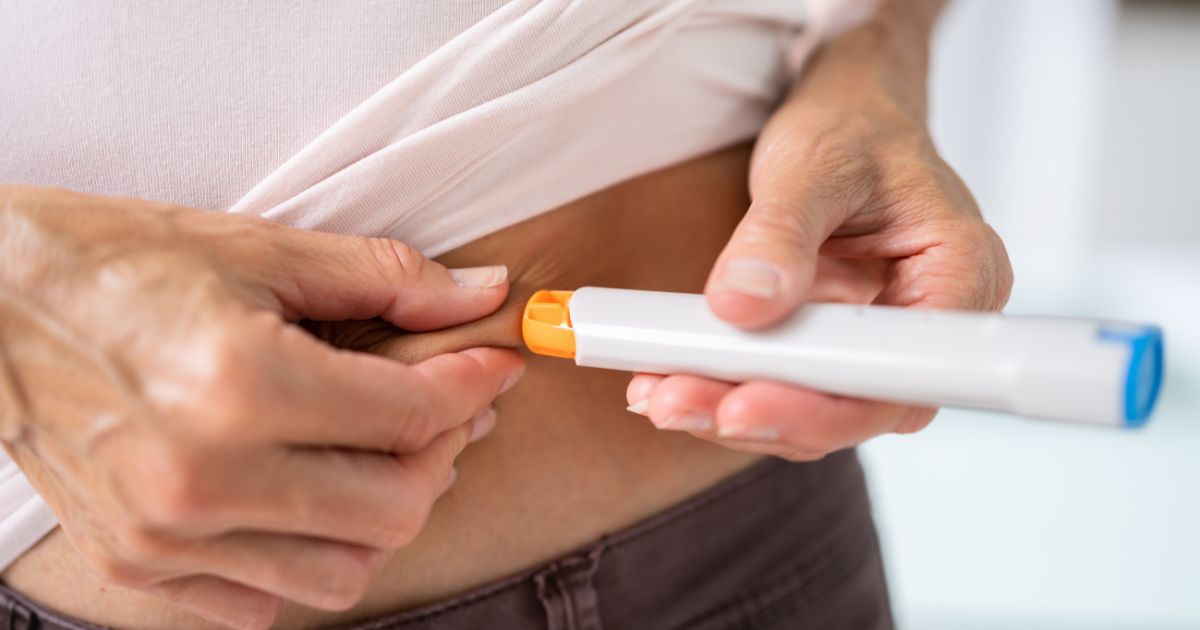
An auto-injector is a pre-filled, spring-loaded pen that allows even a complete bystander to deliver an exact dose of adrenaline through clothing into muscle within seconds. Three brands dominate the European market, and availability shifts with batch supply — always check with your pharmacist.
EpiPen and EpiPen Jr
The household name. EpiPen 0.3 mg is for adults and children over 30 kg; EpiPen Jr 0.15 mg is for children weighing 15–30 kg. The MHRA has issued specific guidance reinforcing the principle that EpiPen and Jext devices should be carried in pairs, and patients should attend regular refresher training with a trainer pen.
Jext (UK and parts of Europe)
A widely used alternative to EpiPen in the UK, dosed at 150 mcg or 300 mcg. Mechanism is similar to EpiPen, but training cues differ — devices are not interchangeable in muscle memory. If a patient has been switched between brands, they should re-train with the new device's trainer pen.
Emerade 150 / 300 / 500 mcg
Currently available in the Czech Republic and several continental European markets. Two practical advantages: a 500 mcg dose useful for heavier adults, and a longer needle reducing the risk of subcutaneous misfire in obese patients. Emerade was the subject of MHRA recalls in past years over an activation-mechanism defect; some batches were withdrawn from the UK market and supply has been variable. If you have an Emerade pen from earlier prescriptions, check with your pharmacist whether your batch is among those affected by recent recalls.
EURneffy: the nasal-spray adrenaline (2024–2025 launch)
In August 2024 the European Commission approved EURneffy 2 mg — the first needle-free alternative to auto-injectors for more than three decades. It is a single-dose nasal spray containing adrenaline, indicated for adults and children over 30 kg. Germany became the first EU country to receive it in mid-2025 through ALK. The MHRA approved EURneffy in the UK in July 2025, and in February 2026 the European Medicines Agency recommended a 1 mg variant for children weighing 15–30 kg. EURneffy is not yet a routine prescription option in every European market — but for patients with a profound needle phobia, or where storing two auto-injectors is impractical, it opens a real second line of defence. Ask your allergist about local availability.
Whatever device the patient carries, one rule applies universally: always carry two pens. The first may misfire, deliver into subcutaneous tissue, or simply prove insufficient — about one in five patients needs a second dose. A single auto-injector is inadequate cover. And the prescription is worthless without practice. Under the panic of an emergency, no one reads a leaflet. Use the trainer pen that comes free with every device, and run the drill with family, partners, schoolteachers and colleagues.
Reducing trigger exposure for known allergy patients
Adrenaline is the emergency brake. The everyday protection is reducing how often you meet your triggers in the first place. Two products we recommend most often at nanoSPACE:


Action plan: what to do once anaphylaxis is over
Surviving the acute episode is not the end of the story — it's the beginning. EAACI sets out a clear path that determines whether the next episode will be milder, similar or worse. The first step is laboratory confirmation of the diagnosis: a serum tryptase sample is drawn from the vein. Tryptase is an enzyme released from mast cells; it peaks one to two hours after the reaction and returns to baseline within 24 hours. An elevated value is the biological footprint of anaphylaxis and protects the patient from a later disputed diagnosis.
The second step is a mandatory referral to a specialist allergy clinic. There the allergist identifies the trigger (skin tests, specific IgE, controlled provocation if needed) and prescribes two auto-injectors. The third — and most often neglected — step is a written anaphylaxis action plan. It is a one-page visual document the patient and family carry with them at all times: in the school bag, on the fridge, with the teachers. The plan distinguishes a mild reaction (oral antihistamine) from a severe one (auto-injector and 999). Without an action plan, people freeze in the panic. With one, the family or first bystander has an algorithm that decides for them.
Patients with a history of anaphylaxis should also wear a medical-alert bracelet or ID card identifying their trigger — if they lose consciousness, that may be the only way paramedics will understand what happened. And if the patient also has pollen or dust-mite allergy, lowering the daily allergen load makes practical sense. Practical advice we give nanoSPACE customers: keep an anti-dust mite bedding set in the bedroom (clinical reviews show HEPA-equivalent reductions in mite allergen exposure during sleep), and use a nanofibre FFP2 respirator as a simple barrier during peak-pollen days outdoors. Neither of those is a treatment for anaphylaxis, but reducing the steady drumbeat of minor reactions helps keep the immune system from being on a constant hair-trigger.
Tip: The Allergy Calendar: when each pollen species peaks across the year
The numbers that prove this isn't theoretical
Anaphylaxis is increasing in frequency: the latest estimate is 46 cases per 100,000 people per year. Hospital admissions for severe allergic reactions have tripled in the past two decades. Mortality has, encouragingly, remained stable (0.002 to 2.51 deaths per million per year), thanks largely to better acute care.
The same data also expose an uncomfortable truth. In 70 % of fatal cases, adrenaline was either never given or given too late. The auto-injector was in the rucksack but the patient was afraid to use it. The parent didn't recognise the symptoms and waited for the ambulance. The restaurant didn't know the sauce contained peanuts. Half of all deaths happen within the first hour — faster ambulances would not have helped most of them, because the reaction outpaced the response. Adrenaline in the hands of the patient or first bystander is the only treatment that reaches the casualty in time.
The classic fatal-anaphylaxis profile is a teenager or young adult with a nut allergy and poorly controlled asthma. Asthma is a major risk multiplier — hyperreactive airways close down rapidly during a reaction. If a household has both diagnoses in the same person, vigilance should be at maximum and auto-injectors stationed in three places: home, school and car.

Practical questions we hear most often
How long do I need to stay in hospital after adrenaline?
EAACI 2021 advises observation for at least 6–8 hours in patients with respiratory involvement, and 12–24 hours for higher-risk profiles (severe initial hypotension, more than one adrenaline dose, history of asthma). The reason is the risk of biphasic anaphylaxis — symptoms returning without further allergen exposure.
What if I'm not certain it's anaphylaxis?
If a patient at risk (previous anaphylaxis, insect-venom or known food allergy) shows any combination of symptoms — breathlessness and hives, dizziness and lip swelling, vomiting and weakness — give the adrenaline. Standard intramuscular adrenaline given to a healthy person will not cause harm. At worst it produces a transient tremor, fast heartbeat and pallor that resolve within fifteen minutes. The risk of withholding adrenaline far exceeds the risk of giving it "unnecessarily".
Three things to take with you
Anaphylaxis is measured in seconds, not hours. If you live with allergy to insects, nuts, milk, medication or anything else flagged as significant by your allergist, always carry two adrenaline auto-injectors and train your family, partner, colleagues and your children's teachers to use them. Print out a written action plan and stick it on the fridge — memory fails under stress, paper does not. And when the reaction starts, do not wait to see what happens. Adrenaline into the thigh, lay flat with legs raised, dial 999 or 112. In that order. That is the entire protocol that keeps people alive.
Frequently asked questions
Can I use an adrenaline auto-injector through clothing?
Yes. EpiPen, Jext and Emerade are designed to penetrate ordinary fabric (jeans, jumpers). There is no time to undress the patient. The injection site is always the outer mid-thigh (the anterolateral aspect), where the muscle is most richly perfused and absorption is fastest.
How soon can I give a second dose?
If symptoms have not improved after five minutes (persistent breathlessness, hypotension, worsening swelling), give a second dose using the second pen. That's why every patient at risk should carry two devices. Only 2.2 % of patients fail to respond even to two intramuscular doses.
How long does the adrenaline in an auto-injector remain effective?
Shelf life is typically 18–24 months from manufacture (check the date on the pen). Inspect expiry quarterly and look at the solution colour through the viewing window — if it has darkened, turned brown or shows crystals, replace the pen immediately. Store at room temperature (below 25 °C), not in the fridge, and never in a hot car.
Can I have anaphylaxis to something I've never reacted to before?
Yes. The first clinically apparent anaphylactic reaction can be the first reaction itself, because immune sensitisation (the formation of specific IgE antibodies) often develops silently during earlier, unnoticed exposures. People with atopic eczema, asthma or pre-existing food allergy are at higher risk for a first episode. Any unusually strong reaction to a food, medication or insect sting deserves an allergist's evaluation — don't wait for a worse second episode.
Does the EURneffy nasal spray work as well as a classic auto-injector?
The clinical studies submitted for EMA, MHRA and FDA approval showed comparable pharmacokinetic profiles — similar onset and similar peak adrenaline blood levels. EURneffy is approved for adults and children over 30 kg (2 mg) and the pending 1 mg variant is for children weighing 15–30 kg. It is not for everyone: severe nasal congestion during an active allergic-rhinitis attack may reduce absorption. Availability is still expanding country by country in 2025–2026, so ask your allergist about local supply.
Sources
- Cardona, V., Ansotegui, I. J., Ebisawa, M., et al. (2020) 'World Allergy Organization Anaphylaxis Guidance 2020', World Allergy Organization Journal, 13(10).
- Muraro, A., Worm, M., Alviani, C., et al. (2021) 'EAACI guidelines: Anaphylaxis (2021 update)', Allergy, 76(5), 1493–1517.
- EAACI (2024) 'Anaphylaxis Guide V3', European Academy of Allergy and Clinical Immunology.
- BSACI (2023) 'Adrenaline auto-injector prescription for patients at risk of anaphylaxis: BSACI guidance for primary care', British Society for Allergy and Clinical Immunology.
- MHRA (2023) 'Adrenaline auto-injectors (AAIs): new guidance and resources for safe use', UK Government Drug Safety Update.
- National Center for Biotechnology Information (2024) 'Fatal Anaphylaxis: Mortality Rates and Risk Factors', PMC10913226.
- National Center for Biotechnology Information (2021) 'Biphasic Anaphylaxis: A Review of the Literature', PMC8323456.
- National Center for Biotechnology Information (2021) 'Adrenaline and Corticosteroids in Anaphylaxis', PMC8139870.
- European Medicines Agency (2024) 'EURneffy – European Public Assessment Report', EMA.
- ARS Pharmaceuticals (2025) 'EURneffy adrenaline nasal spray approved in the UK by the MHRA', press release, 18 July 2025.
- Greiwe, J., Bernstein, J. A. (2025) 'Optimizing Adrenaline Administration in Anaphylaxis: Clinical Practice Considerations and Safety Insights', PMC12328063.