
A quick internet search turns up dozens of articles recommending vitamin E for scars as a tried-and-tested recipe for smooth, flawless skin. Break open a capsule, rub the oil onto the scar, and in a few weeks it vanishes. Sounds simple. But what does the science actually say? A study published in 1999 by dermatologist Dr Leslie Baumann of the University of Miami shook this belief to its foundations: in 90 % of patients, vitamin E for scars either had no effect whatsoever or actually made the scar look worse. And in a third of participants, it triggered contact dermatitis. Before you write off vitamin E entirely, however, wait — the story is considerably more nuanced than it first appears. Vitamin E genuinely plays an important role in protecting healing skin, but not in the way most people imagine. In this article, we will examine what the research truly says, when vitamin E for scars helps, and when its use is pointless — or even harmful.
Key Takeaways if You're Short on Time
- The Baumann 1999 study: in 90 % of patients, vitamin E for scars brought no improvement in appearance — in a third, it triggered contact dermatitis.
- Vitamin E protects healing skin from oxidative damage, but it does not work as an "eraser for old scars" — its strength lies in prevention, not in treating mature scars.
- Timing is everything: vitamin E is most effective during the remodelling phase (3–6 weeks after wound closure), when it shields newly formed collagen from free radicals.
- In combination with ethyl ferulate, the antioxidant protection of vitamin E doubles — a synergistic effect confirmed by studies in the Journal of Investigative Dermatology.
- The type of scar determines the approach: hypertrophic, atrophic, and keloid scars each require a different strategy — no universal solution exists.
Vitamin E for Scars — What the Scientific Studies Say
When dermatologist Dr Leslie Baumann designed her 1999 study on the effectiveness of vitamin E for scars after surgical procedures, she expected positive results. Vitamin E was at the time (and remains today) one of the most popular ingredients in scar-treatment products. The findings, however, surprised her. The study included 15 patients who had undergone skin surgery, where one half of each scar was treated with vitamin E (tocopheryl acetate) and the other half with petroleum jelly as a placebo. After 12 weeks, both physicians and patients assessed the appearance of the scars.
The result? In 90 % of patients, vitamin E for scars either produced no improvement or visually worsened the scar compared to petroleum jelly. And 33 % of participants developed contact dermatitis — redness, itching, and irritation at the site of vitamin E application. Published in Dermatologic Surgery, this study became one of the most cited papers on vitamin E in dermatology and remains the primary ammunition for sceptics to this day.
Why the Baumann Study Is Not the Final Word
The 1999 study, however, has significant limitations that are rarely discussed. First, it included only 15 patients — far too small a sample for statistically conclusive findings. Second, it dealt exclusively with scars from surgical removal of skin cancers, representing a very specific population (older patients, UV-damaged skin). And third, the assessment was partly subjective — a visual evaluation without a standardised measurement tool.
A systematic review by Tanaydin and colleagues from 2016, which analysed all available clinical studies on vitamin E for scars, arrived at a more cautious conclusion: current evidence does not allow us to definitively confirm or refute the effectiveness of vitamin E for scars. Most studies suffer from methodological shortcomings — small samples, short follow-up periods, different forms of vitamin E, and different types of scars. In other words: science does not have a definitive answer, because nobody has yet conducted a sufficiently large, high-quality trial.
How Vitamin E Actually Works in Healing Skin
To understand when vitamin E for scars helps and when it does not, you need to understand how wound healing works. Every wound — from a minor scratch to a surgical incision — progresses through four healing phases: haemostasis (stopping the bleeding), inflammation, proliferation (new tissue formation), and remodelling (restructuring of scar tissue).
Vitamin E is the primary fat-soluble antioxidant in human skin. During the inflammation and proliferation phases, it performs a vital function: it neutralises free radicals that are generated as a byproduct of intense cellular activity within the wound. These free radicals — if not eliminated in time — damage newly forming collagen, ceramides, and the cell membranes of keratinocytes. The outcome is disorganised, excessive, or insufficient scar tissue formation.
The Remodelling Phase — the Window of Opportunity for Vitamin E
A review article by Keen and Hassan (2016), published in the Indian Dermatology Online Journal (PMC4976416), summarises the role of vitamin E in dermatology and highlights an important fact: vitamin E demonstrably protects the lipids of the skin barrier from oxidation and supports the hydration of healing skin. The remodelling phase, which begins approximately three weeks after wound closure and lasts months to years, is the period during which collagen fibres within the scar are restructured and progressively organised. It is precisely during this phase that the antioxidant protection of vitamin E can help — not by "erasing" the scar, but by shielding new collagen from premature damage and allowing optimal remodelling.
This is a fundamental difference from the popular myth. Vitamin E for scars does not act as a rubber that wipes away old damage. It functions more like a shield that protects newly forming tissue at the right stage of healing. And that is precisely why timing matters — applying vitamin E to a mature scar that is years old has no scientific basis.
Different Scars, Different Approaches
Not all scars are the same, and therefore no universal solution can exist. The type of scar fundamentally determines which care has a chance of success.
Hypertrophic Scars
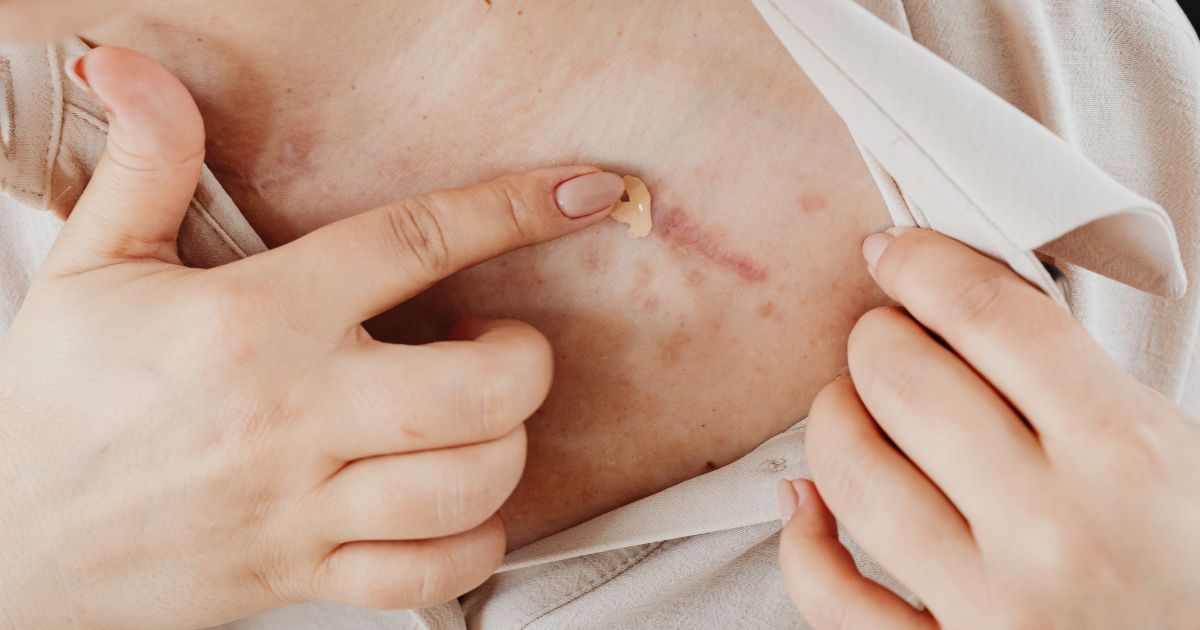
Hypertrophic scars are raised, red, and firm, but they do not extend beyond the boundaries of the original wound. They arise from excessive collagen production during healing. Vitamin E for scars of this type may have a supportive effect during the remodelling phase — antioxidant protection helps regulate collagen synthesis and reduces oxidative stress within the scar. Studies indicate, however, that silicone patches and gels, pressure therapy, or corticosteroid injections are more effective. Vitamin E here can serve as a complement, not as the primary treatment.
Atrophic Scars
Atrophic scars are indented — the skin at the scar site is thinner than the surrounding tissue because insufficient collagen was produced during healing. Classic examples are acne scars or chickenpox scars. For this type, vitamin E for scars is least effective, because the problem is not oxidative damage but a tissue deficit. Dermatological procedures such as microneedling, laser therapy, or hyaluronic acid fillers are demonstrably more effective for atrophic scars.
Keloid Scars
Keloids are scars that overgrow the boundaries of the original wound and can expand into surrounding healthy skin. They arise from a genetically predisposed excessive response to injury and are notoriously difficult to treat. For keloids, vitamin E for scars has no proven effect — treatment requires dermatological supervision and typically involves a combination of injection therapy, cryotherapy, or radiation.
Fresh Surgical and Traumatic Scars
Paradoxically, it is with fresh wounds that the role of vitamin E is clearest — not as a scar treatment per se, but as protection for healing skin. Applying a vitamin E product to the area surrounding a closed wound (never directly onto an open wound) helps shield newly forming tissue. The supportive effect is strongest when the product also contains other regenerative ingredients — oat oil for lipid-barrier repair, coconut oil for hydration, and ethyl ferulate for enhanced antioxidant protection.
Tip: How to Recognise a Damaged Skin Barrier and What to Do About It
Ethyl Ferulate and Vitamin E — a Synergistic Effect for Healing Skin
One of the most fascinating findings in modern dermatology is the synergistic interaction between vitamin E and ferulic acid. A study by Lin and colleagues from 2005, published in the Journal of Investigative Dermatology, demonstrated that adding ferulic acid to vitamins C and E doubled photoprotection — from 4-fold to 8-fold. This means that skin protected by this combination resists oxidative damage far more effectively than when vitamin E is used alone.
Why is this relevant for scars? Because UV radiation is one of the primary factors that worsen the appearance of scars. Fresh scars are extremely sensitive to sunlight — they lack sufficient melanin protection, and UV rays cause hyperpigmentation that visually accentuates the scar. The antioxidant duo of vitamin E plus ethyl ferulate shields healing skin from this damage and helps keep the scar's colour as close to the natural skin tone as possible.
Ethyl ferulate also has an advantage over free ferulic acid in terms of sustained release — whereas free ferulic acid releases 80 % of its content within 8 hours, ethyl ferulate releases only 25 % over the same period. This ensures continuous protection throughout the day, which is ideal for healing skin.
Editor's Pick
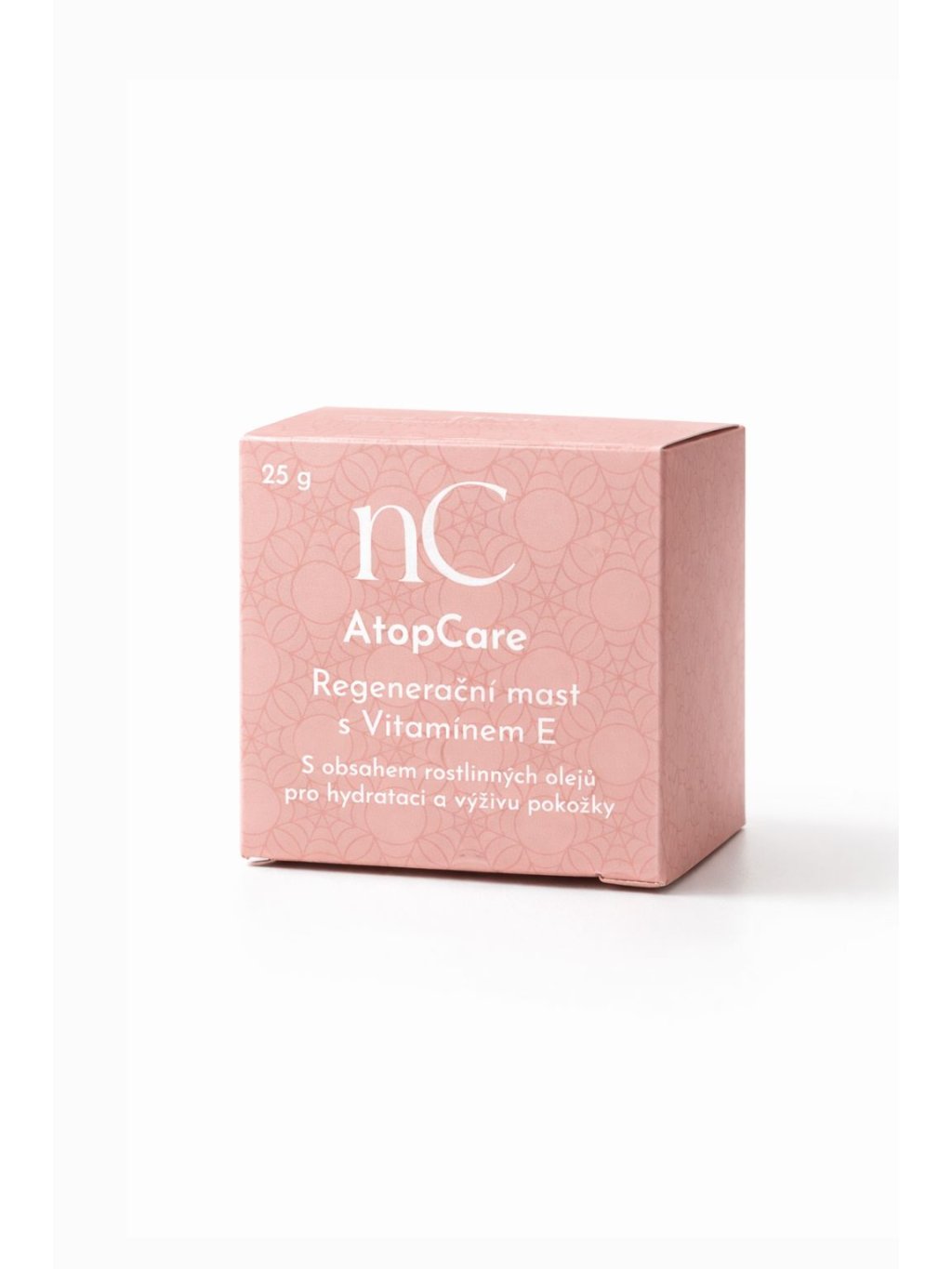
Regenerating Ointment with 5 % Vitamin E AtopCare
A 5 % vitamin E concentration combined with ethyl ferulate, oat oil, and coconut oil. Intensive antioxidant protection for healing skin — shields new collagen and supports skin-barrier regeneration. Free from parabens, silicones, and fragrance.
View
When Vitamin E for Scars Genuinely Helps — and When It Does Not
Based on the available scientific evidence, clear rules can be formulated about when it makes sense to use vitamin E for scars and when a different approach is preferable.
Vitamin E helps during the healing phase — that is, in the period from approximately 3 weeks to 6 months after wound closure. During this time, it protects newly formed tissue from oxidative damage, supports skin hydration, and in combination with ethyl ferulate provides protection against UV radiation, which can disfigure a scar through hyperpigmentation. The best results are achieved when a vitamin E product also combines other regenerative ingredients — oat oil, coconut oil, and shea butter.
Vitamin E does not help with mature scars older than a year, with keloid scars, with deep atrophic acne scars, or as a substitute for dermatological treatment in serious scarring conditions. If you have a scar that has been bothering you for more than a year, consult a dermatologist about laser therapy, microneedling, or silicone products — all of which have a considerably stronger evidence base for older scars.
Be mindful of contact dermatitis as well. The Baumann study showed that in a third of patients, vitamin E triggered an allergic reaction. Before using any vitamin E product on a scar regularly, first test a small amount on healthy skin on the inner forearm and wait 24 hours. If no redness or itching appears, the product is safe for you to use on the scar.
Tip: Vitamin E for the Skin — Why 95 % of Creams Contain Too Little
A Practical Guide — How to Care for a Scar Correctly
Proper scar care differs depending on which healing phase you are in. The following overview is based on dermatological recommendations and available clinical studies.
In the first days after wound closure (0–3 weeks), keep the scar clean and moist. Use sterile dressings as directed by your doctor. During this phase, do not apply vitamin E or any other cosmetic product to the wound — healing tissue needs rest. You can, however, treat the surrounding skin with a regenerating ointment to prevent drying and cracking around the scar.
During the remodelling phase (3 weeks to 6 months), begin regular application of a product containing vitamin E. Apply a thin layer twice daily — morning and evening — gently massaging it into the scar and its surrounding area. The massage itself is important: it stimulates blood flow, supports collagen fibre reorganisation, and enhances absorption of active ingredients. Throughout this phase, protect the scar rigorously from sunlight — either with an SPF 50+ sunscreen or by physically covering it.
After 6 months, assess the scar's condition. If its appearance has improved significantly, continue with hydrating care. If the scar still troubles you, explore dermatological options. And remember: even months and years later, caring for the skin in the scar area remains beneficial — hydrated, nourished skin always looks better than dry, neglected skin, regardless of whether a scar lies beneath it.
For caring for cracked skin on the hands, where small scars form from repeated damage, the ideal combination is a regenerating ointment and a hand cream. The AtopCare Hand Cream with vitamin E and oat oil helps hand skin regenerate and prevents further cracking. And if you are dealing with extremely dry skin that heals slowly, read our article on what actually works for extremely dry skin.
Regenerative Vitamin E Care for Healing Skin

Stretch Marks — a Special Type of Scar Where Vitamin E Plays a Role
Stretch marks (striae distensae) are a peculiar type of scar that forms not from external injury but from internal stretching of the skin — during pregnancy, rapid growth in puberty, or significant weight changes. Unlike surgical scars, there is no breach of the skin surface; instead, collagen and elastin fibres within the dermis rupture.
The role of vitamin E for scars of this kind differs from its role with classical scars. A Cochrane review from 2012 did not confirm that vitamin E prevents stretch marks, but regular hydration of the skin with vitamin E products demonstrably improves elasticity and alleviates the itching that accompanies skin stretching. And that matters — because skin that does not itch gets scratched less, and skin that is well hydrated adapts to tension more effectively.
If stretch marks are a concern or you want to prevent them during pregnancy, read our detailed article on the best cream for stretch marks, where we examine the evidence for individual products and ingredients.
Conclusion — Vitamin E for Scars Is Neither a Miracle Nor a Myth
The truth about vitamin E for scars lies between two extremes. It is not a miraculous ingredient that erases old scars — that would be a false claim. But neither is it a useless ingredient, as a simplified reading of the Baumann study might suggest. Vitamin E is a demonstrably effective antioxidant that protects healing skin from oxidative damage, supports hydration, and in combination with ethyl ferulate provides superior UV protection — against the very factor that makes scars most visible.
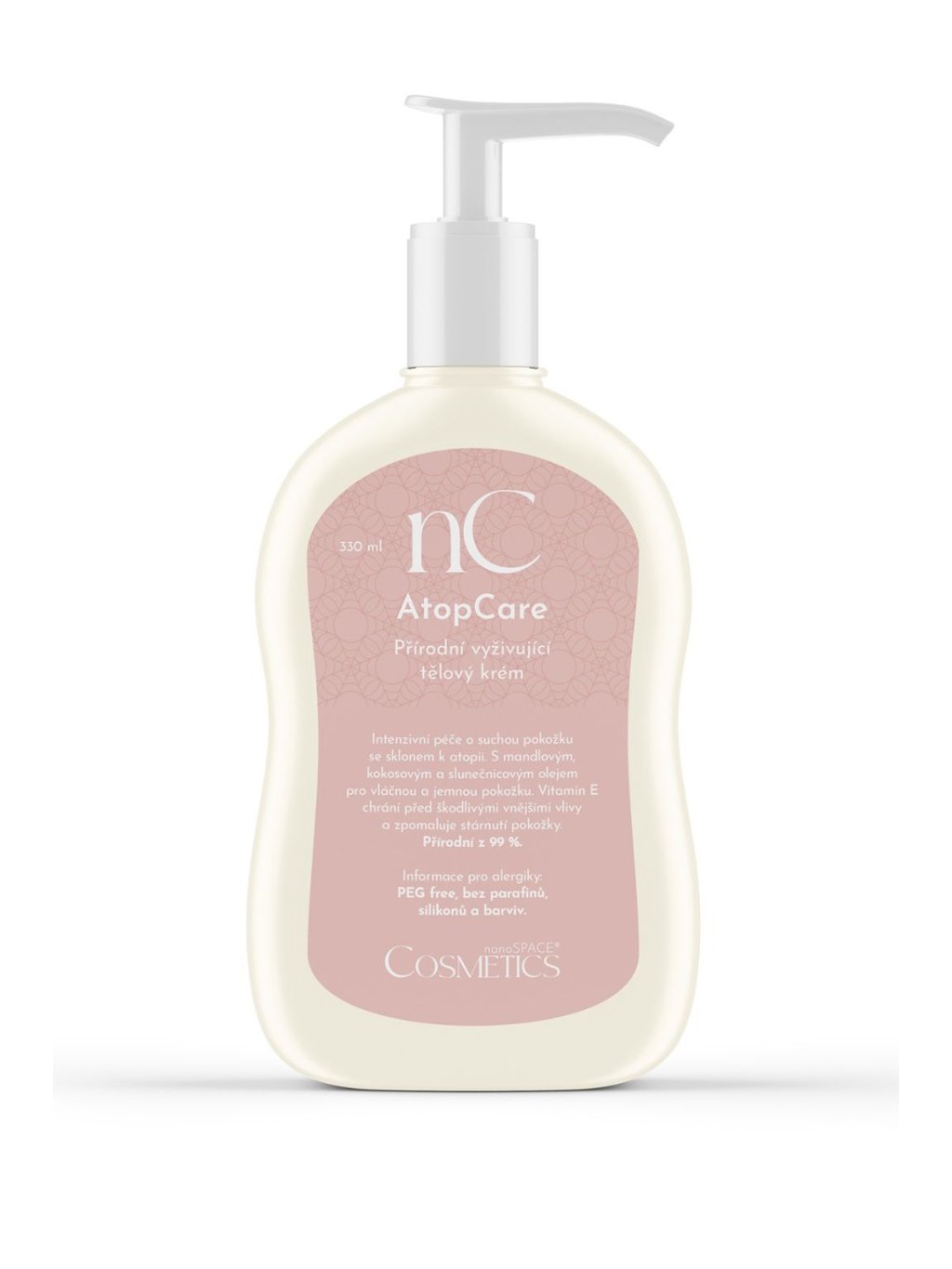
If you have a fresh scar and want to support its healing, a product containing vitamin E and regenerative oils is a sensible choice. The AtopCare Regenerating Ointment with its 5 % vitamin E concentration, ethyl ferulate, and oat oil provides the skin with exactly what it needs during the healing phase — antioxidant protection, hydration, and support for skin-barrier renewal. For whole-body care of scarred skin, choose the AtopCare Nourishing Body Cream, which hydrates the skin throughout the day. But maintain realistic expectations: vitamin E for scars helps most when you use it at the right time, on the right type of scar, and as part of comprehensive care — not as an isolated miracle remedy.
Frequently Asked Questions
Does vitamin E help with old scars?
For mature scars older than a year, vitamin E has no proven effect on improving their appearance. Vitamin E is most effective during the healing phase (3 weeks to 6 months after wound closure), when it protects newly formed collagen from oxidative damage. For older scars, dermatological methods — laser therapy, microneedling, or silicone products — are more effective.
Can vitamin E for scars cause an allergic reaction?
Yes. The 1999 Baumann study showed that in 33 % of patients, vitamin E triggered contact dermatitis — redness, itching, and skin irritation. Before regularly using any vitamin E product on a scar, perform a patch test on a small area of healthy skin on your inner forearm. If no reaction appears within 24 hours, the product is safe for you.
When should I start applying vitamin E to a scar after surgery?
Apply vitamin E to a scar only after the wound has fully closed — typically 2–3 weeks post-surgery, or as directed by your surgeon. Never apply cosmetic products to an open wound. The greatest benefit comes from regular application during the remodelling phase, approximately 3 weeks to 6 months after the procedure, twice daily with gentle massage.
Is pure vitamin E from a capsule better, or a cream containing vitamin E?
A cream or ointment with vitamin E is the better choice. Pure vitamin E from a capsule has an excessively high concentration, can irritate the skin, and lacks other supportive ingredients. Dermocosmetic products contain vitamin E at an optimal concentration (2–5 %) combined with other regenerative ingredients — ethyl ferulate, oat oil, coconut oil — that amplify its effect and improve absorption.
Does vitamin E work on acne scars?
Acne scars are predominantly atrophic (indented) — they form due to insufficient collagen, not oxidative damage. The evidence for vitamin E for scars from acne is insufficient. For this type of scar, dermatological procedures such as microneedling, fractional laser, or chemical peels are more effective. Vitamin E may provide supportive hydration, but as the primary solution for acne scarring, it is not enough.

Sources
- Baumann, L., Spencer, J. (1999) 'The Effects of Topical Vitamin E on the Cosmetic Appearance of Scars', Dermatologic Surgery, 25(4), pp. 311–315.
- Keen, M. A., Hassan, I. (2016) 'Vitamin E in dermatology', Indian Dermatology Online Journal, 7(4), pp. 311–315 (PMC4976416).
- Tanaydin, V. et al. (2016) 'The Role of Topical Vitamin E in Scar Management: A Systematic Review', Aesthetic Surgery Journal, 36(8), pp. 959–965.
- Lin, J. Y. et al. (2005) 'Synthesis of a topical antioxidant formulation containing vitamin C, vitamin E, and ferulic acid', Journal of Investigative Dermatology, 125(4), pp. 826–832.
- Khoo, T. L., Halim, A. S., Zakaria, Z. (2016) 'The Application of Topical Negative Pressure and Vitamin E on Scar Quality', Plastic and Reconstructive Surgery Global Open, 4(2), e646.
- Ud-Din, S., McGeorge, D., Bayat, A. (2016) 'Topical management of striae distensae (stretch marks): prevention and therapy of striae rubrae and albae', Journal of the European Academy of Dermatology and Venereology, 30(2), pp. 211–222.