
Your child scratches until they bleed at night. In the morning, the creases of their elbows are red, their cheeks are covered in dry flakes, and you feel helpless because no cream seems to work long enough. Atopic eczema in children affects 15 to 30 per cent of the paediatric population and is the most common chronic skin condition of childhood. The good news? In 60 to 70 per cent of children, the condition improves with age or disappears entirely. The bad news? Until that happens, your child's skin needs daily care that does not overload it — free from unnecessary chemicals, fragrances, and irritants. In this article, you will learn what triggers atopic eczema in children, how to care for the skin properly, which ingredients to look for, and which ones to avoid at all costs.
Key Takeaways if You're Short on Time
- Atopic eczema in children affects up to 30% of children and manifests as dry, itchy skin, redness, and flaking. It most commonly appears before the age of five.
- The foundation of care is regular moisturising with emollients — at least twice daily, always within three minutes after bathing while the skin is still damp.
- Vitamin E at a 5% concentration reduces eczema severity — a 12-week study showed a 52% decrease in the SCORAD index in children with mild to moderate atopic eczema.
- Avoid products containing parabens, silicones, and fragrances — they irritate the compromised skin barrier and can trigger eczema flare-ups.
- If eczema does not respond to emollients within two weeks, visit a paediatric dermatologist — the child may need short-term corticosteroid treatment or there may be an infection.
What Is Atopic Eczema and Why Does It Affect So Many Children
Atopic eczema (atopic dermatitis) is a chronic inflammatory skin condition with a genetic basis. If one parent has atopy (eczema, asthma, or hay fever), the probability of eczema developing in their child is approximately 50 per cent. If both parents are atopic, this rises to 80 per cent. Genetics, however, is not the only factor — external influences that disrupt the skin barrier also play a role in the development of atopic eczema in children.
In healthy skin, the stratum corneum (the horny layer) forms a tight barrier thanks to a balanced ratio of ceramides, cholesterol, and fatty acids in a 1:1:1 proportion. In children with atopic eczema, this barrier is compromised — ceramides are deficient, the skin loses water faster, and it becomes more permeable to allergens, bacteria, and irritants. The result is a vicious cycle: dry skin itches, the child scratches, scratching further damages the barrier, and inflammation deepens.
Where Atopic Eczema in Children Most Commonly Appears
The location of eczema changes with the child's age, which is one reason parents sometimes fail to recognise it early enough.
Infants (0 to 2 Years)
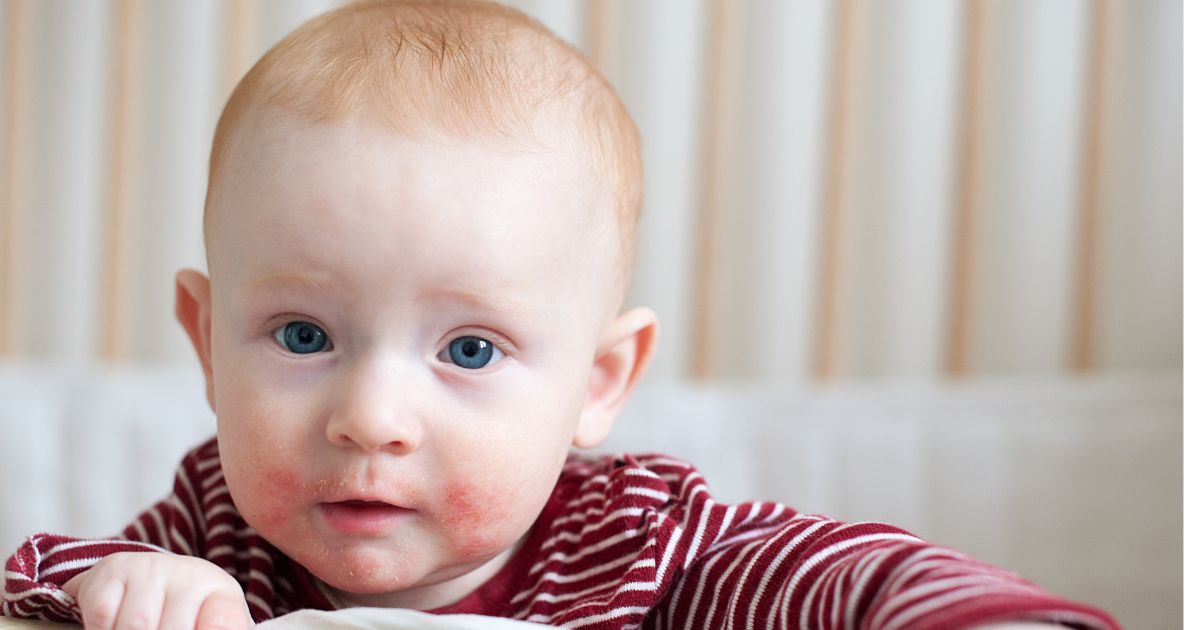
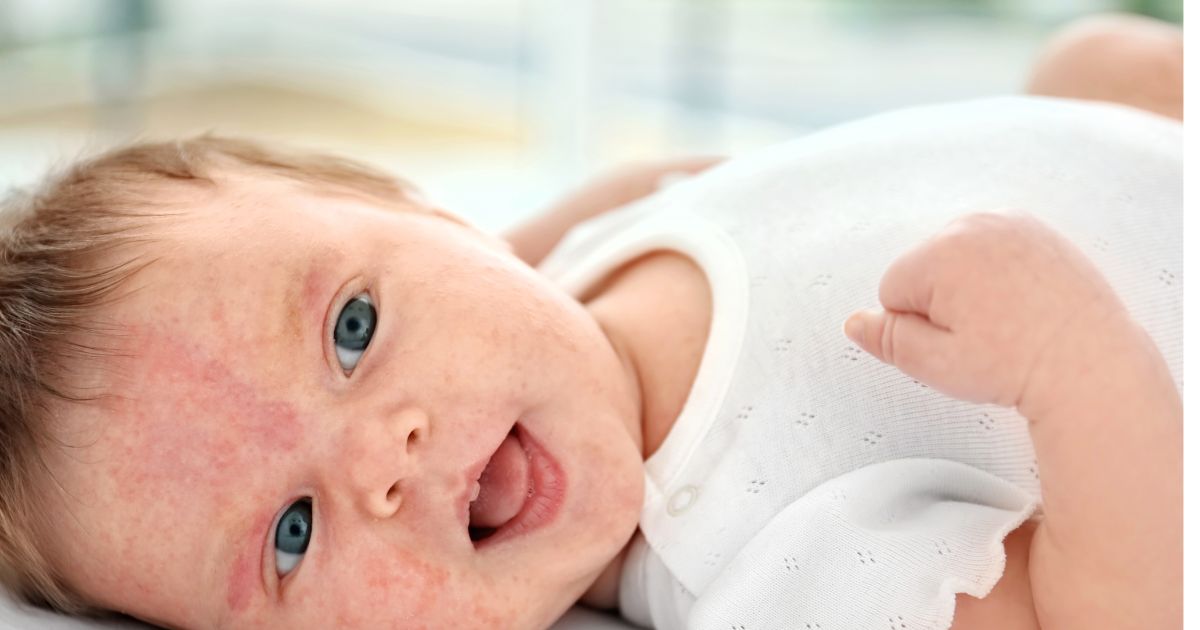
In the youngest children, atopic eczema in children most commonly presents on the cheeks, forehead, chin, and on the outer surfaces of the arms and legs. The skin is red, dry, scaly, and may weep. The nappy area is generally spared — it tends to be relatively protected by moisture.
Toddlers and Preschoolers (2 to 5 Years)
Eczema migrates to the creases of the elbows and behind the knees, the wrists, ankles, and behind the ears. The skin is dry, rough, and intensely itchy, particularly at night. At this age, lichenification also begins to appear — thickening and darkening of the skin resulting from chronic scratching.
School-Age Children and Adolescents (5+ Years)
Eczema typically persists in the flexural areas (elbows, knees, neck) but may also appear on the hands and around the eyes and mouth. In older children, dry, scaly eczema with pronounced lichenification is common. Atopic eczema in children at this stage can significantly affect self-confidence and social interactions, making effective treatment all the more important.
What Triggers Eczema Flare-Ups
Atopic eczema in children follows a chronic course with periods of calm and flare-ups. Knowing the most common triggers helps parents minimise the risk of flare-ups.
Dry, cold weather reduces air humidity and dries out the skin. Central heating in winter makes the situation worse — indoor humidity drops below 30 per cent, while the optimum for atopic skin is 40 to 60 per cent. A humidifier in the child's bedroom can bring visible improvement.
Sweat and overheating irritate eczematous skin. Dress your child in layers that can be easily removed and avoid synthetic materials that do not breathe. Cotton and bamboo are the gentlest choices.
Irritants in skincare products — soaps, shower gels containing SLS (sodium lauryl sulphate), products with fragrances, alcohol, and preservatives. This is precisely why choosing the right products for atopic skin care is so important.
Food allergies can worsen eczema in some children, particularly allergies to milk, eggs, wheat, and soya. However, never attempt an elimination diet without consulting an allergist — unnecessarily restricting a child's diet can cause more harm than good.
Stress and emotions — even in young children, stress (adapting to nursery, family tension) can trigger an eczema flare-up. Atopic eczema is not a psychosomatic condition, but stress demonstrably influences the skin's immune responses.
How to Care for Your Child's Skin Properly When They Have Eczema
Caring for atopic skin rests on three pillars: proper washing, immediate moisturising, and selecting products free from irritants. None of these steps alone is sufficient — only their combination delivers results.
Bathing — Less Is More
Bathe your child two to three times per week in lukewarm water (32 to 34 degrees Celsius) for a maximum of five to ten minutes. Hot water dries out the skin and worsens itching. Do not use soap or shower gels containing SLS — choose syndets (soap-free cleansers) or products with colloidal oat. After bathing, gently pat the skin dry with a towel — never rub.
The Three-Minute Rule
After bathing, you have approximately three minutes to moisturise the skin — during this window, the skin is optimally hydrated and the emollient locks in moisture. After three minutes, water evaporates from the surface and the effectiveness of moisturising drops significantly. Apply the emollient in a generous layer, following the direction of hair growth.
Emollients — The Foundation of Daily Care
Emollients (moisturising and softening preparations) are the absolute foundation of caring for atopic eczema in children. Use them at least twice daily — morning and evening — and always after bathing. During flare-ups, apply even more frequently. The right emollient relieves the sensation of dryness, soothes itching, strengthens the skin barrier, and reduces the need for corticosteroid products during flare-ups.
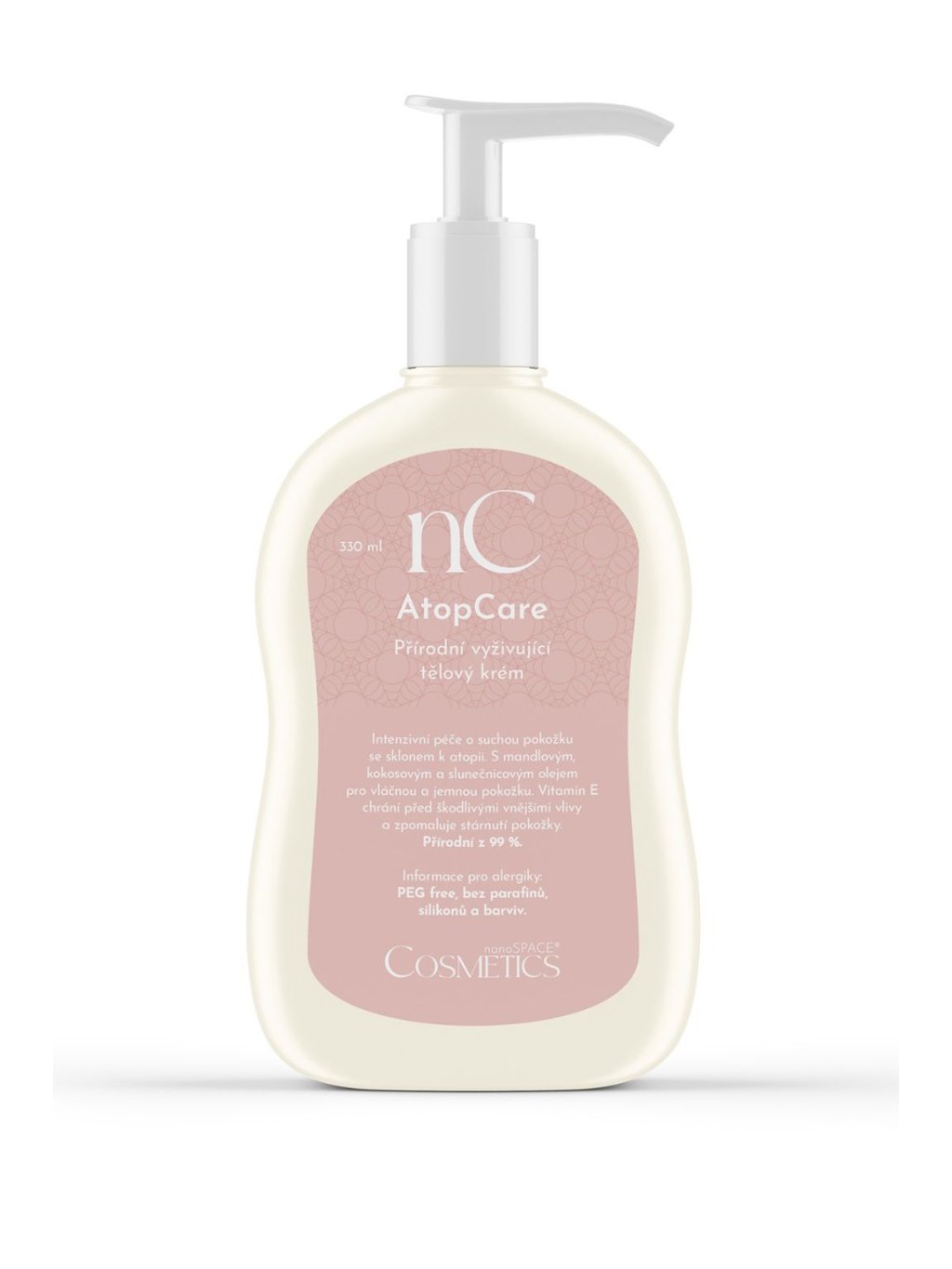
What should you look for in emollients for children? Ceramides, oat oil, coconut oil, vitamin E, and panthenol. What do you want to avoid? Parabens, silicones, fragrances, alcohol, and dyes. The AtopCare range from nanoSPACE meets all these criteria — the products are 100% vegan, free from parabens, silicones, and fragrances, and contain just nine carefully selected ingredients.
Vitamin E and Atopic Eczema in Children — What the Studies Show
The role of vitamin E in caring for atopic skin is the subject of growing scientific interest. Several studies have produced promising results that deserve attention.
Clinical Study in Children (2023)
An open clinical study published in the Journal of Cosmetic Dermatology followed children aged one month to twelve years with mild to moderate atopic eczema. After 12 weeks of using a moisturiser containing vitamin E (tocotrienols), the researchers recorded a decrease in the SCORAD index of 52.3 per cent, a reduction in itching intensity of 46 per cent, and an overall investigator-assessed improvement of 63.4 per cent. The product was evaluated as safe and effective for atopic skin care in young children.
Randomised Controlled Trial (2015)
A study published in the Journal of Research in Medical Sciences demonstrated that oral vitamin E (400 IU daily) significantly improved eczema severity scores (SCORAD) compared with placebo. Patients taking vitamin E showed less redness, less itching, and an overall better skin condition.
Why Vitamin E Helps Atopic Skin
Vitamin E acts on atopic eczema in children on several levels. As an antioxidant, it protects ceramides and fatty acids in the skin barrier from oxidative damage — particularly important for atopic skin, where the barrier is already compromised. As an anti-inflammatory agent, it suppresses the production of pro-inflammatory mediators (prostaglandin E2, nitric oxide) that sustain the chronic inflammation of eczema. And as a humectant, it enhances the skin's ability to retain water, thereby relieving dryness and itching.
In combination with oat oil, which increases ceramide production by 70 per cent, and coconut oil, whose monolaurin has antimicrobial effects against Staphylococcus aureus (the bacterium that colonises the skin in 90 per cent of atopic eczema patients), a synergistic effect emerges that none of these ingredients could achieve alone.
Editor's Pick
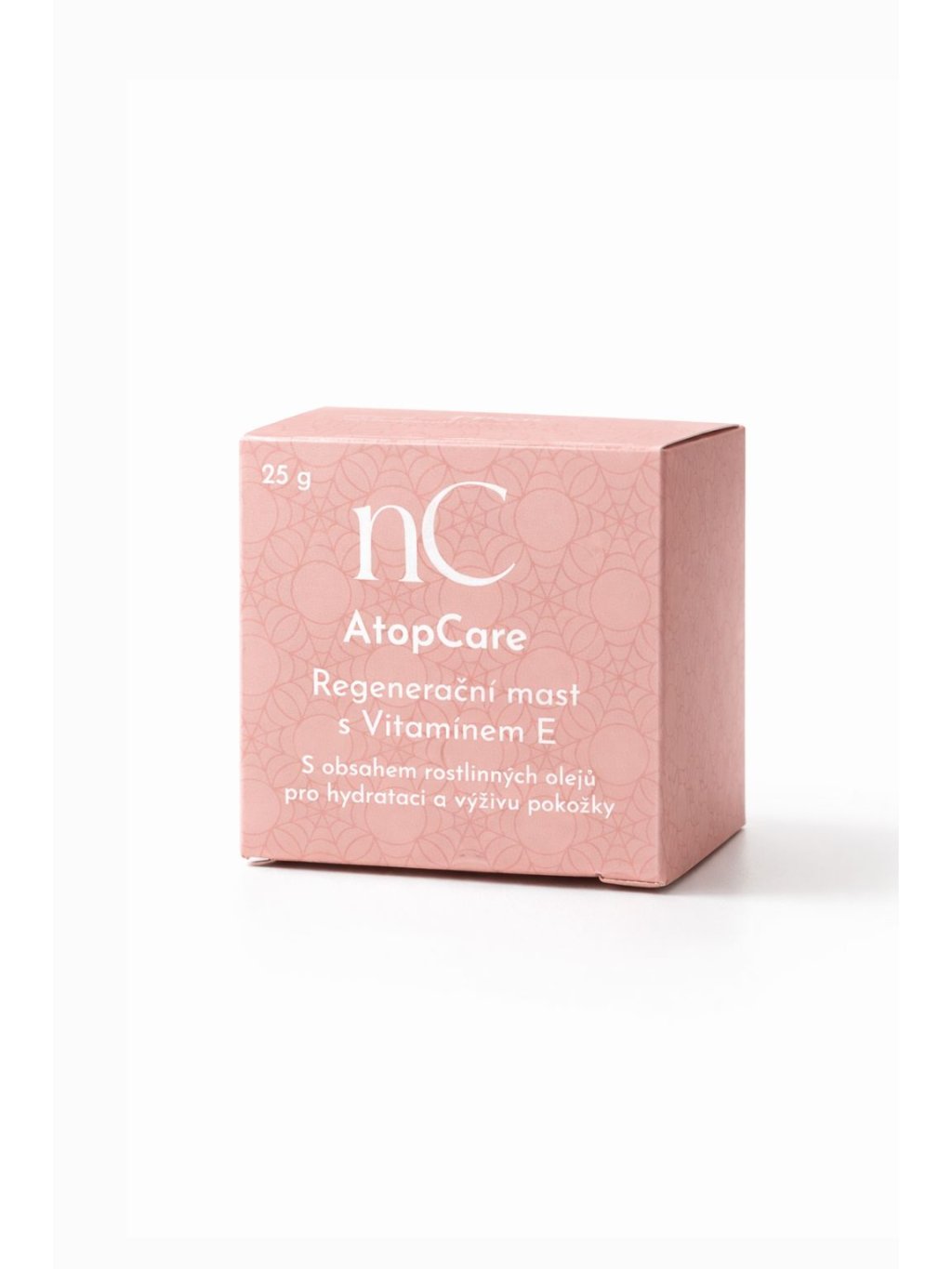
Regenerating Ointment with 5% Vitamin E AtopCare
Developed specifically for dry, irritated, and atopic skin. Contains just 9 ingredients — vitamin E, oat oil, coconut oil, ethyl ferulate, and hop extract. Free from parabens, silicones, fragrances, and alcohol. Suitable for children aged 3 and over.
€10
View ProductIngredients to Avoid in Products for Children
The skin of children with atopic eczema is extremely reactive. Ingredients that healthy skin tolerates without issue can trigger a flare-up in an atopic child. When selecting products, read the composition carefully and avoid the following substances.
Parabens (methylparaben, propylparaben) — preservatives that may disrupt hormonal balance and can trigger contact dermatitis in sensitive skin. For children's skincare, it is better to choose products preserved with natural alternatives.
SLS and SLES (sodium lauryl/laureth sulphate) — aggressive surfactants in soaps and shampoos that dissolve the protective lipids of the skin barrier. They are completely unsuitable for children with eczema.
Fragrances — synthetic scents are among the most common contact allergens. Even products labelled "hypoallergenic" may contain fragrance — always check the INCI list.
Alcohol (alcohol denat., isopropyl alcohol) — dries out the skin and disrupts the lipid barrier. It has no place in products for atopic skin.
Silicones (dimethicone, cyclomethicone) — create an occlusive film on the skin that temporarily smooths but prevents the skin from breathing and can clog pores.
When Medical Help Is Needed
Most episodes of atopic eczema in children can be managed with emollients and proper care. There are situations, however, where it is important to visit a paediatric dermatologist or paediatrician.
Eczema does not respond to emollients after two weeks of regular moisturising. Short-term corticosteroid treatment may be necessary — modern topical corticosteroids are safe when used correctly, even in young children.
The skin is weeping, smells, or has yellowish crusts. These are signs of bacterial superinfection (most commonly Staphylococcus aureus), which requires antibiotic treatment.
The child is scratching until they bleed and cannot sleep. Intense itching that disrupts sleep significantly affects the quality of life of the entire family and may require systemic treatment.
Eczema covers more than 20 per cent of the body surface. Extensive eczema needs a comprehensive dermatological approach, potentially including phototherapy or biological treatment for severe forms.
Suspicion of herpes infection (eczema herpeticum) — painful blisters clustered on eczematous skin, accompanied by fever. This is an urgent condition requiring immediate medical attention.
Gentle Care for Children's Skin

Conclusion — Patience and Proper Care Work Wonders
Atopic eczema in children is not a condition you can cure with a single cream. It is a state that demands daily attention, patience, and carefully chosen products. The foundation consists of regular moisturising with emollients free from irritants, gentle bathing, and recognising triggers. Products with vitamin E, oat oil, and coconut oil demonstrably strengthen the compromised skin barrier and reduce inflammation — and the fewer unnecessary ingredients a product contains, the lower the risk of irritation. Scientific studies confirm that the majority of children outgrow eczema. Until that happens, your task is to maintain their skin in the best possible condition — and with a little knowledge and the right products, that is entirely achievable.
Frequently Asked Questions
From what age can I use vitamin E products on my child?
Products containing vitamin E are generally safe for children aged three and over. For younger children, consult a paediatrician or dermatologist before use. The Regenerating Ointment AtopCare, with its minimalist formula (9 ingredients, free from parabens and fragrances), is suitable for children from age three.
How often should I moisturise my child's skin if they have eczema?
At least twice daily (morning and evening) and always within three minutes after bathing. During flare-ups, apply three to four times daily. Apply the emollient in a generous layer in the direction of hair growth. As a guide, a child with more extensive eczema may use 250 to 500 grams of emollient per week.
Can diet cure atopic eczema in children?
Diet alone will not cure eczema, but in some children, food allergies (milk, eggs, wheat, soya) can worsen the condition. Never attempt an elimination diet without consulting an allergist — unnecessarily restricting a child's diet can cause nutritional deficiencies. A varied diet rich in omega-3 fatty acids, vitamin E, and vitamin D is recommended.
Are corticosteroid creams dangerous for children?
Modern topical corticosteroids (hydrocortisone, mometasone) are safe when used correctly, even in young children. It is important to follow the doctor's instructions — apply only to affected areas, in the prescribed amount, and for the recommended duration. Fear of corticosteroids (corticophobia) leads many parents to under-treat their child, which paradoxically worsens the eczema.
Will my child outgrow atopic eczema?
In 60 to 70 per cent of children, atopic eczema significantly improves or disappears entirely with age, most commonly around puberty. In the remaining 30 to 40 per cent, it persists into adulthood but usually in a milder form. Proper care during childhood — regular moisturising, strengthening the skin barrier, and minimising triggers — can positively influence the course of the condition.

Sources
- How, K. N. et al. (2023) 'Effectiveness and safety of a moisturizer containing tocotrienol-rich composition in children with mild to moderate atopic dermatitis', Journal of Cosmetic Dermatology, 22(4), pp. 1234–1241.
- Javanbakht, M. H. et al. (2011) 'Randomized controlled trial using vitamins E and D supplementation in atopic dermatitis', Journal of Dermatological Treatment, 22(3), pp. 144–150 (PMC4755091).
- Huang, Y. et al. (2024) 'Causal role of vitamin E in atopic dermatitis risk: A Mendelian randomization study', Food Science & Nutrition, 12(5), pp. 3847–3855 (PMC11266936).
- Keen, M. A., Hassan, I. (2016) 'Vitamin E in dermatology', Indian Dermatology Online Journal, 7(4), pp. 311–315 (PMC4976416).
- Wollenberg, A. et al. (2022) 'European guideline (EuroGuiDerm) on atopic eczema', Journal of the European Academy of Dermatology and Venereology, 36(9), pp. 1409–1431.