
Ozone disinfection is one of the most effective ways to clean the air, surfaces and textiles in an enclosed space all at once. It reliably destroys bacteria, mould, viruses, dust mites and the molecules behind stubborn odours – and it does so without a single drop of chemicals. The catch is that the very power that breaks down a microbe's cell wall is also dangerous to you. That is why the sensible question is not whether ozone works, but how to use it safely and which ozone disinfection risks to avoid. This article is a practical guide to the hazards, the symptoms of overexposure and the legitimate uses of ozone disinfection at home, in your car and in the workplace.
Essential takeaways if you're short on time
- Ozone is harmless at low concentrations and toxic at high ones. The strength that makes it such an effective disinfectant is also its primary hazard – concentration and exposure time dictate everything.
- Nobody and nothing living should be in the room during treatment. People, pets and even houseplants must be removed; the door must stay shut, and you should start the generator from outside using a timer.
- After the cycle ends, wait one to two hours before airing the room thoroughly. Ozone naturally breaks back down into ordinary oxygen (O2), and once the space has been ventilated, there is no remaining risk whatsoever.
- Ozone disinfects air and surfaces without chemicals. As a gas, it reaches places a cloth never could – such as textiles, upholstery and deep crevices. Just exercise caution with rubber, sensitive plastics and corrosion-prone objects.
- For home use, a generator with an ozone destructor is the ideal choice. It actively breaks down residual ozone after the cycle, allowing you to re-enter the room sooner and with complete peace of mind.
What ozone is and how it disinfects
Ozone, sometimes known as active oxygen, is a molecule composed of three oxygen atoms (O3). It forms when ordinary atmospheric oxygen (O2) is exposed to an electrical discharge or ultraviolet light – precisely what happens in nature during a thunderstorm, leaving that crisp, "clean" smell hanging in the air after a lightning strike. An ozone generator simply replicates this process: it draws in the surrounding air, passes it through a high-voltage electrical field and produces ozone at the outlet.
The third oxygen atom is only loosely bound to the molecule and readily breaks away. That is the secret to its efficacy. Ozone is one of the most powerful oxidising agents readily available to us. When it encounters a bacterium, virus, mould spore or odour molecule, this highly reactive atom literally tears its structure apart. It oxidises the cell wall, causing what is known as lysis – the rupturing of the cell membrane. In viruses, ozone damages the protein coat and the nucleic acid within, preventing them from multiplying. Unlike conventional air fresheners, this is not merely a case of masking a smell with a fragrance. This is why ozone disinfection physically destroys both the source of the odour and the microbes themselves.
Once its work is done, ozone naturally reverts to ordinary oxygen. It leaves no chemical residues or leftover deposits – just clean, fresh air. This is an enormous advantage over traditional chemical disinfectants, but it is also why we must be cautious about when we re-enter the room. Tip: If you are curious about the technology behind it, read up on what an ozone generator is, its benefits and how it works.
The main ozone disinfection risks
Here, we must be entirely transparent. While ozone is an exceptional disinfectant, it is not a gas you can safely breathe. At the concentrations produced by a generator during a cycle, ozone is a severe respiratory irritant, and in higher doses, it becomes toxic. International health authorities have therefore established strict, low limits for prolonged exposure – for instance, the US Environmental Protection Agency sets a safe eight-hour limit of 0.08 ppm, while OSHA enforces a workplace limit of 0.1 ppm. The concentrations deliberately generated during ozone disinfection are many times higher. Therefore, one simple, non-negotiable rule applies: during ozone treatment, there must be no people, pets or living plants in the room.
The danger does not stem from ozone being unpredictable; it arises solely from remaining in the treated space while a cycle is running, or from re-entering the room too soon after it has finished. Once the ozone has reverted to oxygen and the room has been thoroughly aired, the danger disappears entirely. A secondary, milder risk concerns materials – as a strong oxidising agent, ozone can degrade rubber, certain plastics and corrosion-prone metals. We will cover this in more detail later.
Ozone poisoning: how to recognise the symptoms
If someone inhales ozone at high concentrations, their body will react fairly quickly. Ozone irritates the mucous membranes and airways, so the initial warning signs tend to be breathing difficulties and a burning sensation. Typical symptoms of ozone overexposure include:
- An irritating cough and a burning throat – ozone inflames the lining of the airways, making a dry, scratchy throat one of the earliest signs.
- Tightness or chest pain – particularly when taking a deep breath or during physical exertion.
- Shortness of breath and difficulty breathing normally – often more noticeable when moving around.
- Eye irritation and watering – including burning, itchy or red eyes.
- Headaches – a common symptom of elevated exposure.
- Worsening of asthma or COPD – for individuals with asthma or chronic respiratory conditions, ozone can aggravate symptoms far more severely than in a healthy person.
In practice, these symptoms are rare. If you follow the correct procedures, you will never encounter ozone at disinfection concentrations. However, it is crucial to be aware of them so you can recognise if you have re-entered a room too soon and know to leave immediately.
What to do if you suspect ozone poisoning
If you notice any of the above symptoms in yourself or others following ozone exposure, act calmly but swiftly. Leave the affected space immediately and move to fresh air – ideally outdoors. If it is safe to do so, open the windows and doors to ventilate the room as rapidly as possible. Try to breathe slowly and deeply to help your body recover. Most mild irritation will ease on its own within ten to twenty minutes in the fresh air. However, if the symptoms are severe, persistent, or affect someone with asthma or a heart condition, do not hesitate to seek medical assistance.
How to disinfect with ozone safely, step by step
The good news is that safe ozone disinfection is not rocket science. A handful of straightforward steps will keep the entire process completely under control. Think of this as a checklist you can print out and pin up next to your generator.
1. Remove all living creatures and sensitive objects. Ensure all people and pets are out of the room; remove aquariums, pet cages and houseplants. Rubber items, sensitive plastics and anything of high monetary or artistic value should also be removed or securely covered.
2. Close the windows and doors. Ozone needs to operate in an enclosed space to reach an effective concentration. Seal any large draughty gaps, though there is no need to turn the room into an airtight vault.
3. Set the timer and start the generator from outside. A high-quality ozone generator will feature a timer. Set the cycle length to suit the size of the room, then leave immediately. Never remain inside while the device is running.
4. After the cycle ends, wait one to two hours. The generator will usually signal the end of its cycle with a beep. Do not re-enter straight away – give the ozone ample time to break back down into oxygen.
5. Air the room thoroughly. Open the windows to create a draught for several minutes before properly occupying the room again. After thorough ventilation, there is absolutely no remaining health risk, and you can fully enjoy fresh air free from odours or pollutants.
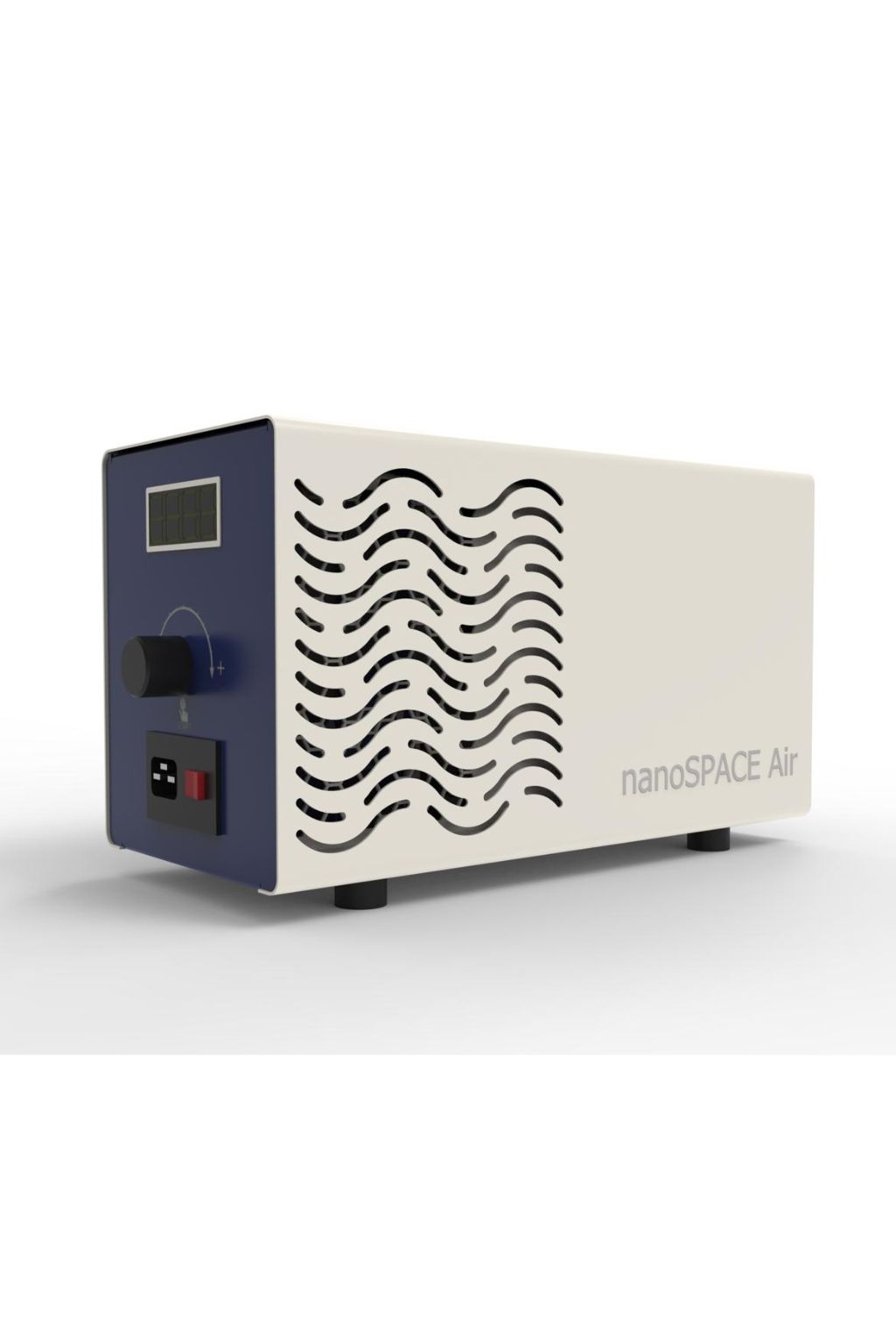
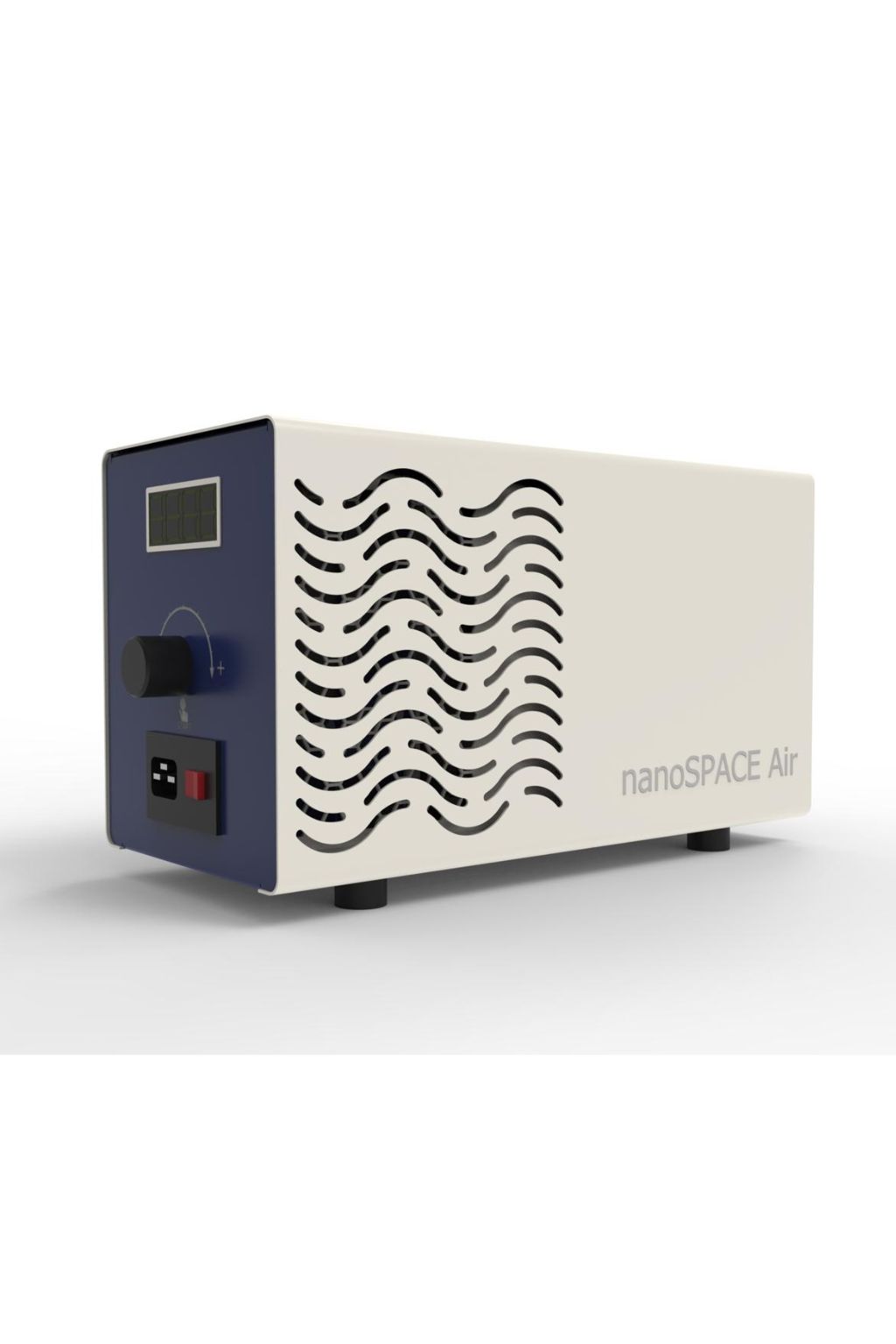
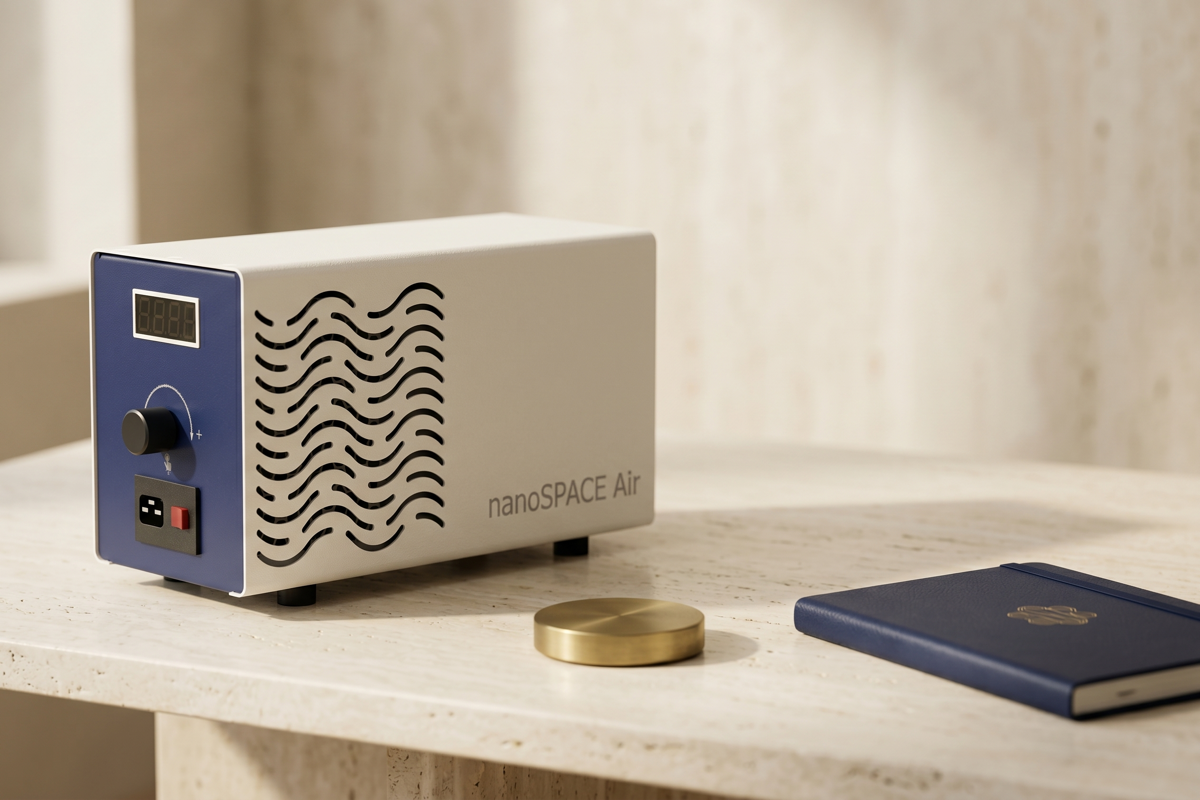
The smartest shortcut here is using an ozone generator with a built-in ozone destructor. After the disinfection cycle, it actively breaks down residual ozone into oxygen. This means you do not have to wait as long and can return to the room sooner and far more safely. This is precisely the technology utilised by the nanoSPACE Air range – such as the nanoSPACE Air 10 Destructor for medium-sized rooms, which we will discuss shortly.
Watch out for sensitive materials – ozone is not for everything
When carrying out everyday ozone disinfection, you do not need to empty the room entirely. On the contrary, the enormous advantage of ozone is that, as a gas, it reaches places you could never access with a cloth and spray. It effortlessly disinfects furniture, curtains, carpets, mattresses and anything else left in the room. This is precisely why ozone treatment is so popular among allergy sufferers.
There is, however, a category of items where caution is warranted. Because it is such a potent oxidising agent, prolonged or repeated exposure at high concentrations can damage corrosion-prone materials, accelerate the ageing and cracking of rubber, and degrade certain plastics. Rubber seals, rubber tubing, older electronics and fine art are particularly sensitive. These items are best removed from the treated room or covered securely. When it comes to cleaning a car with ozone, the golden rule is that short, correctly dosed cycles will not harm the vehicle, but repeated over-ozonation can degrade rubber door and window seals.
What ozone disinfection is genuinely best used for
Setting the risks aside for a moment, ozone is an exceptionally versatile tool. Here is an overview of the situations where ozone disinfection truly excels.
Eliminating odours that won't air out
Cigarette smoke deeply ingrained in upholstery, persistent pet smells, a musty cellar or the lingering odour after a fire – these smells are not merely on the surface but embedded within the materials themselves, meaning ordinary cleaning only temporarily masks them. Ozone, by contrast, breaks them down chemically at the very source. This is why it is so widely used in garages, hotels, car rental fleets and end-of-tenancy deep cleans. Tip: You can find out how to easily rid a vehicle of unpleasant smells in our article on how to remove odour from a car.
Mould, bacteria and viruses
Ozone reliably destroys mould, bacteria and viruses – broadly speaking, the micro-organisms responsible for causing illness, spoiling food or degrading indoor air quality. Studies show that within just a few tens of minutes, it can drastically reduce the number of viable bacteria. A major advantage is that, as a gas, it penetrates hard-to-reach and porous areas that liquid chemical disinfectants simply cannot. This makes it ideal whenever you need to completely "reset" a space – such as after an illness at home, in a mouldy cellar, or in a workplace with strict hygiene protocols.
Dust mites and allergens – relief for allergy sufferers
For allergy sufferers and individuals with asthma, ozone is beneficial on two fronts. Not only does it break down odours and allergens from pets, smoke and dust, but research shows it is also highly effective against the dust mites hiding in mattresses, upholstery and carpets. These microscopic creatures are invisible to the naked eye, and ordinary cleaning is simply not enough to eradicate them. As a gas, ozone can easily reach and neutralise them. It is worth noting, however, that for bedding, the most effective and lasting solution against dust mites is an anti-allergy barrier – specifically, densely woven bedding that physically blocks mites and their allergens. Ozone disinfection is an excellent occasional reset; barrier bedding provides your everyday protection. Tip: You will find the full procedure in our article on how to get rid of dust mites in upholstery and mattresses.
Professional use in healthcare and the food industry
Thanks to its outstanding reliability and the fact that it leaves no chemical residue, ozone has long been trusted in highly demanding professional fields. In healthcare, it is used to sterilise instruments and fully disinfect rooms, clearing surgeries and waiting areas of harmful viruses and bacteria. In the food industry, a process known as food ozonation is widely applied. Ozone cleans and sterilises produce, breaks down toxic substances and odours, and protects food from mould and insects, thereby extending its shelf life. The exact same ozone disinfection principles you use on a small scale at home are applied in daily industrial operations.
How to choose an ozone generator for the home
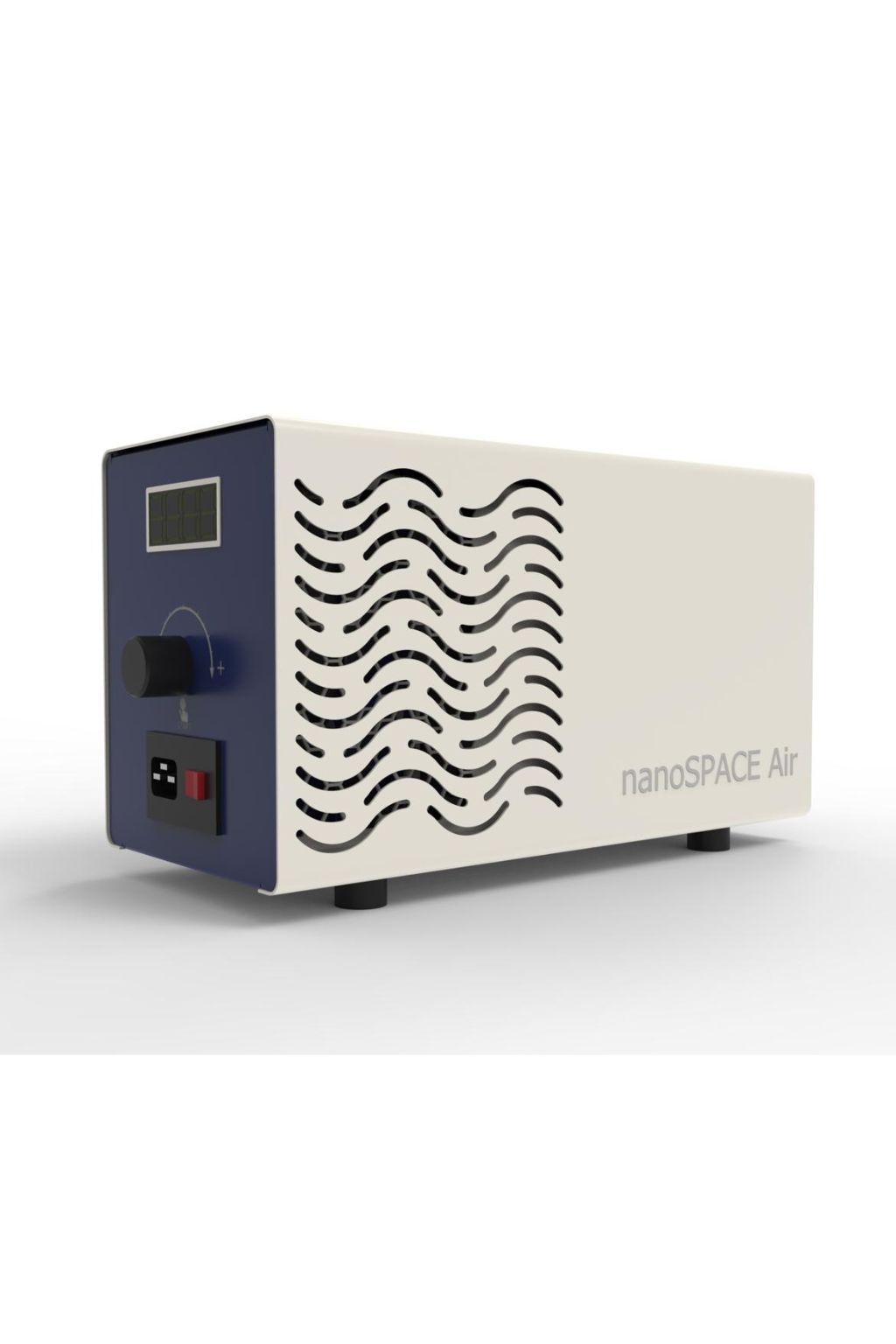
If you are considering purchasing your own device, the primary factors are the size of the space you need to treat and whether the unit features a built-in ozone destructor. The nanoSPACE Air range includes a destructor specifically so the generator can independently neutralise residual ozone after treatment – an enormous advantage for safe home ozone disinfection. The models differ primarily in their output based on floor area. For flats and smaller rooms, the nanoSPACE Air 5 Destructor is more than sufficient, whereas sprawling spaces and commercial premises will benefit from the powerful nanoSPACE Air 20 Destructor.
nanoSPACE Air ozone generators with a destructor
Ozone and the environment: should we worry about the ozone hole?
Mention the word ozone, and many people immediately picture the dreaded ozone hole. It is perfectly understandable, then, to wonder what impact home ozone disinfection has on the natural environment. The reassuring news is that there is absolutely nothing to fear. The ozone hole relates to the stratosphere high above the Earth and the specific pollutants that deplete the ozone layer up there. It has nothing to do with the gas produced by a local generator, which simply breaks back down into harmless oxygen within a couple of hours inside your room.
Furthermore, ozone disinfection requires no liquid chemicals, no aerosol propellants and no single-use plastic packaging. Once the process is complete, zero chemical residues remain. It is, therefore, a highly sustainable and environmentally friendly method that – provided the safety rules are strictly followed – is gentle on both nature and human health. If you would like to learn more about the technology itself, we highly recommend reading our guide on how an ozone generator works in practice.
Conclusion: manage the risks of ozone disinfection with a single rule
Ozone disinfection is an exceptionally effective and remarkably eco-friendly way to eradicate odours, mould, bacteria, viruses and dust mites. Its safe operation can be summed up in one golden rule: do not enter the treated room during the cycle or shortly afterwards, and always air the space thoroughly before using it again. If you follow this rule – and ideally choose a generator equipped with an ozone destructor – you have absolutely nothing to worry about. On the contrary, a well-chosen device will serve you reliably for many years, providing a noticeably cleaner and healthier home environment.
Frequently asked questions
Is ozone toxic?
At the high concentrations a generator creates during disinfection, yes – it is a respiratory irritant and harmful to health. At the low concentrations that occur naturally, it is completely harmless. This is precisely why you must never remain in the treated room during ozone disinfection.
Is it safe to use an ozone generator at home?
Yes, home ozone disinfection is entirely safe provided you follow the correct procedures. Remove all people, pets and plants from the room, start the generator from outside, wait one to two hours after the cycle finishes, and air the room thoroughly. Generators featuring an ozone destructor also break down residual ozone much faster on their own.
Can I be in the room while the ozone generator is running?
No. The room must remain completely empty for the duration of the cycle and for one to two hours afterwards. It is only safe to occupy the space again once the ozone has reverted to oxygen and you have thoroughly ventilated the room.
How do I recognise ozone poisoning?
Typical symptoms include an irritating cough, a dry and burning throat, chest tightness, shortness of breath, stinging eyes and a headache. If you experience these, move to fresh air immediately and ventilate the room. For severe or persistent symptoms, particularly in people with asthma, seek medical advice.
Will ozone disinfection damage furniture or my car?
Standard textiles, household furniture and car interiors are not harmed by a correctly dosed cycle – in fact, ozone effectively disinfects them. However, caution is warranted with rubber components, door seals, sensitive plastics and corrosion-prone objects. These are best removed or covered and should not be subjected to long-term over-ozonation.
Sources
- HUDSON, J. B., SHARMA, M., VIMALANATHAN, S. (2009) 'Development of a practical method for using ozone gas as a virus decontaminating agent', Ozone: Science & Engineering, 31(3), pp. 216–223.
- NOGALES, C. G. et al. (2008) 'Ozone therapy in medicine and dentistry', The Journal of Contemporary Dental Practice, 9(4), pp. 75–84.
- GONÇALVES, A. A. (2016) 'Ozone as a safe and environmentally friendly tool for the seafood industry', Journal of Aquatic Food Product Technology, 25(2), pp. 210–229.
- PUMNUAN, J., INSUNG, A., WANGAPAI, T. (2020) 'The Use of Ozone for Controlling European House Dust Mite, Dermatophagoides pteronyssinus (Trouessart)', Current Applied Science and Technology, pp. 420–428.
- ARLIAN, L. G., PLATTS-MILLS, T. A. E. (2001) 'The biology of dust mites and the remediation of mite allergens in allergic disease', Journal of Allergy and Clinical Immunology, 107(3), pp. S406–S413.