
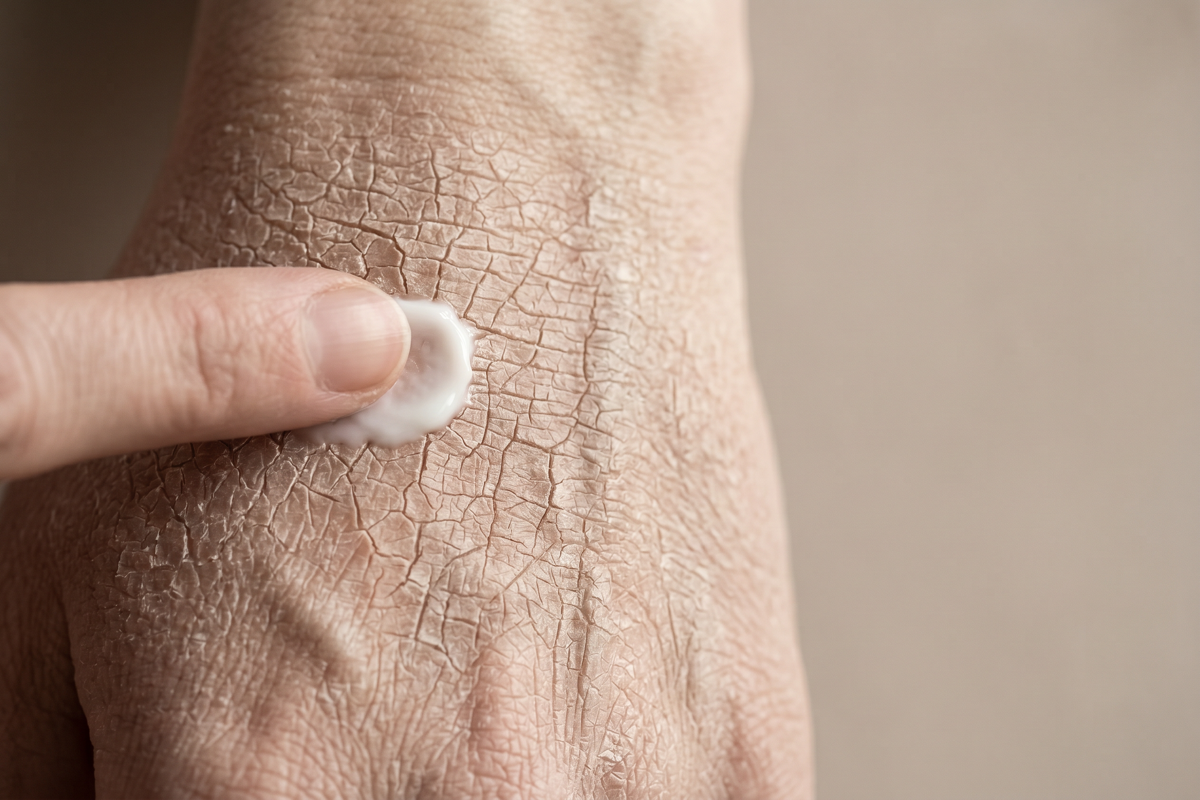
You know the look: the skin on the shins resembles a dried-up riverbed or old, cracked porcelain. A web of fine red fissures rings little islands of dry, scaly skin, everything itches and feels tight. This condition is called asteatotic eczema, and it is by far the most common form of eczema in later life. It isn't "just dry skin from the winter", as many assume, but a genuine failure of the skin barrier that can make life thoroughly miserable. The good news is that we understand why it happens – and that there's a great deal you can do about it. In this article we'll explain what's going on in the skin, who is most at risk, when it's worth taking notice and seeing a doctor, and above all how to bring the skin back to calm, day by day.
Main takeaways if you're short on time
- Asteatotic eczema is the "dried-out" form of eczema – the skin loses fats and water, shrinks and cracks into a characteristic network (medically eczema craquelé, colloquially "cracked porcelain").
- It mainly affects older people. With age the production of ceramides (the skin's protective fats) and sebum drops; it appears most often around the age of 69, and in later life men are affected more often.
- The trigger is dryness, inside and out. The heating season, hot baths and alkaline soaps destroy the barrier; some medicines (diuretics, statins) or an underactive thyroid can add to it.
- Watch for the warning sign. A sudden, severe rash that doesn't respond to usual treatment belongs in a doctor's hands – rarely it can be the first sign of a hidden illness.
- The basis of care is moisturising and gentle washing. Rich emollients (softening creams and oils) on damp skin within three minutes of showering, lukewarm water instead of hot, and humidified air can work wonders.
Disclaimer: This article is for information only and is not a substitute for medical advice. We at nanoSPACE are not doctors. Always leave the diagnosis and treatment of asteatotic eczema (especially a sudden, severe flare) to a dermatologist.
What asteatotic eczema is
The name sounds complicated, but the idea behind it is fairly vivid. The prefix "a-" means "without" and "steato" refers to fat (sebum) – so it's an eczema caused by a lack of fat. In the literature you'll come across a whole range of names that nicely show how different schools view the disease. The French term eczema craquelé comes from "craquelure", that fine net of cracks you know from old oil paintings and ceramics. English speaks of the "crazy paving" appearance, German of Exsikkationsekzem (eczema of desiccation), and because of its strong link to the cold months the name winter eczema has also stuck.
Whatever you call it, the result is the same and unmistakable. It appears most often on the shins, where there are naturally the fewest sebaceous glands, and in its developed form it looks exactly like the parched bed of a pond: polygonal scales with slightly raised edges, and between them red, sometimes even bleeding cracks. It comes with relentless itching that tempts you to scratch – which only makes everything worse. Scratched cracks also open the door to bacteria, so a secondary infection (most often with Staphylococcus aureus) can join the dryness and inflammation. A doctor usually recognises it on sight; to confirm it they may use a dermatoscope, which reveals the typical whitish scales and red lines of the fissures. If you're not sure which type of eczema you have, our overview of active ingredients for eczema-prone skin will help.
Why asteatotic eczema develops: when the barrier crumbles
Healthy skin holds water inside thanks to the fatty "mortar" between its cells. In asteatotic eczema this mortar disappears for several reasons at once, and the skin gradually turns into a leaky sieve.
The main culprit is the loss of fats with age. Ageing skin produces fewer ceramides, less cholesterol and fewer fatty acids – exactly the substances that stop water escaping. Ceramides act as the glue between cells, and as they dwindle the skin dries out. How dramatically? A classic study showed that in such damaged skin, water loss through evaporation (technically transepidermal water loss, TEWL) can rise up to 75-fold compared with healthy tissue. The second problem is the loss of the Natural Moisturising Factor (NMF) – the mix of substances inside the cells that bind water. The skin then loses the ability to hold moisture even when you supply it from outside. A molecule called aquaporin-3 also plays a part – a kind of water channel in the skin that declines in affected skin, so the distribution of water between the layers falters further.
The mechanics of the cracks are simple: as the cells lose water, they literally shrink. But because they are hemmed in by the surrounding layers and can't contract freely, enormous mechanical tension builds up – and the top layer of skin can't withstand it and cracks. These fissures reach deeper, tear the tiny capillaries (hence the pinpoint bleeding) and open the door to irritants and microbes. What began as simple drying-out thus turns into itchy inflammation. Asteatotic eczema is, in effect, a chain reaction set off by dryness and finished by mechanical strain and inflammation.
Who is most at risk of asteatotic eczema
Asteatotic eczema is clearly a disease of ageing skin – and as the population ages, it is becoming more common. The median age of patients is around 69, and in the over-sixties men tend to be affected more often than women (there's no firm explanation yet; one theory points to men moisturising less throughout their lives). Data from long-term care facilities show a very high prevalence: in a Japanese study up to 70% of seniors had some form of dryness. Full-blown eczema then appeared in 16 to 41% of residents, depending on the quality of nursing care. Weather plays a role too: the most trouble comes in winter, when dry air from heating draws the last of the moisture out of the skin. And this is no minor cosmetic issue – the relentless itching disrupts sleep and daily well-being, and in frailer seniors it raises the risk that scratched skin becomes infected and heals poorly.
What triggers and worsens asteatotic eczema
There are usually several causes at once, and relief means eliminating as many of them as possible. Here they are, sorted into three groups.
| Group | Specific triggers |
|---|---|
| External | Dry air from heating and air conditioning, frequent hot and long baths, alkaline soaps and degreasers |
| Internal | Ageing, underactive thyroid, zinc deficiency, swelling from heart and venous problems |
| Medicines | Diuretics, statins, systemic retinoids, some cancer treatments (they dry the skin as a side effect) |
The table has a practical point: if you take diuretics or statins, say, and struggle with dry skin, it doesn't mean you should stop your medication – but it's worth discussing with your doctor and leaning all the more on moisturising. You can read more about how dry skin ties in with overall care in our guide to active ingredients for eczema-prone skin.
When to take notice: rarely, the skin can warn you
For the vast majority of people, asteatotic eczema is a harmless condition linked to ageing and a dry environment. But there is one situation no one should underestimate. If it appears suddenly, is very severe and doesn't respond even to strong medicines from a dermatologist, it may rarely be a so-called paraneoplastic sign – a skin manifestation accompanying a hidden illness, described in the literature especially with certain lymphomas (cancers of the lymphatic system). The warning sign is precisely that stubborn resistance to treatment, to which ordinary asteatotic eczema responds nicely. There's no cause for panic – it's a rarity. But a sudden, fierce and unyielding flare is always a reason to get checked, not to keep smothering it with yet another cream.

Editor's pick
AtopCare Body Oil 200 ml
Water-free lipid care is ideal for parched skin – it delivers exactly the fats the skin is missing. The oil combines hemp, almond, oat and sunflower oil with squalane and vitamin E, has a natural composition and carries the "For allergy sufferers" label. It works best on still-damp skin right after a shower.
€26
View productHow to handle asteatotic eczema: care that repairs the barrier
Here's the encouraging part: most of the work is done by the right daily routine, which you can manage at home. Without restoring the fatty barrier, even the best medicine will fail. Stick to these rules:
- Moisturise damp skin within three minutes of showering. That way the water is "locked into" the top layer. Reach for a rich oil or cream, such as the AtopCare body oil or the AtopCare body cream.
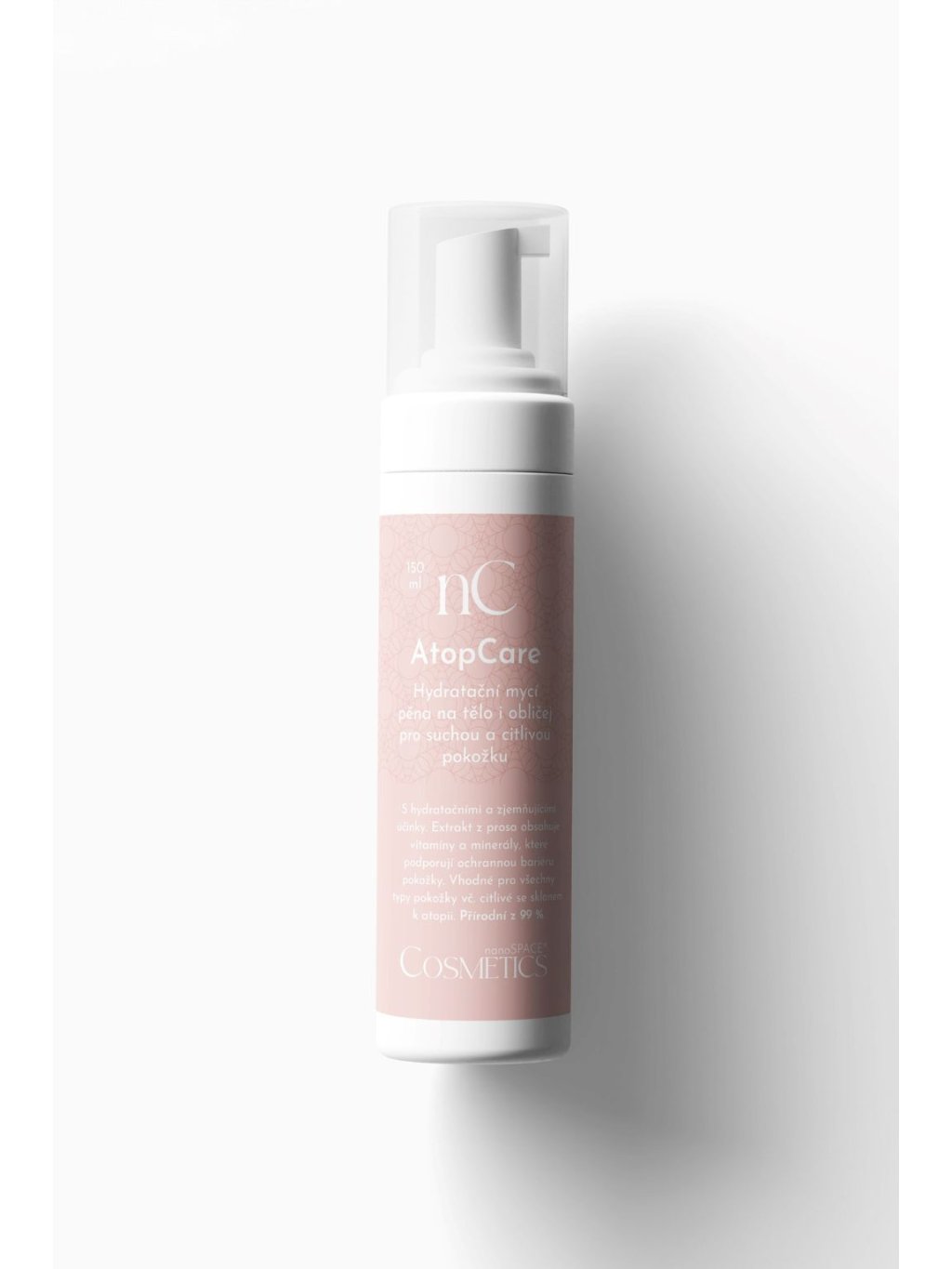
- Forget hot, long baths. A short, lukewarm shower won't wash away the remaining fats. Replace classic alkaline soaps with a mild cleansing foam or a shower oil – try the AtopCare cleansing foam.
- Humidify the air. During the heating season keep bedroom humidity around 50 to 60%. It's one of the most effective and cheapest steps.
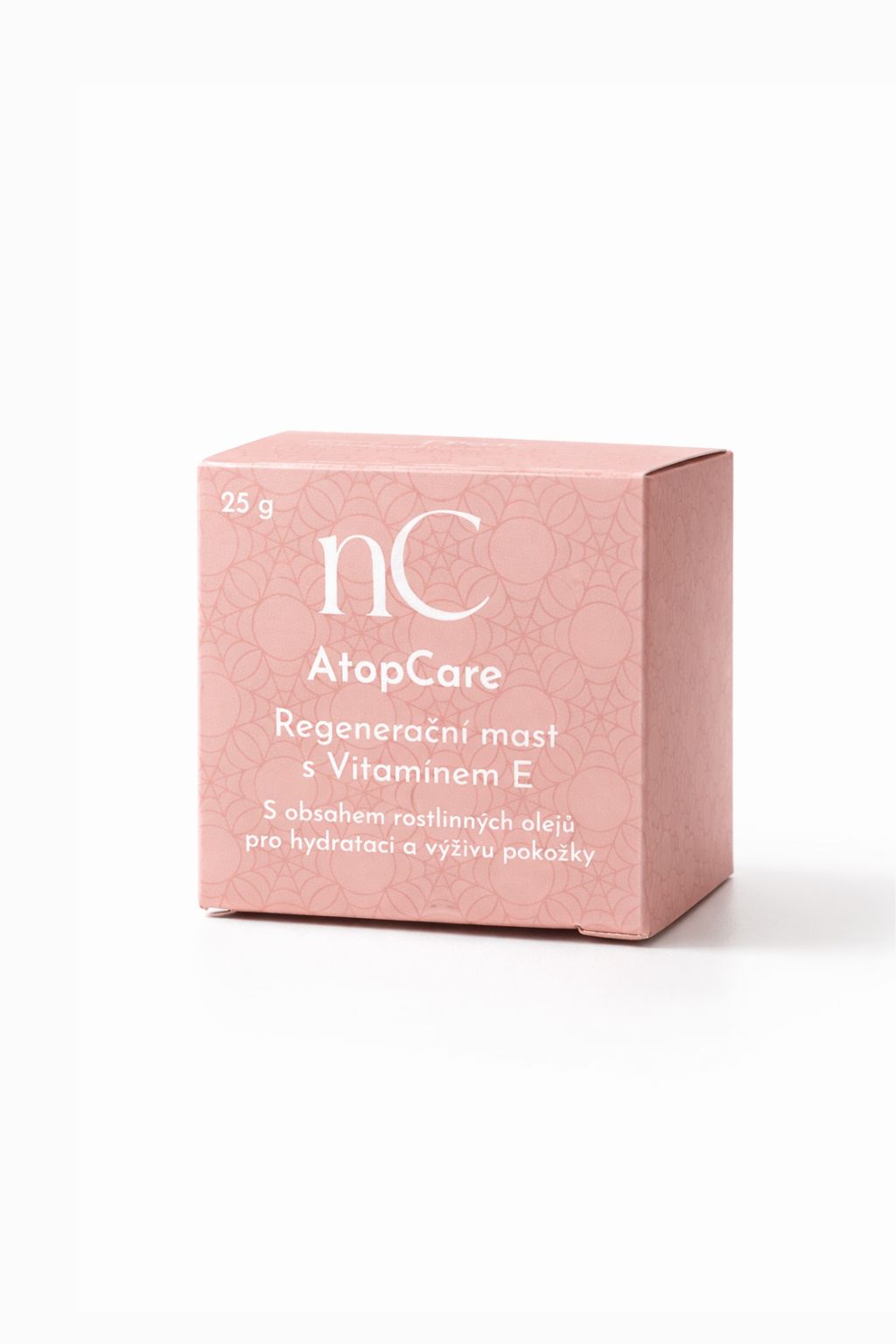
- Moisturise outside flare-ups too. Ideally two to three times a day, not just when it itches. For cracked spots a more concentrated regenerating ointment with vitamin E works well.
- Look for a short, fragrance-free formula. Irritating fragrances and needless preservatives only harm weakened skin.
Research confirms that emollients are more than a token gesture, too – regular moisturising demonstrably reduces irritability and delays the next flare. If a different type of eczema might be at play, it helps to compare it against our overviews of seborrhoeic dermatitis and allergic and irritant contact dermatitis.
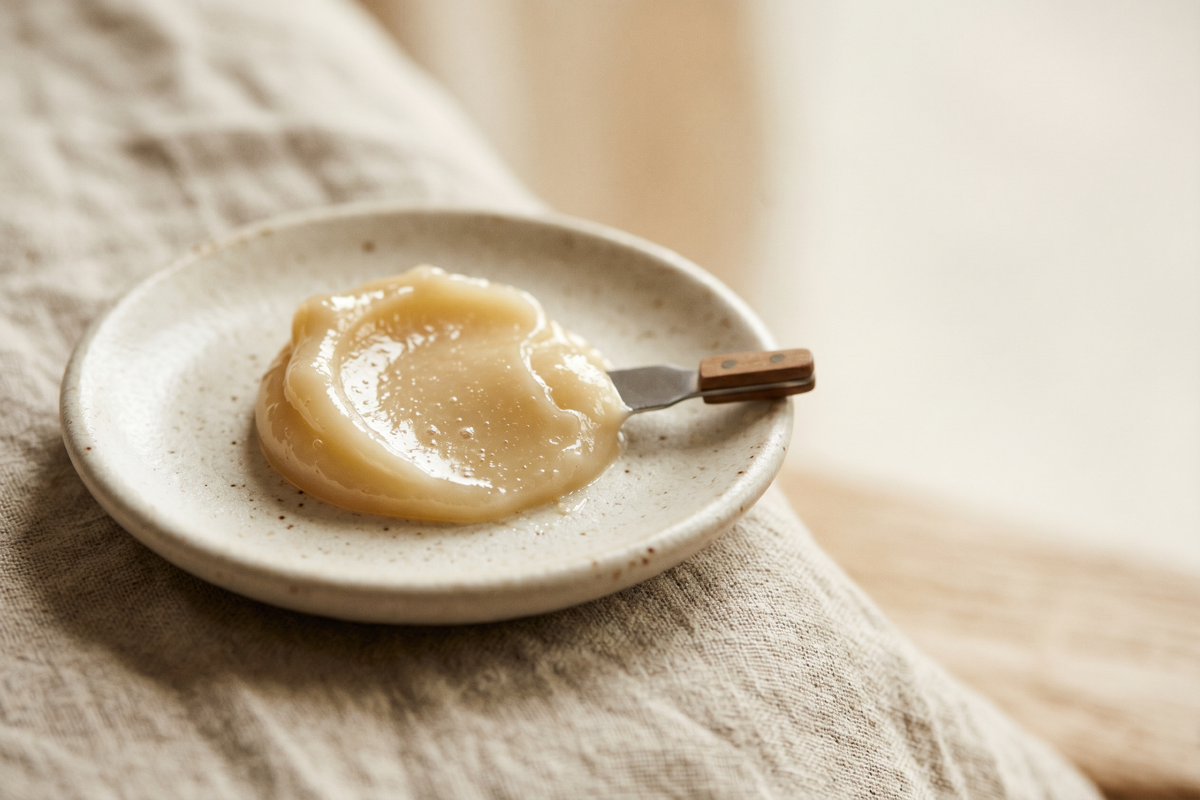
Caring for parched skin step by step

Treatment led by a dermatologist
Once the skin is inflamed – red, itchy, cracked – moisturising alone isn't enough and treatment under a doctor's supervision steps in. In the acute phase, the first-line choice is usually topical corticosteroids, ideally in a greasy base (watery creams dry weakened skin further as they evaporate). As maintenance or add-on therapy, the so-called calcineurin inhibitors (anti-inflammatory medicines in cream form, such as pimecrolimus) have also proved useful; in older people they help avoid the skin thinning that long-term steroid use can cause. It's interesting how different schools approach the same disease. Japanese dermatology relies heavily on heparinoid preparations (substances related to heparin) – besides hydrating, they improve the skin's circulation and show a high success rate. The German tradition, in turn, builds on replenishing lipids through oil baths. Research today is also turning to smarter emollients with skin-native substances (so-called endogenous lipids), such as PEA (N-palmitoylethanolamine), which replaces missing fats while calming inflammation. The specific treatment and its dosing, though, is always the dermatologist's decision – this overview is for orientation only.
Conclusion: moisture, fats and patience
Asteatotic eczema looks dramatic, but its logic is actually simple: the skin lacks fat and water, so it shrinks and cracks. And that is precisely the recipe for tackling it – deliver fats with a rich emollient, lock in moisture after showering, ease off hot baths and humidify the air. For most people this patient routine is enough to bring the skin back to calm. Just remember the one exception: a sudden, severe flare that doesn't respond to treatment belongs with a doctor. Otherwise, good barrier care is in this case the most effective and most accessible medicine there is.
Frequently asked questions
What's the difference between asteatotic eczema and ordinary dry skin?
Dry skin is the precursor – it feels tight and flakes, but doesn't become inflamed. Asteatotic eczema is the next stage, where the dried-out skin cracks into a characteristic network (the "cracked porcelain" look), the fissures redden, become inflamed and itch. The line between them is blurred, which is why it's good to step in while it's still just dryness.
Why do I get asteatotic eczema mainly on my legs?
The shins have naturally the lowest density of sebaceous glands of the whole body, so they produce the least protective sebum. That's why the skin dries out and cracks there first. It's also common on the forearms and the backs of the hands.
When should I see a doctor about asteatotic eczema?
When it appears suddenly and severely, when it doesn't ease even after weeks of diligent care and usual treatment, or when the cracks weep and look infected. A stubborn rash that doesn't respond to treatment is always a reason to get checked – rarely it can signal another illness.
How often should I moisturise?
Ideally two to three times a day, even when the skin is relatively calm. The most important application is right after a shower, on still-damp skin. During the heating season, feel free to moisturise more and add an air humidifier.
Can the medicines I take cause asteatotic eczema?
Some can – diuretics, statins or systemic retinoids have a drying effect, for instance. That doesn't mean you should stop them. Discuss it with your doctor, and above all pay extra attention to moisturising and gentle washing, which offset the drying effect.

Sources
- StatPearls (2024) 'Asteatotic Eczema', NBK549807.
- DermNet NZ 'Asteatotic eczema'.
- Kimura, N. et al. (2013) 'Prevalence of sebum-deficiency eczema in long-term care facilities in Japan', The Journal of Dermatology.
- Onken, H. D. & Moyer, C. A. (1963) 'The water barrier in human epidermis', Archives of Dermatology.
- Wang, Y. & Li, X. (2022) 'Prevalence and risk factors of asteatotic eczema in Chinese elderly population', European Journal of Inflammation.
- Schulz, P. et al. (2007) 'Efficacy and safety of pimecrolimus cream 1% in asteatotic eczema', Dermatology.
- Yuan, C. et al. (2014) 'Efficacy of an endogenous lipid-based emollient containing N-palmitoylethanolamine in asteatotic eczema', Journal of Dermatological Treatment.