
Have you got a red, itchy rash on your hand, eyelid or stomach that keeps coming back in exactly the same spot? Are you avoiding "everything" and it still won't clear? The skin can remember irritants for years. Contact dermatitis is one of the most common skin problems there is – worldwide, roughly one person in five has experienced it. And yet it's surrounded by confusion: people mistake allergy for irritation, blame "chemicals" and praise the "natural" cosmetics that are actually doing them the most harm. In this article we'll set the record straight. We'll explain how the two main types differ, who the usual culprits are, why healing takes longer than you'd expect, and what you can do to finally calm your skin.
Main takeaways if you're short on time
- There are two types: allergic contact dermatitis (an immune reaction to a specific substance) and irritant (direct damage to the barrier). They look similar but arise in completely different ways.
- The most common culprit is nickel – around 17–18% of people are sensitised to it. Fragrances, preservatives and rubber chemicals in gloves follow.
- The "natural" cosmetics paradox: the fragrance ingredient linalool doesn't irritate on its own, but once the jar is opened it oxidises into potent allergens – which is why a favourite cream can suddenly stop agreeing with you.
- Healing takes weeks, not days. Even after you remove the trigger, the skin visibly improves only after 6–8 weeks and fully heals in 3–6 months. Patience is half the battle here.
- The foundation of care is the barrier. Gentle washing without harsh surfactants, a short, fragrance-free formula and regular moisturising with emollients all help the skin repair itself and tolerate its surroundings.
Disclaimer: This article is for information only and is not a substitute for medical advice. We at nanoSPACE are not doctors. Always leave the diagnosis of contact dermatitis and its treatment (including patch tests and medication) to a dermatologist or allergist.
Allergic or irritant? Two types that look the same
When a dermatologist says "contact dermatitis", they mean one of two things that often look similar on the skin but are entirely different processes underneath. Telling them apart matters, because the approach to managing them differs too. And this is no fringe problem: the worldwide prevalence of contact dermatitis in the general population reaches roughly 20%, and in Europe contact allergy affects 10 to 27% of people. The typical patient in the clinic is a woman living in a city, and the condition peaks between the ages of 41 and 50. In other words, it's a very widespread problem.
Allergic contact dermatitis (ACD) is a delayed immune reaction. It works in two phases. In the first – the sensitisation phase, in which the allergic memory is set up – a small molecule of the substance (a so-called hapten, which doesn't trouble the immune system until it binds to a body protein) joins with skin proteins and the immune system "remembers" it. This phase is silent, with no symptoms, and once triggered it often lasts a lifetime. The second phase – elicitation, the firing of the reaction – comes on the next encounter with the same substance: immune cells set off inflammation that peaks 48 to 72 hours later. That's exactly why the rash appears with a delay and people often don't connect it with the trigger.
Irritant contact dermatitis (ICD) needs no allergy at all. It is direct damage to the skin barrier. Organic solvents literally degrease the skin, and harsh surfactants (the active cleansing agents) such as sodium lauryl sulfate (SLS) disrupt its structure. The barrier breaks down, inflammation kicks in and the skin burns and stings. So-called reactive oxygen species (unstable molecules that damage cells) add to the inflammation by deepening oxidative stress in the tissue – which is why irritated skin stays oversensitive for a while even after the original irritant is long gone. This form appears most often on the hands – in everyone who frequently washes, cleans or works with water and cleaning products. If your main worry is cracked, irritated hands, have a read of our overview of skincare ingredients for eczema-prone skin.
The most common triggers of contact dermatitis
The range of substances that set off contact dermatitis keeps shifting with whatever we happen to be using. Some, though, are perennial offenders. Here's an overview of the main culprits and where you'll run into them.
| Allergen | Where you'll meet it | How often it reacts |
|---|---|---|
| Nickel | Costume jewellery, watches, jeans buttons, keys, coins | 17–18% (most common) |
| Fragrances (linalool) | Perfumes, "natural" cosmetics, essential oils | up to 16% of those tested |
| Preservatives (MI, formaldehyde) | Cosmetics, wet wipes, paints | about 3% (fell after regulation) |
| Rubber chemicals (thiurams) | Examination and cleaning gloves | 2.5% (common in healthcare staff) |
| Chromium | Cement, tanned leather | common in builders |
It's worth noting how big a role legislation plays. When the European Union restricted how much nickel could be released from items in prolonged contact with the skin, the prevalence of allergy among young women fell from 19.8% to 11.4%. Similarly, the 2017 ban on the preservative methylisothiazolinone (MI) in leave-on cosmetics (creams and lotions, which aren't rinsed off) cut the number of reactions from eight per cent to just under three. So the rules do work – just with a lag of several years.
Why a "natural" cream can do more harm than a pharmacy one
You buy an expensive cream with essential oils, use it happily for a few months – and then a sudden, fierce reaction. The culprit is often linalool, a fragrant terpene that barely irritates on its own. The trouble starts once you open the product and expose it to air: linalool gradually oxidises into hydroperoxides – compounds that rank among the strongest known allergy triggers. In a warm, humid bathroom the cream simply "ages" into an aggressive form. That's why, with contact dermatitis, a short, sober, fragrance-free formula pays off – and you can read more about how to read labels and which ingredients actually help the skin in our guide to active ingredients for eczema-prone skin.
Contact dermatitis as an occupational disease
The workplace is an ideal breeding ground for contact dermatitis. In some occupations the risk is so high that skin trouble almost "comes with the job". It's not a sign of weakness or poor hygiene – it's a combination of wet work, chemicals and constant mechanical strain.
| Occupation | What strains the skin | Scale of the problem |
|---|---|---|
| Hairdressers | Dyes, bleaches, constant wet work | 38.2% lifetime rate of hand eczema |
| Builders | Cement (chromium), mechanical irritation | 36.9% share of occupational skin disease |
| Healthcare staff | Disinfectants, frequent washing, gloves | 31.5% positive tests in symptomatic staff |
Among healthcare staff there's an added, treacherous paradox. Many dutifully switch to expensive "accelerator-free" gloves to avoid the rubber thiurams – and still suffer. In 2024 it emerged that even these "hypoallergenic" gloves can contain a new irritating chemical. The detective work of finding the trigger, it seems, never ends.

How contact dermatitis is diagnosed
You can't reliably tell allergic from irritant dermatitis by sight alone – and often they can't be distinguished from other types of eczema either. The only objective tool for proving an allergy is patch testing. The dermatologist sticks chambers containing defined allergens onto the patient's back and removes them after 48 hours.
Here's one essential detail that decides success: a single reading isn't enough. Because the allergic reaction peaks between the second and third day, and some substances (corticosteroids, for instance) react late, the correct procedure includes a reading after removal, a main reading around the third or fourth day, and a late check around day seven. The European standard is the so-called European Baseline Series of allergens, which is updated regularly to reflect new epidemiological trends.
Editor's pick
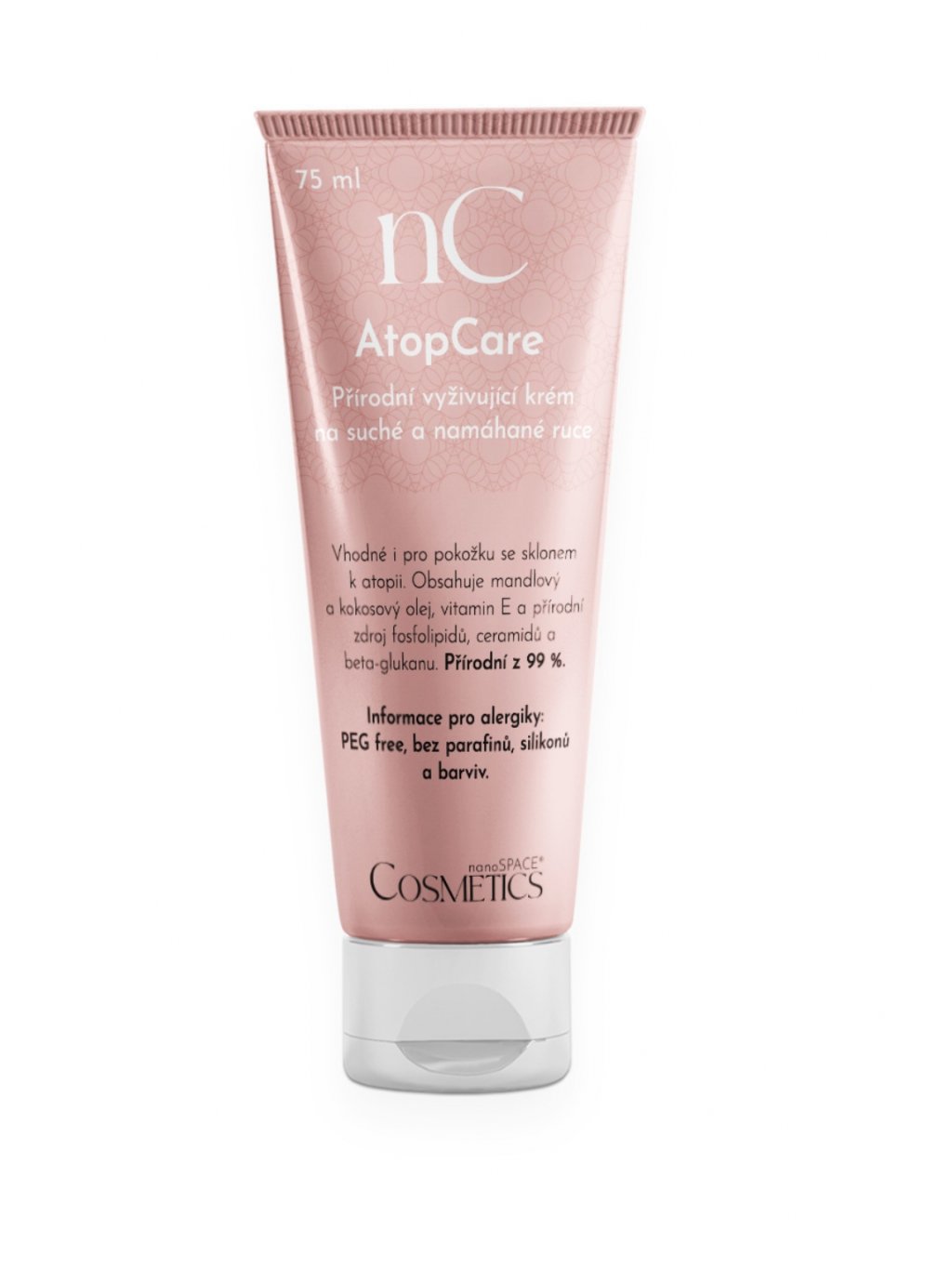
AtopCare Hand Cream
The hands take the heaviest strain in both allergic and irritant contact dermatitis. This cream is built on colloidal oat and almond oil, has a sober fragrance-free formula, is free from PEG, parabens, paraffins, silicones and artificial colourants, and carries the "For allergy sufferers" label. Ideal for regular moisturising after washing and work.
€10
View productTreatment: from removing the trigger to modern options
Treating contact dermatitis is a long game and calls for the patient's cooperation. The absolute foundation is identifying and strictly eliminating the irritant or allergen – without that, no cream or drug will work. To suppress acute inflammation, the dermatologist applies topical (applied directly to the skin) corticosteroids for short bursts, and on the face and sensitive areas rather tacrolimus, which, unlike them, doesn't thin the skin.
If local treatment isn't enough in severe chronic hand eczema, there's systemic therapy – for example alitretinoin (a vitamin A derivative), with which, according to clinical data, up to half of patients reach a "clear or almost clear" state within 24 weeks. The British ALPHA trial in 2024, however, showed that after a year the results of different approaches even out. Alitretinoin is therefore mainly a tool for quickly bringing a flare under control, not for long-term remission. For the most severe, otherwise intractable cases, dermatology also turns to targeted treatment – dupilumab (a biologic that blocks inflammatory signals) or so-called JAK inhibitors (drugs that dampen the inflammatory pathways inside cells), which can quell inflammation rapidly. The specific treatment, though, is always the doctor's decision.
Prevention and everyday care that makes sense
Prevention of contact dermatitis fortunately rests on a few clear rules that work for both the allergic and the irritant type:
- Wash gently. Skip harsh soaps and surfactants (SLS) and reach for a mild formula, such as the AtopCare cleansing foam.
- Moisturise, moisturise, moisturise. A regular emollient (a softening cream) repairs the barrier and demonstrably reduces irritability. The AtopCare body cream suits the body, and a body oil the drier areas.
- Read the ingredients. Look for short labels without fragrance, MI and needless preservatives.
- Mind the gloves. They protect against the allergen, but wearing an airtight material for long periods steams the skin and disrupts the barrier. Wear them only as long as necessary, ideally with a cotton liner.
- Be patient. Give the skin weeks, not days – and avoid non-specific irritants in the meantime.
Barrier creams in the workplace now have research behind them too: regular use significantly reduces irritant effects. Skincare, then, isn't a luxury – it's part of prevention.
What people with contact dermatitis most often struggle with
On patient forums the same lines come up again and again – and each has its explanation in how contact dermatitis works. "I've avoided the allergen for a month and it still won't clear" is the most common. That isn't a treatment failure but a matter of time: the skin visibly improves only after 6–8 weeks and fully heals in 3–6 months. "Natural cosmetics make me worse than the pharmacy kind" is the classic oxidation of fragrances we discussed above. And "I get eczema from gloves even though I wear the special ones" is a reminder that hunting the trigger is detective work in which even the rules change. If you're not sure whether it's eczema at all, the distinctions in our article on allergic rashes and hives or the overview of dyshidrotic eczema can help.
Conclusion: patience and smart prevention win
Contact dermatitis isn't a cosmetic detail or a sign of poor hygiene – it's a complex skin reaction you manage by combining three things: find and remove the trigger, give the skin time, and support it with gentle, barrier-focused care. Leave the diagnosis and treatment to a dermatologist, but the daily routine is in your hands. And that routine often decides whether the skin calms down for weeks – or for years.
Frequently asked questions
How do I tell whether I have allergic or irritant contact dermatitis?
You can't tell reliably by sight – both types look similar (redness, itching, sometimes blisters). One clue is timing: an allergic reaction appears with a delay of 48 to 72 hours after contact, whereas irritation comes on quickly after exposure. You'll only know for sure with patch testing at a dermatologist.
How long does contact dermatitis take to clear?
Longer than most people expect. Even if you remove the trigger entirely, visible improvement usually comes only after 6 to 8 weeks, and the skin barrier fully heals in 3 to 6 months. Throughout that time the skin is oversensitive, so it's important to spare it from non-specific irritants too.
Why do even "natural" cosmetics with essential oils bother me?
Oxidation is usually to blame. Fragrance ingredients such as linalool don't irritate on their own, but after the product is opened and meets the air they turn into hydroperoxides, which rank among the strongest allergens. That's why, with contact dermatitis, a fragrance-free product with a short ingredient list pays off.
Do protective gloves help against work-related eczema?
Only partly, and with care. Gloves protect against direct contact with the allergen, but wearing an airtight material for long periods steams the skin, disrupts the barrier and, once you take them off, paradoxically makes it easier for irritants to get in. Wear them only as long as necessary, ideally with a cotton liner, and moisturise your hands after work.
Can nickel in jewellery cause contact dermatitis too?
Yes – nickel is the single most common contact allergen, with around 17 to 18% of people sensitised. You'll find it in costume jewellery, watches, jeans buttons, keys and coins. It helps to choose pieces made of surgical steel, titanium or gold, and to coat metal studs with, say, clear nail varnish.

Sources
- World Allergy Organization Journal (2025) 'Global epidemiology of contact dermatitis'.
- Nature Reviews Disease Primers (2021) 'Contact dermatitis', 7(38).
- Frontiers in Medicine (2023) 'Elicitation phase of allergic contact dermatitis'.
- Contact Dermatitis (2017) 'Impact of the EU Nickel Directive'.
- Contact Dermatitis (2024) 'Preservative allergy and MI regulations'.
- Contact Dermatitis (2025) 'Rubber allergens and CEDMC in accelerator-free gloves'.
- Dermatitis (2024) 'Occupational contact dermatitis in construction workers and chromium'.
- ESCD Guidelines / AWMF S3-Leitlinie 013-018 'Diagnostic patch testing'.
- ALPHA trial (2024) 'Alitretinoin versus PUVA in chronic hand eczema'.
- JAAD Reviews (2025) 'Emerging therapies in contact dermatitis'.