
If you wake up congested, spend your mornings sneezing uncontrollably, or feel like your allergies worsen the moment you climb into bed, your bedding is likely harboring millions of microscopic enemies. Choosing the right bedding for dust mite allergy can mean the difference between restless, symptom-filled nights and waking up refreshed and breathing clearly. With countless products claiming to be "hypoallergenic," "anti-allergy," or "dust mite resistant," how do you separate genuinely effective solutions from expensive disappointments that leave your symptoms unchanged? The best bedding for dust mite allergy must accomplish three critical goals simultaneously: create an impenetrable physical barrier preventing allergen exposure, maintain breathability and comfort for restful sleep, and deliver consistent protection that lasts for years rather than washing away after a few cycles. Understanding which materials and technologies actually achieve these goals—and which fall short despite their marketing claims—is essential for making an investment that truly transforms your sleep quality and daily life.
.jpg)
Summary for those short on time
- Nanofiber membrane technology with 80-150 nanometer pores provides the most effective barrier, blocking 99.9% of dust mites and allergens—far superior to traditional materials like cotton, bamboo, or microfiber.
- Natural materials like silk, bamboo, and eucalyptus lyocell offer moisture-wicking and breathability but lack genuine barrier protection against dust mites measuring 420,000 nanometers.
- Tight-weave cotton and microfiber fabrics provide better protection than standard bedding but require uncomfortable 60°C washing and sacrifice breathability for modest allergen blocking.
- Advanced bedding like Nanocotton® from nanospace.store combines organic cotton comfort with nanofiber barrier technology in three-layer construction, eliminating the need for separate plastic covers while blocking allergens effectively.
- Complete protection requires coordinated systems including barrier sheets, anti-allergy pillows, and duvets —addressing all potential dust mite reservoirs rather than just individual bedding components.
Understanding What Makes Bedding Effective Against Dust Mites
The Three Essential Criteria
Not all "anti-allergy" bedding delivers meaningful relief, because effective dust mite protection requires meeting three non-negotiable criteria simultaneously. First, the bedding must create a genuine physical barrier that prevents dust mites (measuring approximately 420,000 nanometers) and their allergenic waste products (10,000-40,000 nanometers) from penetrating through to your sleeping surface. Materials with large pore sizes allow allergens to pass through easily, rendering them essentially ineffective regardless of other positive qualities.
.jpg)
Read: Anti-Allergy Bedding for Children: What to Choose for Healthier Sleep
Second, the bedding must remain breathable and comfortable enough for regular use. Even the most effective barrier fails if you cannot tolerate sleeping on it night after night. Traditional plastic or polyurethane-coated mattress encasements provided excellent allergen blocking but felt so uncomfortable—trapping heat, making crinkling noises, feeling clammy against skin—that compliance rates remained disappointingly low. People abandoned their protective covers within weeks or months because the discomfort outweighed the allergy benefits.
Third, the protection must be durable and permanent rather than temporary. Chemical treatments that wash out after several laundry cycles or fabrics that degrade rapidly under the aggressive washing they require represent false economies—you invest in "protection" that disappears precisely when you need it most. The best bedding maintains its allergen-blocking properties through hundreds of wash cycles, providing years of reliable relief rather than short-term improvements followed by symptom recurrence.
Why Pore Size Matters More Than Material Type
The single most important factor determining bedding effectiveness against dust mites is pore size—the spaces between fibers through which particles can potentially pass. Standard cotton fabric has pore sizes around 420,000 nanometers, roughly equivalent to the size of a dust mite itself. This explains why regular cotton sheets, regardless of how soft or expensive, provide essentially zero barrier protection. Dust mites easily navigate through these large openings, and their microscopic fecal pellets pass through even more readily.
Tight-weave cotton fabrics attempt to reduce pore sizes through extremely dense weaving, potentially achieving pore sizes of 50,000-100,000 nanometers. While this represents improvement over standard cotton, it still allows many allergen particles to penetrate. Independent laboratory testing using actual dust mite allergens has shown that even premium tight-weave barrier fabrics allow some allergen passage, though significantly less than standard materials.
Nanofiber membrane technology achieves pore sizes as small as 80-150 nanometers —approximately 5,000 times smaller than standard cotton and 300-1,000 times smaller than tight-weave alternatives. At this scale, dust mites and their allergens face a physical impossibility: they simply cannot fit through openings this tiny. Testing by the Technical University of Liberec proved effective capture of microorganisms at ≥99.0% and dust particles at ≥99.9% with nanofiber materials. This isn't incremental improvement—it's a quantum leap in effectiveness that no traditional material can match.
Traditional Bedding Materials: Strengths and Critical Limitations
Cotton: Natural Comfort Without Barrier Protection
Cotton remains the most popular bedding material worldwide, prized for its softness, breathability, temperature regulation, and natural feel against skin. Organic cotton eliminates pesticide residues and harsh chemical treatments, making it ideal for people with sensitive skin or chemical sensitivities. High-thread-count cotton provides luxurious smoothness and durability that improves with washing over time.
Read: How to Choose the Best Anti Dust Mite Pillowcase?
Despite these comfort advantages, standard cotton bedding offers virtually no protection against dust mites. The 420,000-nanometer pore size means dust mites navigate through cotton fabric as easily as you walk through a doorway. Manufacturers sometimes market "high thread count" cotton as if the tighter weave provides dust mite protection, but even 1,000-thread-count cotton has pores exponentially larger than dust mites and their allergens.
Even specialty tight-weave cotton marketed specifically as allergen barriers provides inconsistent protection. While tighter weaving does reduce pore sizes somewhat, achieving the 50,000-100,000 nanometer range, this still allows significant allergen passage. Additionally, creating such tight weaves sacrifices the breathability and softness that make cotton desirable—resulting in stiffer, less comfortable fabrics that trap heat and moisture. You gain modest allergen reduction while losing the comfort qualities that make cotton appealing in the first place.
Bamboo and Eucalyptus Lyocell: Moisture Control Without Barriers
Bamboo and eucalyptus lyocell (Tencel) have gained popularity as environmentally sustainable bedding materials offering excellent moisture-wicking properties. These fabrics draw perspiration away from your skin to the fabric surface where it evaporates, creating a drier sleep environment less conducive to dust mite proliferation. Bamboo possesses natural antimicrobial properties that inhibit bacterial growth, and both materials provide exceptional breathability and temperature regulation.
From an environmental allergen perspective, bamboo and lyocell offer indirect benefits by reducing the humidity dust mites require to thrive. Drier bedding conditions discourage mite reproduction and can modestly reduce overall mite populations over time. The smooth fiber surfaces also provide fewer places for allergen particles to lodge compared to cotton's rougher texture.
However, these moisture-management benefits should not be confused with genuine barrier protection. Bamboo and lyocell fabrics have pore sizes comparable to cotton—far too large to physically block dust mites or their allergens from passing through. These materials make your bed environment less ideal for dust mite population growth, but they don't prevent the millions of mites already established in your mattress from reaching you or shedding their allergenic waste products onto your sleeping surface. For people with severe dust mite allergies, the modest environmental improvements these materials provide prove insufficient to deliver meaningful symptom relief.
Read: How to Choose Suitable Bed Linen for Allergy and Asthma Sufferers?
Silk: Luxury and Smooth Surfaces
Silk bedding represents the luxury end of the natural fiber spectrum, offering exceptionally smooth surfaces, natural temperature regulation, and inherent hypoallergenic properties. The smooth, tightly packed protein fibers of silk create surfaces that are naturally less hospitable to dust mites compared to cotton's rougher texture. Silk doesn't absorb moisture as readily as cotton, potentially creating less favorable conditions for mite colonies.
The smoothness of silk also means allergen particles don't embed as deeply into the fabric structure, making them easier to remove through washing. For people with contact allergies or extremely sensitive skin, silk's natural proteins rarely trigger reactions, and the absence of chemical processing in high-quality silk eliminates irritants present in conventionally treated fabrics.
Despite these advantages, silk provides no meaningful physical barrier against dust mite allergen exposure. The luxury and comfort qualities that make silk desirable don't translate to barrier protection—dust mites and allergens pass through silk fabric as easily as through cotton. Silk also requires delicate care, cannot withstand the high-temperature washing sometimes recommended for dust mite control, and represents a significant investment that doesn't deliver the allergen-blocking effectiveness severe allergy sufferers require.
Microfiber: Tighter Weaves With Comfort Trade-Offs
Synthetic microfiber fabrics achieve tighter weaves than natural materials, creating smaller pore sizes that block more allergens than standard cotton or bamboo. Some microfiber bedding markets itself specifically as anti-allergy, claiming the tight weave prevents dust mite penetration. This claim has partial validity—quality microfiber does block more allergens than looser-weave natural fabrics.
The effectiveness varies widely depending on specific construction techniques and fiber quality. Premium microfiber barriers can achieve pore sizes small enough to block many dust mites and larger allergen particles, though smaller allergens still penetrate. Independent testing shows that while microfiber performs better than natural fabrics, it doesn't achieve the near-total allergen blocking that nanofiber membranes provide.
.jpg)
Read: Does Anti-Dust Mite Bedding Work? How to Choose Best
The comfort compromises limit microfiber's appeal for many users. Synthetic microfibers often trap heat and don't regulate temperature as effectively as natural materials. The fabrics can feel less breathable, causing sweating and discomfort particularly for people who sleep hot. Some people find microfiber's texture less pleasant than natural cotton or silk. Most critically, even premium microfiber requires washing at 60°C to kill dust mites—subjecting it to the same aggressive treatment that rapidly degrades fabric quality and shortens lifespan.
Why Nanofiber Technology Represents the Ultimate Solution
The Physics of 80-Nanometer Pore Sizes
Nanofiber membrane technology achieves what no traditional bedding material can: genuine, near-total allergen blocking while maintaining excellent breathability and comfort. By engineering fibers at the molecular level, manufacturers create membranes with precisely controlled pore sizes of 80-150 nanometers. To appreciate this achievement, consider the scale differences: dust mites measure approximately 420,000 nanometers, making them roughly 5,000 times larger than nanofiber pores.
This creates an absolute physical barrier. A dust mite encountering an 80-nanometer pore faces the same impossibility you would trying to walk through a brick wall—it simply cannot fit through regardless of time or effort. The same principle applies to dust mite fecal pellets (10,000-40,000 nanometers), body fragments, pollen (15,000-200,000 nanometers), pet dander, mold spores, and even bacteria and viruses. If the particle is larger than the pore, penetration becomes physically impossible.
What makes this revolutionary is that 80-nanometer pores remain large enough for air molecules and water vapor (measuring just a few nanometers) to pass through freely. This allows excellent breathability and moisture transmission while blocking everything that triggers allergy symptoms. Unlike older barrier technologies that forced users to choose between protection and comfort, nanofiber membranes deliver both simultaneously—solving the compliance problem that plagued traditional plastic-coated mattress covers.
.jpg)
Read: Detailed Guide to Bedding: How to Choose the Best One
Verified Testing Results From Independent Institutions
Many bedding products make impressive marketing claims about allergen blocking, but few back those assertions with rigorous, independent laboratory testing. Nanofiber materials used in products from nanospace.store have undergone extensive verification by multiple professional institutions, with published results demonstrating extraordinary effectiveness.
The Textile Testing Institute in Brno verified effective capture of microorganisms at ≥99.0%. The Technical University of Liberec proved effective capture of dust particles at ≥99.9%. The State Institute of Public Health in Prague tested biocompatibility and detected no negative reactions when in contact with human skin. These aren't internal company tests or vague marketing assertions—they're independent scientific evaluations conducted by respected institutions using standardized testing protocols.
Comparative testing reveals nanofiber's superiority over traditional materials. Studies examining various covering materials found that while plastic and polyurethane-coated covers provided good impermeability, they represented the least comfortable options. Non-woven fabrics performed better than woven cotton but still allowed some allergen penetration. Testing clearly showed that nanofiber material outperforms other available woven and non-woven barrier fabrics in efficiency, breathability, and water vapor permeability. The effectiveness gap isn't marginal—it's a difference of several orders of magnitude that translates directly to dramatically better symptom relief.
#produkty#https://www.nanospace.store/anti-dust-mite-bedding/
Nanocotton®: Integrating Barriers Into Beautiful Bedding
Traditional anti-allergy approaches required cumbersome multi-layer systems: plastic or polyurethane-coated barrier covers wrapped around mattresses and pillows, then decorative bedding layered on top for comfort. This created complexity that discouraged consistent use, gaps where covers didn't fully seal, and extra laundry that made allergy management feel burdensome.
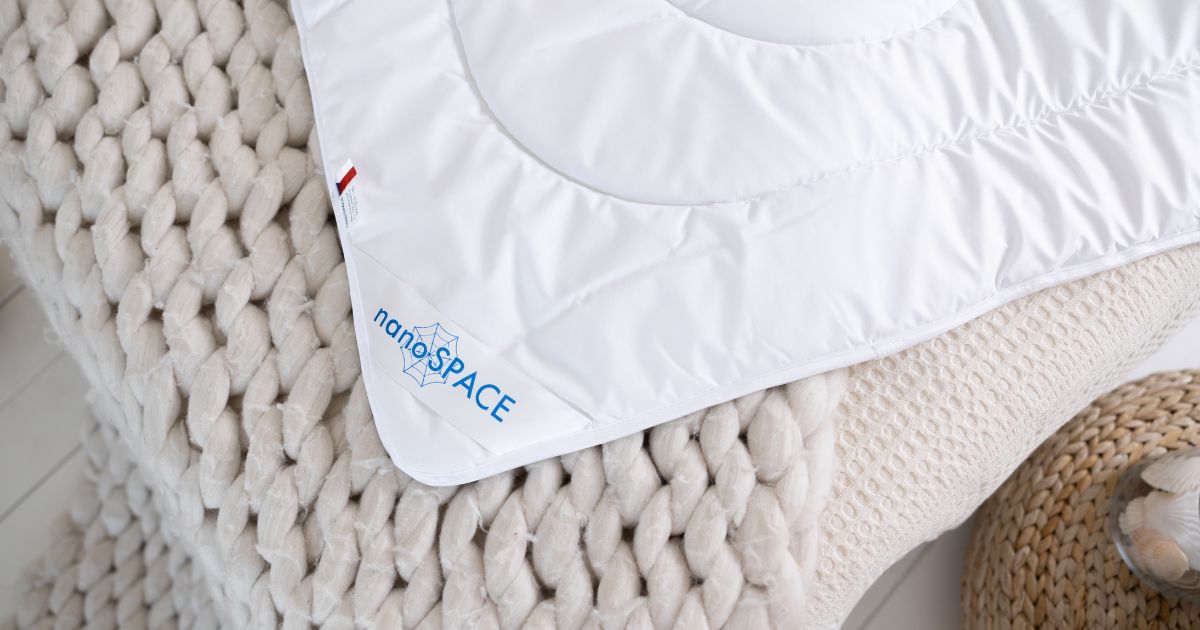
Nanocotton® from nanospace.store revolutionized this paradigm when it became the world's first functional bed linen that fully replaces traditional anti-mite covers. The innovation lies in sophisticated three-layer sandwich construction: 100% organic cotton satin on top providing luxurious softness and hypoallergenic comfort, a nanofiber membrane in the middle creating the impenetrable allergen barrier, and durable 100% polyester fabric on the bottom adding structural strength.
This integrated design means you simply use Nanocotton® bed sheets, duvet covers, and pillowcases as your complete bedding—the protection is built directly into beautiful, comfortable bedding you'd choose even without allergy concerns. There are no separate barrier covers to wrestle with, no plastic-feeling materials against your skin, and no compromise between protection and aesthetics. The nanofiber membrane works invisibly inside the fabric structure, blocking allergens while the organic cotton surfaces provide all the comfort qualities people love about premium natural bedding.
The organic cotton used is completely natural, unbleached, and undyed—you can even see darker pieces of the cotton plant in the fabric structure, evidence of its genuine organic, unprocessed nature. This makes it ideal for people with atopic dermatitis, eczema, or extreme skin sensitivities. The material is certified by OEKO-TEX® STANDARD 100, confirming it meets rigorous safety and sustainability standards. You get medical-grade allergen protection combined with luxury-level comfort in bedding gentle enough for the most sensitive skin.
#produkty#https://www.nanospace.store/nanocotton/
Complete System Approach: Beyond Just Sheets
Why Mattress Protection Is Primary
Your mattress represents the single largest dust mite reservoir in your bedroom, potentially harboring anywhere from 100,000 to 10 million of these microscopic creatures. Even if you use the finest anti-allergy pillows and duvets, sleeping directly on an unprotected mattress colonized by millions of mites ensures continued allergen exposure. Effective dust mite allergy management must start with comprehensive mattress protection.
Nanofiber bed sheets from nanospace.store create an impermeable layer over your entire mattress, preventing the mites living deep within the mattress from reaching the surface where you sleep. This approach proves more practical than traditional full-encasement mattress covers that require completely wrapping the mattress in a zippered barrier. While encasements work when properly installed, they're difficult to put on, impossible to wash frequently, and often get removed during mattress flipping or cleaning and never properly replaced.
.jpg)
Read: Dust Mite Allergies in Children and Adults: Symptoms, Manifestations, and Advice
Barrier sheets that you use as your normal top sheet provide protection you interact with every night, making it impossible to forget or neglect. You simply make your bed with Nanocotton® sheets the same way you would with any bedding—the protection happens automatically without requiring any special installation or maintenance procedures. When it's time to wash, you launder the sheets at gentle temperatures (30-40°C), and the nanofiber barrier emerges from the wash cycle with its 99.9% effectiveness completely intact.
The Critical Importance of Anti-Allergy Pillows
While mattresses harbor the most dust mites by total volume, pillows may represent the most dangerous allergen exposure point. Your face rests against your pillow for 6-8 hours nightly, meaning you're breathing air filtered through whatever allergens have accumulated in the pillow material. Traditional pillows filled with down, feathers, or even synthetic materials become dust mite colonies within months of use, concentrating allergens precisely where they'll most directly affect your respiratory system.
Standard pillowcases—even those made from high-quality cotton, bamboo, or silk—provide no barrier whatsoever. The 420,000-nanometer pore sizes allow dust mites and allergens to pass freely between the pillow interior and the surface your face contacts. Washing pillowcases regularly only cleans the surface while leaving the allergen-saturated pillow filling completely unaffected.
Complete anti-dust mite pillows with integrated nanofiber barriers, like those available from nanospace.store, prevent allergen accumulation inside the pillow filling itself. The barrier is built into the pillow construction rather than being a separate cover you must remember to use. These pillows can be filled with comfortable, supportive materials because the nanofiber membrane prevents dust mites from colonizing the filling regardless of what material it contains. You get the support and comfort you need from your pillow without the allergen exposure that ruins sleep quality and worsens daytime symptoms.
#produkty#https://www.nanospace.store/anti-dust-mite-pillows/
Anti-Allergy Duvets Complete the Protection
Duvets and comforters represent the third major allergen reservoir in your bed. Traditional duvets filled with down, feathers, wool, or synthetic fibers become dust mite habitats over time, accumulating allergens throughout their filling material. Washing duvet covers addresses only the outer fabric while leaving the allergen-colonized interior completely untouched.
Anti-allergy duvets with nanofiber barrier technology prevent dust mites from ever accessing the filling material. The barrier is integrated into the duvet construction, creating an impermeable seal around the filling. This means your duvet remains as allergen-free in year five as it was when new, assuming proper care and no physical damage to the barrier. The filling material stays clean, maintains its loft better without dust mite waste products degrading it, and provides consistent warmth without allergen exposure.
nanospace.store offers various anti-allergy duvet options designed for different seasonal needs—lightweight summer duvets, medium-weight options for spring and fall, and warm winter duvets. All incorporate the same nanofiber barrier technology that blocks 99.9% of allergens while maintaining breathability and comfort. Using coordinated bedding systems where sheets, pillows, and duvets all incorporate nanofiber barriers creates comprehensive protection that addresses every potential allergen source rather than leaving gaps that compromise overall effectiveness.
#produkty#https://www.nanospace.store/anti-dust-mite-duvets/
Comparing Cost vs. Value Across Bedding Options
Initial Investment vs. Long-Term Effectiveness
When evaluating bedding for dust mite allergy, initial purchase price tells only part of the story. A complete value analysis must consider durability, ongoing maintenance costs, consistency of protection, and the health benefits that effective allergen blocking provides.
Natural materials like bamboo or eucalyptus lyocell might cost $50-$150 for a sheet set, offering excellent comfort and modest indirect allergy benefits through moisture management. However, they provide minimal barrier protection, meaning allergy symptoms persist despite the investment. You're purchasing comfortable bedding that doesn't solve your primary problem—waking up congested and miserable.
.jpg)
Read: Anti-Allergy vs Hypoallergenic Bedding: What’s the Difference?
Tight-weave microfiber or cotton barrier products marketed specifically for allergies typically cost $150-$300 for sheet sets, with additional expenses for separate mattress encasements ($100-$200) and pillow covers ($20-$50 each). These provide better allergen blocking than standard materials but require washing at 60°C, consuming significant energy and rapidly degrading the fabrics. Replacement every 1-3 years means ongoing expenses that accumulate over time. Total five-year cost: $400-$800 or more, with inconsistent protection that weakens as fabrics deteriorate.
Premium nanofiber barrier bedding like Nanocotton® from nanospace.store might require $300-$500 initially for a complete sheet set, but it lasts 5-10 years with proper care while maintaining 99.9% allergen blocking throughout its entire lifespan. Lower washing temperatures (30-40°C) reduce energy costs substantially. No separate barrier covers are needed because protection is integrated into the bedding itself. Total five-year cost proves comparable to or less than repeatedly replacing cheaper alternatives, while delivering exponentially better allergen protection and superior comfort.
The Health Investment: Beyond Money
The most significant value calculation involves benefits difficult to quantify in purely monetary terms. How much is it worth to sleep through the night without waking congested? To start your day breathing clearly rather than fighting through morning allergy fog? To see your child sleep peacefully without struggling to breathe or waking repeatedly from allergy symptoms?
Clinical studies consistently show that quality barrier bedding reduces dust mite allergen levels in beds by 80-90% within weeks. More importantly, 73% of participants report significantly better sleep quality after just eight weeks of using proper allergy covers. Many users describe experiencing relief from the very first night—waking up without the usual congestion, going through the morning without sneezing fits, and noticing that symptoms that plagued them for years simply disappear.
.jpg)
Read: How to Choose the Best Mattress Protector?
Better sleep translates to improved daytime functioning, enhanced work productivity, better mood, clearer thinking, and reduced need for allergy medications with their side effects and costs. Parents report that children using effective barrier bedding experience fewer respiratory infections, need less medication, perform better in school, and show improved behavior as sleep quality enhances their overall well-being. These quality-of-life improvements represent the true value proposition that pure cost analysis cannot capture—but that every allergy sufferer recognizes as priceless when they finally experience consistent, effective relief.
Materials to Avoid for Dust Mite Allergies
Down and Feather Filling
Traditional down and feather pillows and duvets represent some of the worst choices for people with dust mite allergies. Beyond the fact that many people have allergies to the feathers and down themselves, these natural fill materials create ideal dust mite habitats—providing warmth, moisture retention, and numerous hiding places within the complex structure of feathers.
Down and feathers trap dead skin cells that filter down through pillowcases and duvet covers, creating concentrated food sources for dust mites. The protein structure of feathers themselves can trigger allergic reactions separate from dust mite allergies, compounding symptom severity. Washing down bedding proves difficult—high temperatures damage the natural oils that give down its loft and insulating properties, yet lower temperatures don't kill dust mites effectively.
For people with dust mite allergies, avoiding down and feather-filled bedding is essential even if you're not allergic to the feathers themselves. The combination of natural allergen sources (feathers) with ideal dust mite habitat (complex structure that traps debris and provides warmth) creates a worst-case scenario for allergy management. Modern synthetic alternatives or natural fills protected by nanofiber barriers provide better options that deliver comfort without the allergen exposure.
Untreated Wool
Wool has complex relationships with dust mite allergies. High-quality wool naturally wicks moisture away from skin, potentially creating less favorable conditions for dust mite proliferation. Some specialty wool products like alpaca fiber are marketed as naturally resistant to dust mites, mold, and mildew, making them suitable for allergy sufferers.
.jpg)
Read: Does Anti-Allergy Bedding Really Stop Dust Mites?
However, untreated wool can also harbor dust mites within its fiber structure, and many people have allergies to wool itself separate from dust mite sensitivities. Wool requires careful washing to avoid shrinkage and felting, often limiting washing to low temperatures that don't effectively eliminate dust mites. The rough texture of some wool products can irritate sensitive skin even if you're not technically allergic to wool proteins.
For dust mite allergy sufferers, wool represents an uncertain choice—potentially helpful for its moisture-wicking properties but potentially problematic if it harbors mites or triggers separate wool allergies. Unless you've specifically tested your tolerance for wool and chosen specialty varieties with documented dust mite resistance, safer alternatives like organic cotton protected by nanofiber barriers provide more reliable allergen protection without the uncertainty.
Chemically Treated "Anti-Allergy" Products
Not all products labeled "anti-allergy" or "anti-dust mite" deliver effective protection. Many rely on chemical treatments—antimicrobial compounds or acaricides applied during manufacturing. While these might work initially, the treatments progressively wash out with laundering, often losing significant effectiveness after just 10-20 wash cycles.
More concerning, some allergy sufferers experience sensitivities to the very chemicals used in these treatments. The compounds that kill or repel dust mites can trigger respiratory irritation, skin reactions, or headaches in vulnerable individuals. You invest in "anti-allergy" bedding that introduces new allergen sources while providing only temporary dust mite protection.
The advantage of quality bedding with physical anti-mite technology lies in its safety combined with durability. Physical barriers like nanofiber membranes rely on no chemical additives whatsoever, completely avoiding potential chemical sensitivity risks. For allergic individuals, products using physical methods don't introduce new allergens at all, fundamentally addressing the secondary allergy issues that chemical treatments may cause. When evaluating "anti-allergy" bedding, understand exactly what provides the protection—permanent physical barriers or temporary chemical treatments that will disappear within months.
.jpg)
Read: What to Do when You Can't Sleep: 30 Scientifically Backed Tips
Care and Maintenance for Maximum Protection
Washing Frequency and Temperature
The washing requirements for dust mite allergy bedding depend entirely on which technology provides protection. Traditional approaches recommend weekly washing at 60°C (140°F) to kill dust mites, but this aggressive treatment consumes enormous energy and rapidly degrades fabric quality.
Nanofiber barrier bedding requires fundamentally different care because it prevents dust mites from accessing the bedding in the first place. When mites can't colonize your sheets, killing them through high-temperature washing becomes unnecessary. Quality nanofiber bedding can be washed at gentle temperatures of 30-40°C while maintaining full protective properties. This extends fabric lifespan dramatically, reduces energy costs substantially, and makes maintenance far more practical for busy households.
Washing frequency can also be reduced somewhat compared to traditional bedding, though most people prefer washing sheets weekly or biweekly for general hygiene and freshness. The key difference is that you're washing to remove body oils, sweat, and general debris—not desperately trying to kill dust mite colonies that have infiltrated your bedding. The nanofiber barrier ensures your sheets remain allergen-free between washes, meaning even if circumstances delay washing for a week or two, you're still protected.
Detergent Selection and Fabric Softener Avoidance
Proper detergent selection helps maintain nanofiber membrane functionality and extends bedding lifespan. Use mild, fragrance-free detergents without harsh chemicals, bleach, or optical brighteners that might damage the ultra-fine fiber structure. Liquid detergents generally dissolve more completely than powders, reducing residue that could accumulate in the nanofiber pores over time.
Critically, avoid fabric softeners entirely when washing nanofiber barrier bedding. Fabric softeners work by coating fibers with waxy compounds that make them feel softer and reduce static. These coatings can clog the microscopic pores in nanofiber membranes, potentially reducing breathability and even compromising allergen-blocking effectiveness. The organic cotton surfaces in products like Nanocotton® remain naturally soft without needing fabric softeners, and avoiding these products ensures the nanofiber membrane maintains optimal performance.

Read: Save Money on Laundry: 10 Tips for Energy-efficient Washing
If you must use bleach for sanitization purposes occasionally, choose oxygen bleach rather than chlorine bleach, and use it sparingly. Excessive bleach exposure can degrade both natural cotton fibers and synthetic nanofiber membranes over time. Most routine washing requires nothing beyond mild detergent—the nanofiber barrier prevents allergen accumulation, so you're simply removing normal body oils and perspiration rather than battling embedded allergens.
Environmental Considerations and Sustainability
The Longevity Advantage
Sustainability in bedding extends beyond whether materials are organic or renewable—it encompasses the entire lifecycle including how long products remain functional before requiring replacement. Textile production consumes enormous resources (water, energy, chemicals, raw materials) while generating significant waste and pollution. Every premature replacement multiplies your environmental footprint.
Traditional anti-allergy bedding requiring replacement every 1-3 years as chemical treatments wash out or fabrics degrade creates substantial environmental burden over a decade. You might purchase and discard four or five complete bedding sets during a period when a single set of quality nanofiber bedding would continue providing effective service. That's potentially 75-80% less textile waste entering landfills, fewer resources consumed in manufacturing, and dramatically reduced carbon emissions from production and transportation.
The durability of nanofiber barrier bedding makes it paradoxically more sustainable than "eco-friendly" materials like bamboo or organic cotton that lack genuine allergen protection. If bamboo sheets don't solve your allergy problem, you'll continue searching for solutions—potentially purchasing multiple different products before finding effective relief. Investing in bedding that actually works the first time eliminates the waste associated with trial-and-error approaches using multiple inadequate products.
_1.jpg)
Read: Identifying and Managing Allergies in Infants and Children
Energy Efficiency Through Lower Washing Temperatures
The environmental advantage of nanofiber bedding extends to ongoing maintenance. Washing at 30-40°C instead of 60°C reduces energy consumption by approximately 40-60% per load. Over hundreds of washing cycles throughout the bedding's 5-10 year lifespan, this energy savings becomes substantial—potentially reducing the carbon emissions associated with bedding care by several hundred kilograms of CO2.
For environmentally conscious consumers seeking both effective allergy relief and sustainable choices, nanofiber barrier bedding represents the optimal solution. The combination of extended product lifespan (reducing waste), lower washing temperatures (reducing energy consumption), and effectiveness that eliminates trial-and-error purchasing of multiple inadequate products creates a sustainability profile superior to alternatives that seem "greener" based solely on material origin.
Conclusion
The best bedding for dust mite allergy must deliver three essential qualities simultaneously: impenetrable barrier protection blocking 99%+ of allergens, breathability and comfort sufficient for consistent nightly use, and durability that maintains effectiveness for years rather than washing away after several laundry cycles. Traditional materials like cotton, bamboo, silk, and even tight-weave microfiber fall short on at least one of these critical dimensions—comfortable but porous, or protective but uncomfortable, or initially effective but temporary. Nanofiber membrane technology with 80-150 nanometer pores achieves verified allergen capture rates of ≥99.9%, blocking dust mites and their waste products through absolute physical barriers while maintaining excellent breathability and lasting 5-10 years with proper care. Products like Nanocotton® from nanospace.store represent the current pinnacle of this technology, integrating nanofiber barriers with organic cotton luxury in bedding you'd choose for comfort alone—eliminating the compromises that plagued earlier anti-allergy solutions. For dust mite allergy sufferers seeking genuine, lasting relief rather than modest symptom reduction or temporary improvements, nanofiber barrier bedding isn't just the best option—it's the only technology that delivers comprehensive protection without sacrificing the comfort essential for restful sleep and consistent use.
Frequently Asked Questions
What is the single most effective material for dust mite allergy bedding?
Nanofiber membrane technology provides the most effective barrier against dust mites and their allergens, achieving verified capture rates of ≥99.9% through pore sizes of just 80-150 nanometers—approximately 5,000 times smaller than dust mites themselves. Traditional materials like cotton (420,000nm pores), bamboo, silk, and even tight-weave microfiber cannot achieve comparable protection because their pore sizes remain orders of magnitude too large to physically block allergen particles.
Can natural materials like bamboo or organic cotton really protect against dust mites?
While natural materials like bamboo and organic cotton offer excellent comfort and hypoallergenic properties (not causing reactions themselves), they provide minimal barrier protection against dust mites. Bamboo's moisture-wicking properties create less favorable conditions for mite proliferation, but this indirect benefit doesn't prevent the millions of mites already in your mattress from reaching you or shedding allergens onto your sleeping surface. For genuine protection, you need physical barriers with pore sizes small enough to block allergens—which only technologies like nanofiber membranes provide.
Do I need separate mattress covers if I use anti-allergy sheets?
With traditional tight-weave or chemically treated sheets, you typically need separate full-encasement mattress covers because the sheets alone don't provide complete protection. However, nanofiber barrier sheets like those from nanospace.store create an impermeable layer over your mattress, eliminating the need for separate uncomfortable encasements. The integrated three-layer construction combines barrier protection with comfort in bedding you use as your normal sheets, simplifying allergy management while providing superior effectiveness compared to traditional multi-layer systems.
How do I know if "anti-allergy" bedding marketing claims are legitimate?
Look for specific, verifiable evidence rather than vague marketing terminology. Legitimate anti-allergy bedding should clearly explain the protection mechanism (physical barrier pore sizes, verified allergen capture rates) and provide independent laboratory testing results from recognized institutions. Products certified by OEKO-TEX®, tested by universities, or approved by allergy organizations offer more credibility than those making unsupported claims. Be particularly skeptical of chemical treatments that don't specify how many washes the protection survives, or "tight-weave" claims without actual pore size measurements.
Is investing in premium nanofiber bedding worth the higher initial cost?
Yes, when you calculate total cost of ownership over 5-10 years. While nanofiber bedding like Nanocotton® costs more initially ($300-$500 for a sheet set), it lasts 5-10 years while maintaining 99.9% effectiveness and can be washed at lower temperatures. Cheaper alternatives ($50-$150) either don't work effectively or require replacement every 1-3 years plus expensive 60°C washing, resulting in comparable or higher total costs with inferior protection. Factor in reduced medication needs, fewer doctor visits, and dramatically better sleep quality, and premium nanofiber bedding delivers superior value alongside unmatched effectiveness.