
You diligently apply your facial moisturisers, morning and evening, year after year. Then, one day, you catch a glimpse of your profile in harsh lighting and pause: the skin beneath your chin seems to belong to someone a decade older. If this sounds familiar, you are certainly not alone, and it is by no means a coincidence. The delicate tissue in this area is exceptionally vulnerable, which is why neck wrinkles frequently appear much earlier and look far more pronounced than fine lines on the face. The skin here endures entirely different conditions and structural challenges compared to the skin on your face. The reassuring news is that once you understand the biological and environmental reasons behind this accelerated ageing, you can intervene effectively from the comfort of your own home. In this comprehensive guide, we will explore precisely why the neck and décolleté age so rapidly, which lifestyle factors accelerate this process, and how you can establish a highly effective daily routine. We will also clarify what modern cosmetics can achieve and when a dermatologist might be required, relying solely on verified dermatological evidence rather than empty marketing promises.

Key takeaways if you're short on time
If you are in a rush and need the essentials quickly, here is a brief overview of the fundamental points to help you understand proper care.
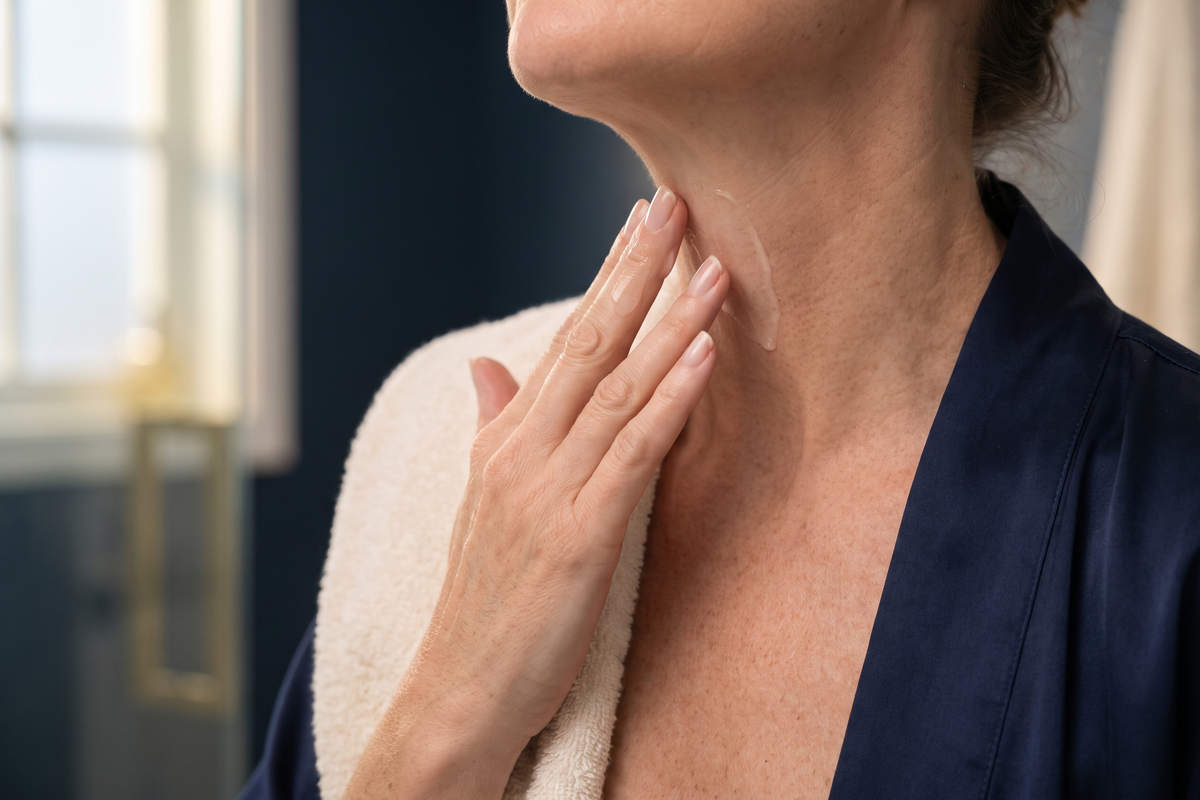
- The skin on the neck and décolleté is thinner and produces less sebum, lacking the robust structural support found in the face. This causes fine lines to form earlier and become more visible.
- Sun exposure is the primary accelerator of premature ageing. People often forget to protect their chest with sunscreen for years, yet UV radiation is responsible for the vast majority of early wrinkles.
- Sleep positions and constantly tilting your head down play a role, although the notion that mobile phones cause permanent wrinkles has not been conclusively confirmed by science.
- Consistent home care acts as excellent prevention and improves the look of the skin: sun protection, thorough hydration, antioxidants like vitamin C and hyaluronic acid, and targeted masks are essential.
- Cosmetics cannot heal the skin or lift it like a surgical procedure, but they can noticeably smooth the texture, boost circulation, and slow visible ageing, whilst deep creases remain the domain of a doctor.
Why the Skin on Your Neck and Décolleté Ages Faster Than Your Face
If you were to examine the skin on your face and your neck under a microscope, you would observe two entirely different anatomical landscapes. The skin covering the neck and décolleté is significantly thinner, possesses a much lower density of sebaceous glands, and lacks the robust underlying support network of collagen and elastin that gives facial skin its plumpness. Sebum, the natural oil produced by these glands, acts as a crucial protective barrier that locks precious moisture within the tissues and defends against environmental aggressors. In areas where sebum production is naturally sparse, the skin dries out much faster, loses its inherent elasticity, and begins to display fine lines and a crepey texture far earlier in life.
A comprehensive narrative review by Polish researchers focusing on neck and cleavage rejuvenation (Pająk et al., 2022) summarises this phenomenon with absolute clarity. The authors note that the neck and décolleté are among the most visibly ageing areas of the human body because they combine inherently thin skin with relentless daily movement and high levels of cumulative sun exposure. For women, there are additional physiological factors at play. The mechanical strain exerted by the weight of the breasts constantly pulls and stretches the delicate skin of the chest. Furthermore, hormonal shifts, particularly the profound changes experienced during menopause, have a dramatic impact. The sharp decline in oestrogen levels during this period drastically accelerates the depletion of collagen, the protein responsible for structural integrity. Given this combination of structural fragility and hormonal shifts, it is hardly surprising that neck wrinkles can become prominent long before we even think to extend our skincare routine below the jawline.
Naturally, the constant mechanical motion of the neck also plays a substantial role in how the skin ages. The neck is virtually never at rest; we turn our heads, nod, speak, swallow, and look down constantly. Every single movement folds and stresses the skin. In areas where this repetitive bending occurs, horizontal lines gradually begin to etch themselves into the tissue. These horizontal bands, sometimes colloquially referred to as "Venus rings", are a natural consequence of human anatomy and movement, but their depth and severity are strongly influenced by how well the skin is cared for and protected over the decades.
The Primary Causes Behind Neck Wrinkles and Crepey Skin
While a certain portion of the ageing process is dictated by our genetics—a biological blueprint we simply cannot rewrite—the vast majority of visible neck wrinkles are caused by extrinsic environmental factors. Fortunately, because these factors originate outside the body, we have a significant degree of control over them. Once you identify these primary external influences, you can take deliberate steps to minimise their impact, thereby preserving the smooth appearance of your skin for much longer.
Sun Exposure: The Silent but Destructive Culprit
If you take only one piece of advice from this entire guide, let it be this fundamental rule: your neck and décolleté require sunscreen just as much as your face. Ultraviolet (UV) radiation is exceptionally aggressive; it penetrates the skin and systematically breaks down the collagen and elastin fibres that keep the tissue firm and resilient. This process, known as photoageing, is responsible for the overwhelming majority of premature skin ageing. The décolleté is particularly vulnerable because it is frequently exposed by lower necklines during the warmer months, yet it is rarely afforded the systematic, daily protection that people apply to their faces. The cumulative result of this neglect is not merely the formation of deep neck wrinkles, but also the development of unsightly hyperpigmentation, stubborn sun spots, and a permanent, patchy redness.
In practical terms, proper protection means applying a generous layer of sunscreen to your neck and chest every single day, even if you live in a city or if it is the middle of winter. UVA rays, which are primarily responsible for ageing the skin, penetrate effortlessly through thick clouds and even glass windows. Ideally, you should reapply your sun protection throughout the day, especially if you are spending extended periods outdoors. If you are heading out into direct, intense sunlight, do not rely exclusively on topical creams. Physical barriers, such as a lightweight scarf, a high collar, or a wide-brimmed hat, offer the most reliable defence for your chest. If you are unsure which product to select, you can read our detailed guide on how to choose a good sunscreen. Initially, applying SPF to your body might seem like an annoying extra step, but over the course of a decade, this single habit will make a staggering difference to the texture and appearance of your skin.
Sleep Positions and the Formation of Creases
The way you sleep has a surprisingly profound impact on the smoothness of your décolleté. Sleeping on your side or on your stomach forces the delicate skin of your chest to fold and compress against itself for several hours every night. In your twenties, the high elasticity of your skin means these sleep lines usually vanish within minutes of waking up. However, as the skin matures and loses its structural bounce, these repetitive nightly folds gradually begin to imprint themselves permanently, forming vertical neck wrinkles and deep V-shaped creases on the chest. To prevent this mechanical ageing, dermatologists frequently recommend training yourself to sleep on your back. Additionally, it is wise to avoid sleeping on excessively high pillows, which force the chin down towards the chest, exacerbating the formation of horizontal neck bands.
Tech Neck: Do Mobile Phones Really Cause Neck Wrinkles?
You have likely encountered the widely discussed concept of "tech neck". This term refers to the modern habit of constantly tilting the head downwards to look at mobile phones, tablets, and laptops, a posture that repeatedly folds and strains the skin of the neck. Intuitively, it makes perfect sense that this constant creasing would accelerate ageing. However, it is important to remain objective and scientifically accurate: the claim that using a mobile phone directly causes permanent neck wrinkles has not yet been conclusively proven by any reliable, long-term scientific studies. What has been extensively documented, however, is something slightly different but equally concerning: the immense, unnatural load placed upon the cervical spine and the surrounding muscles when the head is held in a forward, downward position for hours on end. Correcting your posture, keeping your back straight, lifting your devices to eye level, and taking regular screen breaks are absolutely worthwhile habits. Your spine and neck muscles will thank you, and relieving that mechanical stress will not do your skin any harm.
Dehydration, Smoking and the Gradual Loss of Collagen
Skin that lacks moisture always appears older and more wrinkled than it actually is. When the uppermost layers of the epidermis are dehydrated, the skin loses its plumpness, allowing even the finest, most superficial lines to stand out in stark relief. Beyond topical hydration, lifestyle choices play a massive role. Smoking is particularly devastating for the skin; it introduces thousands of free radicals, constricts the blood vessels (thereby reducing the delivery of oxygen and nutrients to the tissues), and actively impairs the body's ability to synthesise new collagen. This is why the décolleté of heavy smokers demonstrably ages and thins much faster than that of non-smokers.
Superimposed on all these environmental factors is the natural, chronological depletion of collagen, which begins to accelerate noticeably after we reach our thirties. Because collagen is the primary scaffolding of the skin, its gradual loss leads inevitably to sagging and wrinkling. Therefore, it makes perfect sense to supply the body and the skin with ingredients that actively support hydration and structural firmness. For a deeper dive into how this vital protein functions within the skin matrix and how you can support it, you can explore our detailed article on collagen for skin.
Building a Sensible Daily Routine for Your Neck and Décolleté
Establishing a proper skincare routine for your neck and chest does not require a degree in chemistry, nor does it necessarily have to be exorbitantly expensive. It relies on a few fundamental, well-chosen habits that yield the greatest benefits only when practised with unwavering daily consistency. The golden rule of anti-ageing is remarkably straightforward: whatever beneficial products you apply to your face, you must thoroughly blend down over your neck and across your décolleté. For far too many people, these vulnerable areas remain entirely neglected for decades, receiving nothing more than residual shower gel.
The absolute foundation of this routine, as previously mentioned, is robust sun protection every single day of the year. In the morning, it is highly beneficial to apply a high-quality antioxidant serum before your moisturiser and SPF. In practice, this usually means reaching for a well-formulated vitamin C serum. According to a comprehensive scientific review published in the journal Nutrients (Pullar et al., 2017), vitamin C is crucial for skin health; it helps the skin successfully neutralise the damaging free radicals generated by UV exposure and pollution, whilst also acting as an essential co-factor in the biological synthesis of new collagen. By applying vitamin C daily, you are actively helping your skin defend its existing structural proteins while encouraging the production of new ones.
Throughout the day, and particularly in your evening routine, you will want to focus heavily on profound hydration. This is where ingredients like hyaluronic acid shine brilliantly. This remarkable molecule can bind an enormous amount of water to itself, drawing moisture into the skin and noticeably plumping out fine lines, making the skin appear instantly smoother and more resilient. For those who wish to elevate their routine to the next level, carefully introducing a gentle retinoid in the evening can be highly effective for encouraging cellular turnover. However, this must be done with extreme caution and ample spacing between applications. Because the skin on the neck is so thin and lacks protective sebum, it tolerates strong active ingredients like retinoids much more poorly than the face, and aggressive application can lead to severe irritation, redness, and a compromised skin barrier.
If you are wondering how to pull all these elements together into a cohesive regimen, consistency is your best friend. For further reading on structuring an effective anti-ageing strategy, you can review our comprehensive guide on how to tackle wrinkles. A practical daily routine should look something like this: in the morning, gently cleanse your face, neck, and chest. Apply your vitamin C serum, follow with a nourishing moisturiser to lock in hydration, and finish with a generous layer of SPF 30 or higher. In the evening, after thoroughly cleansing away the day's grime and sunscreen, apply a regenerating serum or a richer, more emollient cream. Two or three nights a week, you might incorporate a gentle retinoid, provided your skin tolerates it without redness. Then, once or twice a week, treat the area to a specialised, targeted mask. This simple yet highly considered regimen will keep neck wrinkles safely at bay, primarily because it is practical enough to repeat every single day. In skincare, daily consistency will always achieve far more than a single, expensive cosmetic miracle applied erratically once a month.
The Importance of Gentle Massage
When applying your creams and serums, do not underestimate the power of a gentle, deliberate massage. Always sweep your hands in upward motions, starting from the base of the décolleté and moving up towards the jawline. This upward massage technique beautifully stimulates local blood circulation, bringing fresh oxygen to the tissues, and helps the skin absorb the active ingredients much more effectively. Furthermore, it avoids pulling the delicate skin downwards, which would only exacerbate the natural effects of gravity over time.
How Diet and Hydration Support Your Skincare Routine
Healthy, resilient skin is not built solely from the outside in; the internal environment of your body provides the essential building blocks. An adequate daily intake of pure water, high-quality proteins, and a diverse array of colourful vegetables supplies the skin with the necessary amino acids, vitamins, and antioxidants required for cellular repair. Hydrating from within ensures that the moisture-binding ingredients you apply topically, like hyaluronic acid, actually have water to draw upon.
Conversely, a diet high in refined sugars and excessive alcohol consumption can significantly accelerate the ageing process. Sugar contributes to a process called glycation, where glucose molecules bind to collagen and elastin fibres, making them stiff, brittle, and prone to breaking. Alcohol is a diuretic that severely dehydrates the body and the skin, whilst also depleting vital stores of vitamin A, a crucial nutrient for cellular turnover. This internal chemical stress manifests externally as dull, sagging, and prematurely wrinkled skin.
While there is no specific miracle meal that will suddenly erase neck wrinkles overnight, and you certainly do not need to search the internet for a restrictive "anti-ageing diet", a balanced nutritional profile and honest hydration form a highly effective, low-cost foundation for skin health. They perfectly complement all the topical care you apply and are always the best place to start before rushing out to buy increasingly expensive cosmetic solutions.
How Nanofibre Masks Work to Rejuvenate the Skin
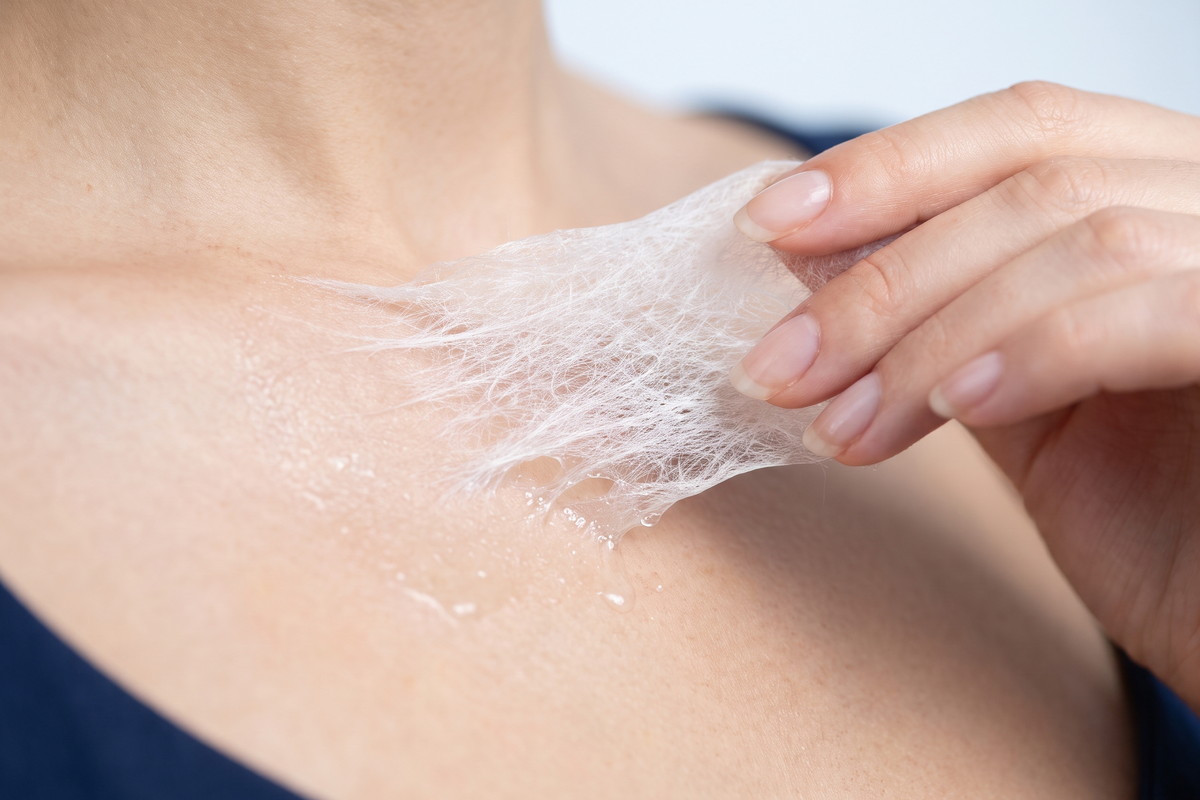
Caring for the neck and chest with traditional wet sheet masks or heavy clay pastes can be a frustrating task. Standard cosmetic masks often slip uncomfortably down the neck, and before the ingredients can properly absorb, half of the precious active compounds usually end up smeared across your clothing. It is precisely to solve this practical dilemma that dry nanofibre masks were developed. Instead of a messy, dripping gel, these innovative products consist of a fine, dry white textile composed of millions of microscopic nanofibres. You can read a detailed explanation of this fascinating technology in our article discussing what nanofibre is and how it is made.
The application method is entirely unique. The dry nanofibre sheet is placed directly onto skin that has been freshly cleansed and thoroughly dampened with water. Upon contact with the moisture, the nanofibres instantly dissolve, transforming into a potent delivery system that transports the active ingredients precisely where they are needed, without any slipping, dripping, or mess. The entire process is incredibly efficient, requiring only an eight-minute application time. After removing the backing layer, you simply massage any remaining dissolved gel gently into the skin.
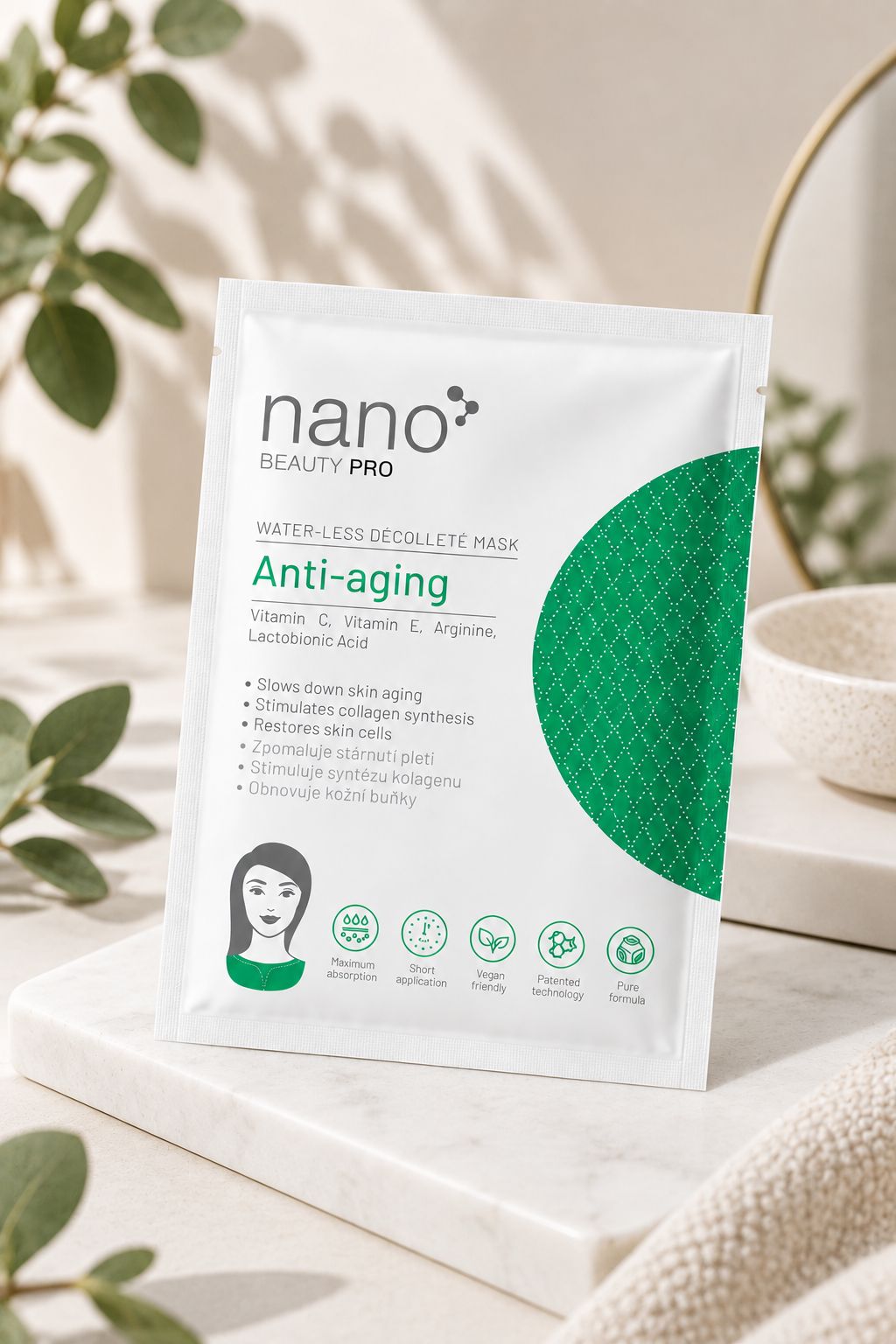
The nanoBeauty masks manufactured by our Czech family company, nanoSPACE (founded in 2012), cleverly combine a potent blend of vitamin C, vitamin E, arginine, and lactobionic acid. Lactobionic acid, in particular, demonstrates truly remarkable benefits for ageing skin. A peer-reviewed study published in the prestigious Journal of Clinical Medicine (Warowna et al., 2025) closely monitored 180 women and confirmed that this specific polyhydroxy acid drastically improves both the hydration and the elasticity parameters of the skin, achieving notable results even in the 50–60 age group. Because we understand that different areas of the body require specific shapes for optimal adherence, we offer targeted solutions. You can incorporate the Anti-aging Dry Sheet Nanofiber Neck Mask nanoBeauty for the throat area, the anatomically shaped Anti-aging Dry Sheet Nanofiber Décolleté Mask nanoBeauty for the chest, and the Anti-aging Dry Sheet Nanofiber Face Mask nanoBeauty for your facial routine.
Targeted Care for Your Face, Neck and Décolleté


What Cosmetics Can Achieve Versus When to See a Dermatologist
It is vital to be completely honest with ourselves regarding expectations. Standard cosmetics care for and improve the look of the skin—they do not cure, heal, or treat underlying medical or severe structural issues, and no miraculous cream can ever replace a complex aesthetic procedure. What honest, systematic home care reliably achieves is noticeable hydration, a smoother texture, improved blood circulation, and a significant slowing of visible ageing. For fine lines, dullness, and a noticeably dry décolleté, a diligent daily routine that includes high-quality active ingredients and nanofibre masks is usually more than sufficient. When consistently applied, desirable improvements to the skin's appearance are often visible after just a few short weeks.
An entirely different situation arises when dealing with deep, permanently etched neck wrinkles and significantly sagging, loose skin. At this stage, topical cosmetics simply cannot penetrate deeply enough to alter the fundamental structure of the compromised tissue. This is where professional dermatological interventions usually come into play. The aforementioned narrative review (Pająk et al., 2022) discusses several clinical options, such as micro-needling, which purposefully stimulates deep tissue regeneration in the neck and cleavage. Other advanced methods include sophisticated laser resurfacing, radiofrequency treatments to tighten the skin, or the careful application of dermal fillers. These demanding, invasive methods belong exclusively in the sterile environment of a doctor's clinic, not in a home bathroom cabinet.
Nevertheless, even if you choose to pursue professional aesthetic treatments, a rigorous home skincare routine remains absolutely indispensable. Without diligent daily sun protection, hydration, and antioxidant support, the positive effects of any expensive dermatological procedure will fade much faster. The natural formation of neck wrinkles is not a personal failure, nor is it something to be ashamed of; it is simply a physiological consequence of having thinner skin that works tirelessly every day. By protecting it from the sun and providing targeted care, you can radically slow its ageing. The best time to start such a routine was likely a decade ago. The second best time is tonight, when you are cleansing your face—and this time, you will confidently smooth your moisturisers right down over your neck and décolleté.
Frequently asked questions
Here you will find answers to the most common queries regarding neck and décolleté care. If you are curious about something specific that was not covered in the article, please do not hesitate to contact us.
At what age do neck wrinkles typically start to form?
The first fine lines often appear for many individuals in their early thirties, primarily because the skin on the neck is naturally thin and lacks protective sebum. However, the exact timing depends heavily on genetics and the cumulative amount of sun exposure the skin has endured over a lifetime; someone who has spent years in the sun without UV protection will notice neck wrinkles significantly earlier and more prominently.
Is it possible to completely get rid of neck wrinkles and chest creases?
Unfortunately, it is not possible to completely erase deep creases and permanent neck wrinkles using only home cosmetic care—that level of structural change requires specialised medical procedures, and even those results are usually temporary. However, a consistent and thorough routine (involving sun protection, deep hydration, and the use of nanofibre masks) will visibly soften fine lines, alleviate unpleasant dryness, and highly effectively slow down the formation of new wrinkles.
How often should I use a targeted mask on my neck and décolleté?
For the nanoBeauty dry sheet nanofibre masks, we recommend applying them approximately once or twice a week to maintain optimal results. If you wish to significantly accelerate the visible improvements to the look of your skin, they are gentle enough to be used daily. The application process itself is highly efficient, taking only about eight minutes of your time.
Does using a mobile phone actually cause neck wrinkles?
A direct causal link between constantly tilting your head down at a phone screen and the formation of permanent neck wrinkles has not yet been convincingly confirmed by rigorous science. However, holding your head in a forward, downward position for long periods demonstrably places an unhealthy strain on the cervical spine and neck muscles, so correcting your posture and lifting your device higher is highly beneficial in the long run regardless.
Is my regular facial moisturiser sufficient for my neck and décolleté?
In the vast majority of cases, absolutely yes—the fundamental rule is to extend your standard facial care directly down to your neck and chest. The only things you must pay special attention to are ensuring you apply a high-quality sunscreen (which is unfortunately often neglected in these areas) and being highly cautious with strong retinoids. The thin skin on the neck tolerates potent active ingredients much more poorly than the face, so introduce them with maximum care.

Sources
We based this article on verified dermatological evidence. Below is the full list of scientific studies referenced:
- Pająk, J. et al. (2022) 'Prevention of Ageing — The Role of Micro-Needling in Neck and Cleavage Rejuvenation: A Narrative Review', International Journal of Environmental Research and Public Health, 19(15), 9055.
- Warowna, M., Strzelecka, A., Kręcisz, B. (2025) 'Influence of Lactobionic Acid on Hydration and Elasticity Parameters in Women Aged 30–40 and 50–60 Years in Comparison to Mandelic Acid', Journal of Clinical Medicine, 14(5), 1619.
- Pullar, J. M., Carr, A. C., Vissers, M. C. M. (2017) 'The Roles of Vitamin C in Skin Health', Nutrients, 9(8), 866.