
A forehead that turns shiny by noon, clogged pores, blackheads around the nose and spots that always show up at the worst possible moment. And on top of that, the advice you have probably heard a hundred times: "just dry it out." And that is exactly where most people go wrong. Caring for acne-prone skin is not about drying and scrubbing, but the opposite — gentle yet thorough cleansing that rids the skin of excess oil and impurities without stripping away its protective barrier. In this guide we will walk you through it step by step: what to cleanse with, how to use exfoliating acids, and why even oily skin must never skip hydration.
Key takeaways if you're short on time
- Do not dry out oily skin. When you strip away its oil, the sebaceous glands produce even more — drying makes the problem worse, not better.
- The most common mistake is over-exfoliation. Stinging, tightness and redness are not signs of effect, but of a damaged skin barrier.
- The foundation is gentle two-step cleansing — makeup removal followed by washing with a mild gel, ideally one with exfoliating acids.
- Choose acids according to how sensitive your skin is. AHAs work on the surface, BHA (salicylic acid) cleans pores from within, and PHAs are the gentlest option for sensitive skin.
- Hydration and SPF are non-negotiable, even for acne-prone skin. Without them the rest of your routine won't deliver, and acids leave you prone to pigmentation.
Why caring for acne-prone skin looks different from what you'd expect
Acne-prone skin has one awkward trait: it produces more sebum and its pores clog more easily. Logic suggests you simply remove the oil and the problem is solved. The reality is different. When you aggressively degrease the skin — with alcohol, a drying gel or an alcohol-based product — you damage its protective film. The skin immediately registers the lack of oil and starts producing even more than before. A vicious circle sets in: the more you degrease, the oilier your skin gets.
Plenty of people also misread their "sensitive skin". They are convinced their complexion is hypersensitive by nature. Yet sensitivity is often a consequence, not a cause — the skin is irritated and reactive because earlier products wrecked its barrier. It can be repaired, though. The harder part is letting go of the idea that "stronger is better". If you are not sure what you are working with, start with our guide on how to discover your skin type, because oily and dry skin differ at every step.
And one more thing that reliably meets with resistance: oily skin needs hydration too. Oiliness and dehydration are not mutually exclusive — skin can be shiny and parched beneath the surface at the same time. Dehydrated skin defends itself precisely by producing more oil. Balanced, hydrated skin has no reason to "fight back". This kind of skin does not need punishing, then — it needs calming.
The biggest mistake: over-exfoliation and drying
Once you start tackling blemishes, it is tempting to overdo it with active ingredients. An acid in the morning, another acid in the evening, a scrub twice a week and a drying mask for good measure. This is the fastest route to a damaged barrier — and among skincare experts it is the most common problem there is.
You will recognise it easily. The skin starts to sting on contact with plain water, feels tight, looks red and, paradoxically, gets oilier. Tiny bumps often appear — closed comedones that look like a rash of small white pimples. That is not skin "purging". That is skin begging for a break. If you recognise these signs, the best thing you can do is drop all active ingredients for a few days and go back to nothing but gentle cleansing and hydration.
Treat "old wives' remedies" such as dabbing spots with alcohol or zinc ointment with the same scepticism. They dry the surface but do nothing for the inflammation underneath — in fact, they often deepen it. And forget the maxim "it stings, so it's working". Stinging after a product is not a sign of effectiveness, but a signal that you have disrupted the protective layer. Good care here is unobtrusive: it does not irritate, it does not sting, and the results come gradually.
How to cleanse acne-prone skin step by step
Cleansing is the absolute foundation here — more important than any expensive serum. The goal, however, is not to scour the skin, but to gently lift away oil, impurities and makeup residue so the pores do not clog. It works best in two consecutive steps.
Step 1: Gentle makeup removal and double cleansing
In the evening, especially if you wear makeup or water-resistant sunscreen, a double cleanse makes sense. The first step uses an oil-based product that dissolves oils, makeup and the greasy film left by sunscreen. The second step, a gentle water-based gel, then finishes cleaning the skin. Water and makeup essentially repel each other, whereas oil lifts makeup reliably without any rubbing.
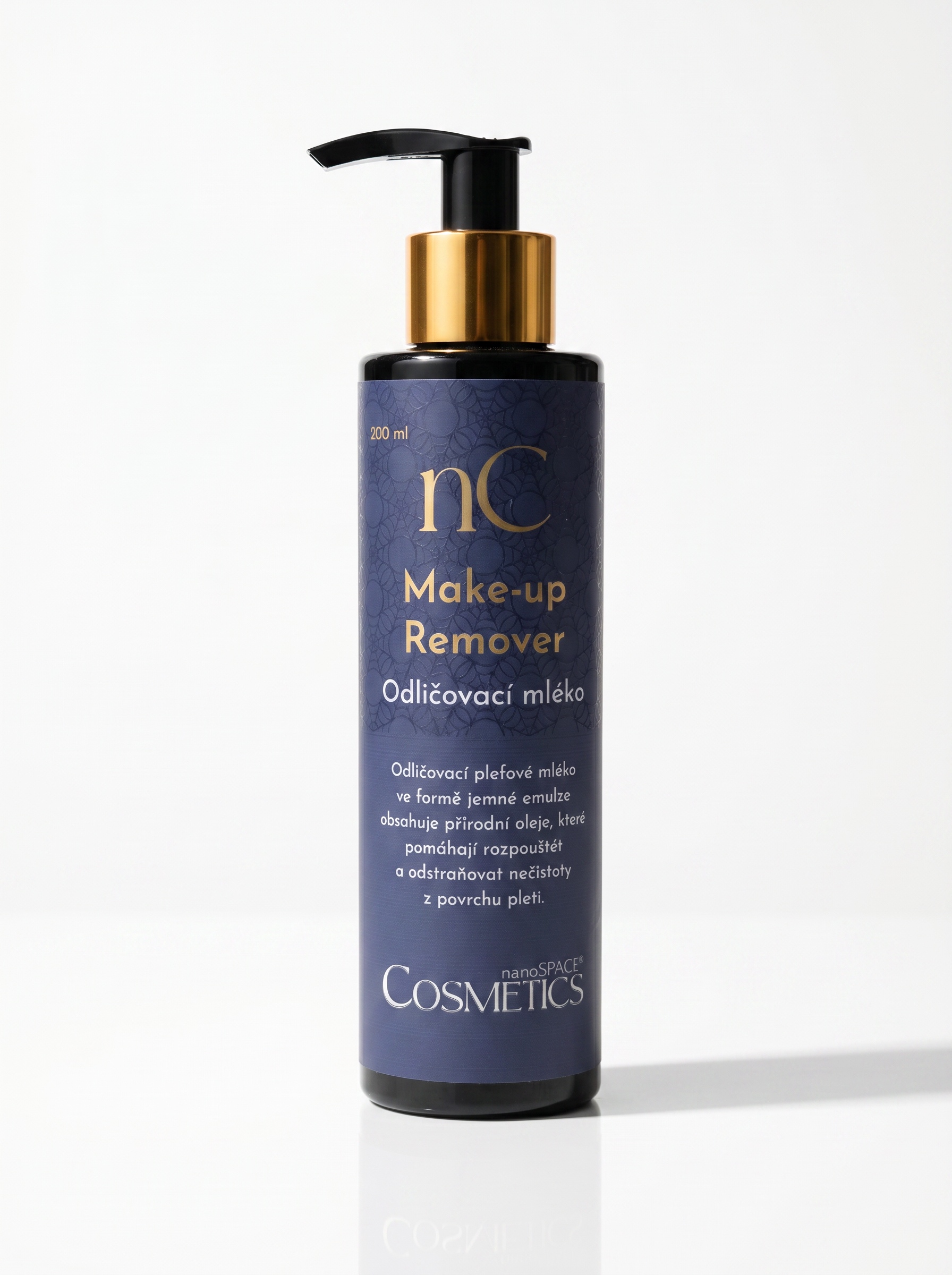
A cleansing milk is ideal for the first step. It contains almond oil, which mimics the skin's natural lipids, so it lifts makeup gently and without tugging. It also contains glycerin — one of the very best humectants your skin can get. The remover therefore not only cleanses but also avoids drying the skin out, which makes all the difference for skin that breaks out. It is applied without rinsing, saving you both time and water. Do watch out for overwashing, though: aggressive cleansers strip the protective film and lead to exactly the stinging and tightness we are trying to avoid.
Step 2: An exfoliating gel with AHA for deep pore cleansing
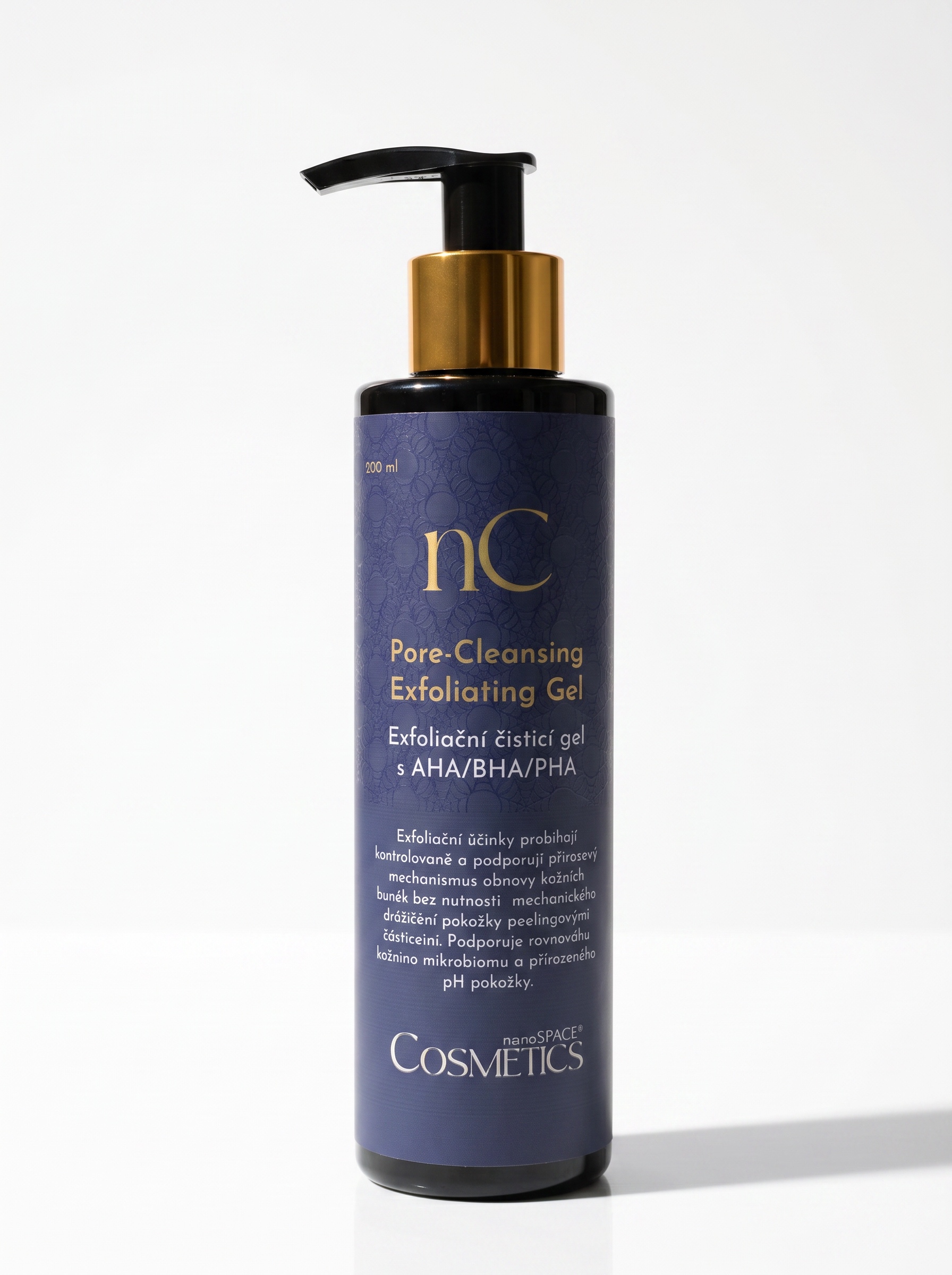
The second evening cleansing step is a gel that not only washes but also gently exfoliates. The exfoliating cleansing gel with AHA acids combines two types of acid, each working differently. AHAs (glycolic, lactic) are water-soluble and act on the surface — they loosen the bonds between dead cells, so the skin naturally and safely sheds its hardened layer. The smallest of the AHAs, glycolic acid, penetrates deepest and fastest, while lactic acid additionally works as a humectant.
Salicylic acid belongs to the BHA group. Because it is oil-soluble, it reaches right inside a clogged pore and dissolves the plugs of oxidised oil. Those plugs are exactly what you see on the surface as blackheads. It is also anti-inflammatory. Clinical studies have shown that a gentle form of salicylic acid can cut the number of inflammatory blemishes by around 44% — comparable to far more aggressive benzoyl peroxide, but better tolerated. And unlike AHAs, salicylic acid does not increase the skin's sensitivity to the sun. If you want to know more, we cover the effects of salicylic acid on the skin separately, as well as what actually works on blackheads.
One detail makes a big difference: in this gel the acids are released in a controlled, gradual way rather than all at once. That is precisely what separates gentle exfoliation from irritation. The skin gets the benefit of the acids, but without the stinging and redness that so many people expect from "acids" and avoid them because of it.
Step 3: A toner with AHA/BHA/PHA for gentle daily care
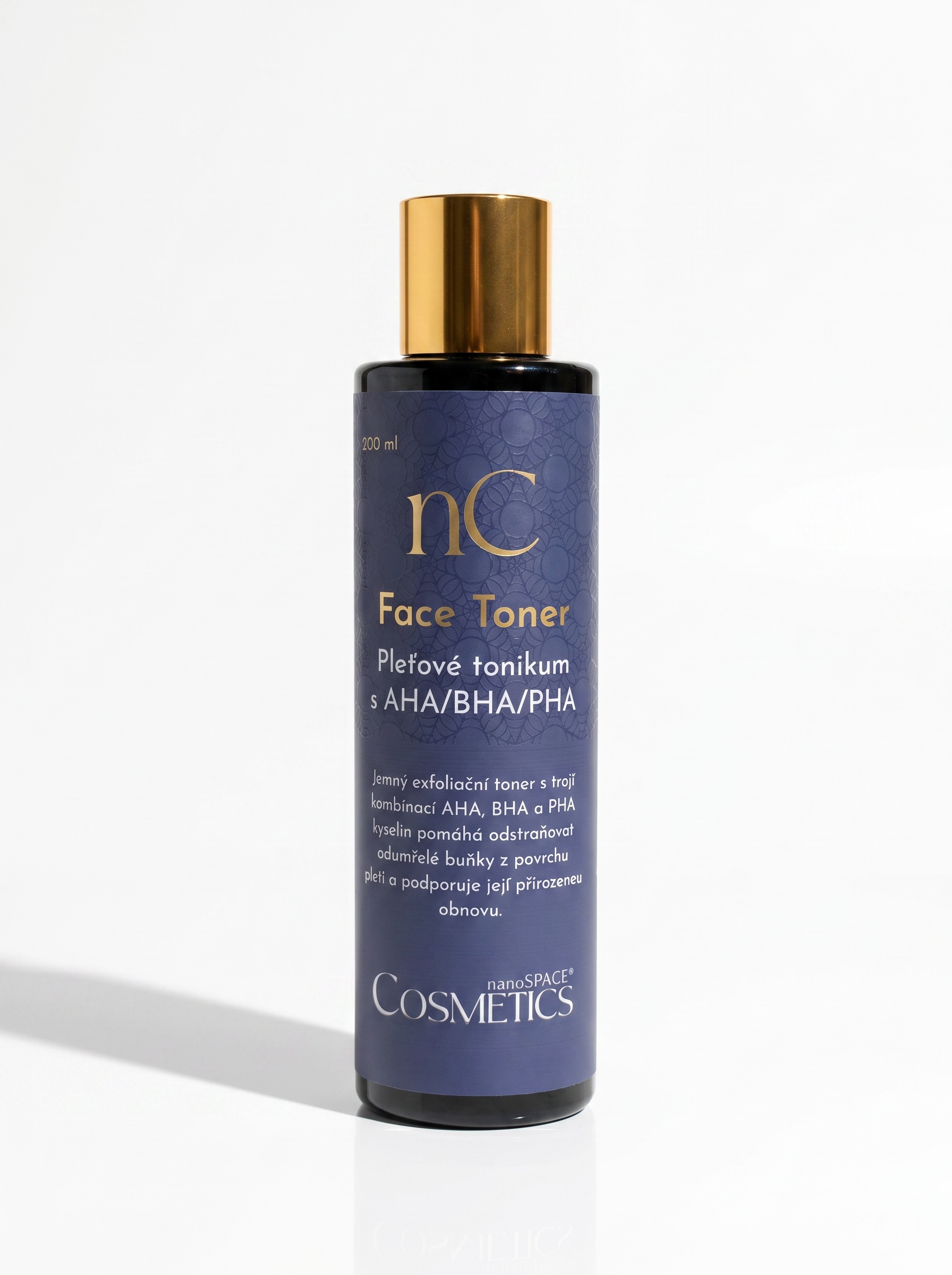
Where the exfoliating gel is a more intensive step for a few evenings a week, a facial toner with AHA/BHA/PHA is the gentler everyday option. The clue is in that third set of letters — PHA, the polyhydroxy acids, which include gluconolactone. Their molecule is larger than that of ordinary AHAs, so they penetrate more slowly and do not irritate nerve endings. They are also strong humectants and, unlike ordinary acids, do not increase water loss from the skin — on the contrary, they protect the barrier. That is why PHAs are a lifeline for sensitive skin that cannot tolerate harsher acids.
There is one rule you must not break with acid toners: the next morning, use sunscreen. AHAs increase the skin's sensitivity to sunlight, and without protection you risk pigmentation. So use the toner in your evening routine and always apply SPF in the morning.
Hydration and SPF: the steps acne-prone skin must never skip
Which takes us back to where we began. Even oily, acne-prone skin needs hydration. After cleansing and acids, a light moisturiser or serum helps restore the skin's balance. Do not worry that it will make you shinier — the opposite is true. Balanced, hydrated skin has no reason to produce excess oil.
The second indispensable step is sun protection. There is a persistent myth that the sun "cures" acne — that skin looks clearer after a beach holiday. In the short term it may seem that way, because UV radiation dries the surface. In reality it thickens sebum, weakens the skin's immunity and leaves post-inflammatory pigmentation, the dark marks where spots have healed. Sunscreen is therefore an inseparable part of this routine — not just to slow ageing, but above all to prevent the marks acne leaves behind.
The nanoSPACE range for cleansing acne-prone skin
How to build your morning and evening routine
Put all the steps together and you get a simple routine you can manage in a few minutes. In the morning, rinse your skin with lukewarm water or a mild gel, apply a light hydrating serum and finish with sunscreen. In the evening comes more thorough care: first makeup removal, then cleansing with the gel or using the toner, and finally a moisturiser. The rule throughout is to layer from the thinnest to the thickest texture — watery serums go on first, rich creams and oils last.
Do not pile active ingredients into the same evening. Alternating works well: one evening use exfoliating acids, the next give your skin pure recovery with a moisturiser. If you add other strong ingredients, give each of them its own evening. That gives the skin room to recover and prevents exactly the over-exfoliation we talked about.
And one last, easily overlooked rule: introduce new products one at a time. If you throw three new products at your skin at once and irritation appears, you will not know which one is to blame. Give each newcomer two to four weeks before you judge how your skin responds. Looking after skin that breaks out is a long game — it rewards patience, not sudden experiments.
Common mistakes in caring for acne-prone skin
Besides drying, which we have already covered, there are a few more pitfalls worth avoiding. The first is harsh physical scrubs with crushed kernels or shells. They abrade the skin unevenly, create micro-tears and, on inflamed skin, tend to deepen the inflammation. Controlled exfoliation with acids is far kinder to the skin.
The second is faith in "natural miracles" such as coconut oil for cleansing or lemon juice on marks. Coconut oil is among the most comedogenic ingredients there is — it tends to clog pores rather than clear them. Lemon juice has an extremely acidic pH and is phototoxic in sunlight, so you can give yourself irritation and pigmentation. Not everything natural is safe for the skin. If you want an overview of what really works on blemishes, take a look at the best products for acne, or our piece on how to deal with subcutaneous acne that cannot be squeezed out.
And finally, the hardest part: do not expect miracles overnight. The skin renews itself roughly on a monthly cycle, so the first visible improvement in texture and fewer clogged pores usually appears after four to eight weeks of consistent care. Anyone who gives up after a week and goes back to drying loses the result just as it was about to show.

Conclusion
It all comes down to one shift in mindset: stop punishing the skin and start calming it. Instead of drying, gentle cleansing; instead of aggressive scrubs, controlled exfoliation with acids; instead of fearing hydration, a light moisturiser and daily SPF. Give your skin this care regularly and patiently and it will stop "defending" itself with excess oil, the pores will clear and blemishes will fade. It is not about one miracle product, but a well-thought-out routine — and now you have it in hand.
Frequently asked questions
How often should I exfoliate acne-prone skin?
Use the more intensive cleansing gel with acids a few times a week, not every day. A gentle PHA toner can be tolerated even daily by sensitive skin. The main rule: if your skin starts to sting, feel tight or flake, you are exfoliating too much and it is time to ease off.
Can I simply dry out oily skin so it stops being oily?
No, drying is counterproductive. When you strip the skin of oil, the sebaceous glands respond by producing more, so the skin ends up even oilier. The goal is not to degrease the skin, but to balance it — cleanse gently while keeping it hydrated.
Which is better for acne — AHA or BHA acids?
It depends on the issue. AHAs (glycolic, lactic) work on the surface and smooth the texture. BHA, or salicylic acid, penetrates the pores and dissolves sebum plugs, so it is more effective on blackheads and oily skin. The ideal is a combination of both, with gentle PHAs added for sensitive skin.
Is cleansing milk worth it if I don't wear makeup?
Yes. Skin that breaks out needs this evening cleanse every day — not because of makeup, but because of the oil, dust, sunscreen residue and impurities that build up during the day. A gentle cleansing milk removes them without drying the skin out.
How long until I see results on acne-prone skin?
The skin renews on roughly a monthly cycle. The first improvements — fewer clogged pores and smoother texture — usually appear after four to eight weeks of consistent care. Post-inflammatory marks fade more slowly, so reckon on several months, and never skip your SPF.

Sources
- Kornhauser, A. et al. (2009) 'Applications of hydroxy acids: classification, mechanisms, and photoactivity', Clinical, Cosmetic and Investigational Dermatology, 3, pp. 135–142.
- Berardesca, E. et al. (1997) 'Clinical and instrumental evaluation of skin improvement after treatment with a new salicylic acid and polyhydroxy acid (PHA) formulation', Journal of Cosmetic Dermatology.
- Milani, M. & Sparavigna, A. (2017) 'The 24-hour skin hydration and barrier function effects of a hyaluronic 1%, glycerin 5% formulation', Clinical, Cosmetic and Investigational Dermatology, 10, pp. 311–315.