
Have you ever spent a small fortune on a highly rated skincare product, swayed by glowing reviews, only to find it simply doesn't work for you—or worse, triggers redness, irritation, and unexpected breakouts? Before you blame the formulation, it’s worth pausing to ask yourself one basic question: do you actually know your skin type? Most of us choose our cosmetics more or less blind, which is the most common reason a daily routine fails to deliver. The foundation of a healthy, comfortable complexion is knowing exactly what your skin naturally needs—and what it lacks. Understanding your own biology is the most reliable way to build a routine that actually works.

We live in an era where the beauty market is flooded with new serums, creams, and cleansers every single month. Influencers promote exhaustive ten-step routines promising flawless results, but following these trends without understanding your own starting point rarely ends well. Your skin is a complex organ with its own ecosystem, complete with a protective lipid barrier and a unique microbiome. When you apply products that clash with your natural sebum levels, you upset that delicate balance. This guide explains how to identify your profile, including how to know your skin type using a couple of simple methods, and how to adjust your daily routine to support your complexion over the long term.
Key takeaways if you're short on time
- Your underlying skin type is set genetically, but its current condition can shift with age, hormonal changes, stress, and the changing seasons.
- Dermatologists recognise several main categories: normal skin type, dry, oily, combination skin type, sensitive, and mature. These often overlap with specific conditions, such as acne-prone or atopic tendencies.
- You can run a reliable skin type test at home using the bare-face observation method or the blotting sheet technique to see how your complexion behaves naturally.
- Dehydrated and dry are two entirely different things. A dry skin type lacks natural sebum (oil), whereas a dehydrated complexion lacks water—meaning even the oiliest faces can be dehydrated.
- Every skin type needs its own approach, but the basics remain the same: gentle double cleansing, pH-balancing toning, targeted serums, a suitable moisturiser, and daily sun protection (SPF).
The Biology Behind Your Complexion: Why Knowing Your Skin Type Matters
To understand why identifying your skin type matters, it helps to look at the structure of your skin. The outermost layer of the epidermis, the stratum corneum, is covered by a fine film called the acid mantle—a mixture of sweat, natural oils (sebum), and dead skin cells. Its job is to protect you from bacteria, pollutants, and moisture loss. The amount of sebum your sebaceous glands produce is the primary factor that determines your skin type.
Say you have a dry complexion, which craves rich lipids, ceramides, and nourishing oils to maintain its barrier. If you mistakenly treat it with a harsh, foaming cleanser meant for oil control, you'll strip away the few natural lipids you have. The result is a tight, flaky, and irritated face with a compromised barrier. The reverse is just as true: if your glands produce excess sebum and you reach for a heavy, comedogenic cream meant for very dry skin, you’ll likely wake up to clogged pores, blackheads, and fresh breakouts.
Getting the diagnosis right is crucial. Knowing your skin type helps you build a routine that genuinely supports your face, stops you from wasting money on the wrong products, and prevents you from accidentally making things worse. Ultimately, it allows you to work with your body's natural processes rather than against them.
How to Test Your Skin Type at Home: A Step-by-Step Guide
You don't need to book into a dermatology clinic or an expensive salon to understand your face. The answer to how to know your skin type can usually be found in your own bathroom. There are two reliable methods that reveal how your face behaves in its natural state, entirely free from creams, serums, or makeup. It's worth planning your skin type test at home for a relaxed weekend morning when you aren't rushing out of the door.
The Bare Face Method (Observation)
This method is brilliantly simple, relying purely on your own senses and a good look in the mirror. Start by washing your face thoroughly but gently. Use a mild, non-foaming cleanser that you know won't leave your face feeling stripped. After rinsing with lukewarm water, pat your face dry with a clean, soft towel—don't rub; just press lightly to absorb the moisture. Now for the important part: apply absolutely nothing. No toner, no essence, no serum, no moisturiser. Leave your face bare and wait for between thirty minutes and an hour. During this window, your sebaceous glands will settle back into their normal rhythm, allowing your face to return to its baseline.
Once the time is up, stand in front of a mirror in good, natural daylight and assess how your face looks and feels. If you feel an uncomfortable tightness across your whole face, especially when you smile or speak, and you notice fine, flaky patches, you have a dry skin type. If your whole face looks shiny and feels greasy to the touch, you have an oily skin type. If the shine is confined to your T-zone (forehead, nose, and chin) but your cheeks feel either tight or comfortable, that points to a combination skin type. And if you feel no tightness, see no excess shine, and your complexion looks healthy and balanced, you have a normal skin type.
The Blotting Sheet Method
If you're still unsure after the visual check, try this second, slightly more objective approach. It's a brilliant skin type test at home for anyone who wants physical proof of their sebum production. Follow the exact same preparation as before—wash your face gently, pat it dry, and wait a full hour without applying a thing. After the hour is up, take a clean, dry piece of tissue paper, a cosmetic blotting sheet, or even a piece of lens-cleaning paper. If you're using a standard tissue, peel it apart into its thinnest layers.
Press one thin layer firmly against your forehead and nose (the T-zone), and press another piece against your cheeks. Hold them there for a few seconds, then peel them off and hold them up to the light. If both the T-zone paper and the cheek paper show clear, translucent grease spots, your glands are active all over, confirming an oily complexion. If there's a grease spot only on the T-zone paper while the cheek paper stays dry and clean, you have a combination skin type. If there's no oil on any of the papers and your face feels taut and uncomfortable, you have a dry complexion. If there's no oil but your face feels comfortable and supple, you have a normal skin type.
Professional Diagnostics: When Does It Make Sense?
A skin type test at home gives you a solid foundation, but a professional session with a dermatologist or an experienced aesthetician goes much deeper. Professionals use specialised equipment—corneometers to measure hydration, sebumeters to gauge oil production, and UV cameras to reveal underlying sun damage. These tools can pick up issues that are completely invisible to the naked eye.
A professional can assess the exact degree of damage to your barrier, the depth of hyperpigmentation from UV exposure, or the stage of collagen loss in the dermis. It's well worth seeking a professional examination if you're dealing with persistent, painful skin problems—such as severe cystic acne, chronic rosacea, or stubborn eczema—that simply don't improve even after you've adjusted your routine to match your skin type.
Detailed Breakdown: Understanding Every Skin Type
Dermatology sorts complexions into several main groups. Each has its own characteristics, its own distinct advantages, and its own weak spots. Let's go through them in detail so you know exactly what your face needs at every stage of your routine, from the first cleanse right through to your sun protection.
Normal Skin Type: The Rare Ideal
A normal skin type is what many of us are striving for, though it's fairly rare to maintain into adulthood without some effort. It is beautifully balanced—neither too oily nor too dry. The pores are fine and almost invisible, the texture is smooth, the tone is even, and there are no real blemishes, dry patches, or flaking. Circulation works well, meaning the face tends to look naturally healthy and fresh.
How to care for it: The aim of your routine is simply to maintain this state and protect your face from everyday damage. You don't need aggressive active treatments. Morning and evening, reach for a gentle, pH-balanced cleanser. For this, and to understand the broader principles of skin cleansing, it's best to use mild formulations that won't disrupt your microbiome. Follow with a gentle toner, a light hydrating serum (one rich in hyaluronic acid to bind moisture, for example), and a lightweight day cream. Year-round broad-spectrum SPF is non-negotiable for preventing premature ageing.
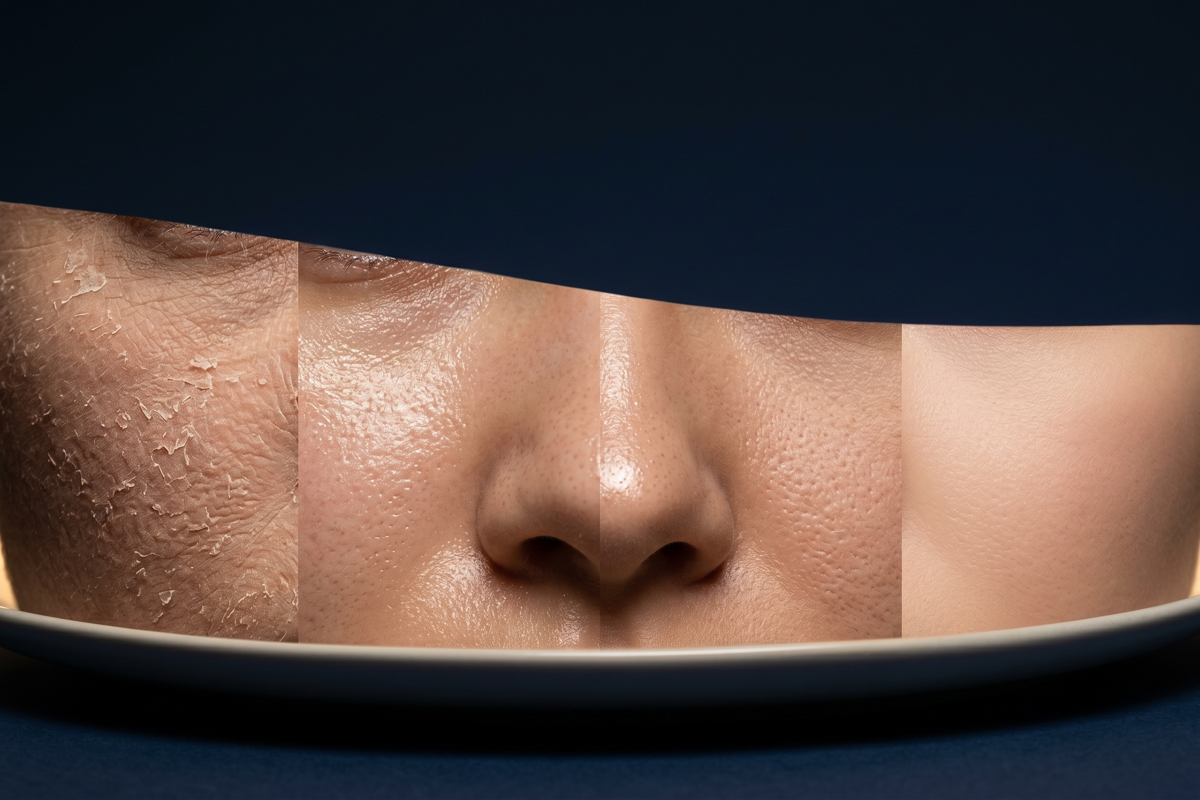
Dry Skin Type: The Need for Lipids and Deep Nourishment
A dry skin type is defined by its inability to produce enough natural sebum (lipids). Without an adequate supply of these oils, the epidermis can't hold onto moisture or build a robust barrier against wind, cold air, and pollution. It typically shows up as a persistent feeling of tightness (especially right after washing with tap water), a rougher, uneven texture, frequent dry flakes, and a greater tendency to develop fine lines and wrinkles early on. On the plus side, the pores are usually tight and almost invisible.
How to care for it: The priority is to nourish the skin and prevent further moisture loss. Avoid foaming gels formulated with harsh sulphates (such as SLS or SLES). Instead, opt for rich, creamy cleansing milks, balms, or oil-based cleansers. Build your routine around barrier-repairing ingredients such as ceramides, squalane, and shea butter, along with thicker, more occlusive creams that lock moisture in. For daily cleansing, a soothing option like the AtopCare soap can keep your skin comfortable without stripping its protective barrier. If you want to delve deeper, we highly recommend our full guide on caring for dry skin, which sets out how to build a restorative routine step by step.
Oily Skin Type: Managing Shine and Enlarged Pores
An oily skin type comes from an overproduction of sebum by the sebaceous glands (a condition known as seborrhoea). It's usually easy to spot: the face starts to shine soon after washing, the pores are visibly enlarged across the cheeks and forehead, and they frequently become congested. That congestion leads to blackheads (open comedones), whiteheads (closed comedones), and inflammatory acne. An oily complexion is often thicker and more robust, and it does have one real advantage: the constant layer of natural oil protects it brilliantly against environmental damage, meaning deep wrinkles tend to form later than they do on drier types.
How to care for it: The most common mistake is trying to "dry out" the face with harsh, alcohol-heavy astringents and aggressive scrubs. This inevitably backfires—it strips the barrier and pushes the glands to produce even more oil to compensate. Instead, stick to a gentle double-cleansing method. One of the most effective ingredients for this skin type is salicylic acid (a BHA), which is oil-soluble and can penetrate the pore lining to dissolve trapped sebum and dead cells. Avoid heavy, pore-clogging oils and favour lightweight, water-based gel moisturisers. For a detailed, step-by-step approach, see our guide on how to care for oily skin.
This category often overlaps with the acne-prone subtype. If you're constantly fighting inflammatory breakouts and painful spots, it helps to introduce active ingredients that manage bacterial growth and calm inflammation. The Acne Cream is a superb addition for overall management, while nanotechnology solutions such as the [n]Acne MAX patches can be applied directly to active blemishes overnight to help draw out impurities. You'll find more strategies in our article on the ultimate guide how to get rid of acne.
Combination Skin Type: Two Faces in One
The combination skin type is probably the most common profile worldwide. As the name suggests, it's a blend of two different types—most often an oily T-zone alongside normal or dry cheeks. It typically features an overactive sebaceous response in the central panel of the face (forehead, nose, and chin), where enlarged pores, blackheads, and afternoon shine are common. The outer cheeks and the delicate eye area, meanwhile, tend to be normal to dry, sometimes feeling tight and flaky, especially in the colder months.
How to care for it: Balancing the conflicting needs of a combination skin type can feel like a bit of a puzzle. The most effective approach is often "multi-masking" or zonal application. For evening makeup removal, a good Cleansing Oil works wonders, dissolving excess T-zone sebum and waterproof makeup without stripping the drier cheeks. After cleansing, you might apply a light, mattifying gel moisturiser to your T-zone and massage a richer, more emollient cream into your dry cheeks. The rule of thumb is to look for light, non-comedogenic layers that hydrate without suffocating the oilier areas.
Sensitive and Atopic Skin: A Fragile Barrier
Sensitivity is really more of a condition or a "state" than a genetic skin type, but it's almost always treated separately because it calls for a very different, far more cautious approach. A sensitive complexion overreacts to things that normal faces tolerate easily—sudden temperature changes, biting cold winds, hard water, and common cosmetic ingredients such as artificial fragrances or essential oils. It often presents as persistent redness, itching, stinging, and a feeling of heat across the face.
The most extreme form of this fragility is an atopic profile, which involves chronic underlying inflammation and a genuinely defective barrier. Here, we're talking about a recognised dermatological condition. If you're dealing with painful flare-ups and eczema, you'll find science-backed advice in our dedicated article on effective treatments for atopic eczema.
How to care for it: The golden rule for sensitivity is minimalism. Less is definitely more. Read ingredient lists carefully and choose cosmetics free from artificial perfumes, synthetic dyes, drying alcohols, and known irritating preservatives. When your face feels hot and reactive, a cooling, restorative treatment such as the Soothing mask can help calm the redness. When it comes to active ingredients and exfoliation, traditional acids may be far too harsh. Look instead for gluconolactone (a PHA), which offers gentle cellular turnover while strengthening the compromised barrier without triggering irritation.
Editor's pick
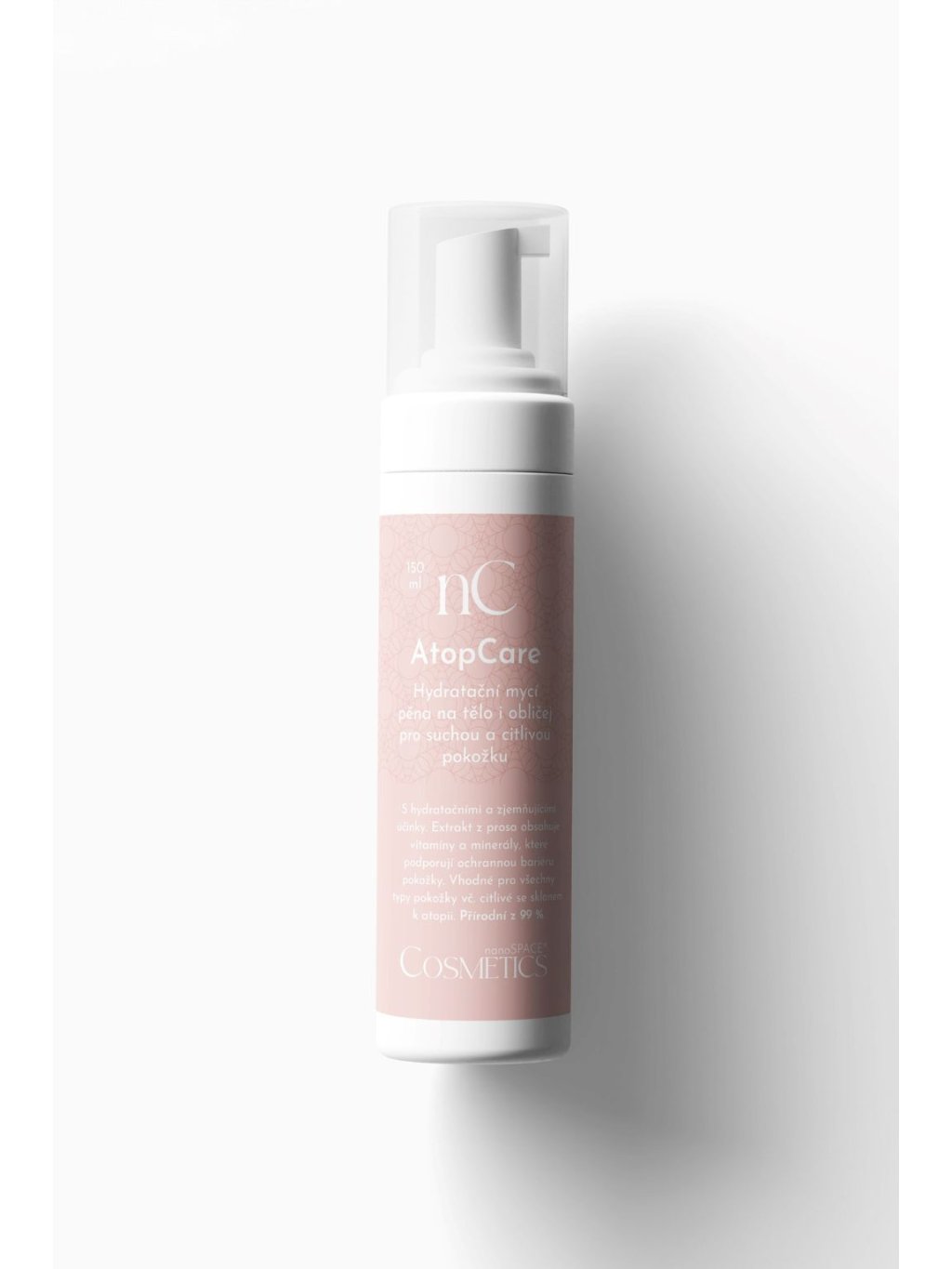
Moisturizing Cleansing Foam AtopCare 150 ml
An exceptionally gentle cleansing foam designed specifically for dry, sensitive, and atopic skin types. It delicately removes daily impurities without disrupting the natural skin barrier, delivering essential hydration even during the washing process.
€11
View productMature Skin: Loss of Firmness and the Ageing Process
As the years pass, our cellular metabolism naturally slows down. The fibroblasts in the dermis produce less of the structural proteins collagen and elastin, and our natural reserves of hyaluronic acid deplete. A mature skin type shows a noticeable loss of firmness, sagging contours, expression lines deepening into static wrinkles, and often hyperpigmentation (age spots) from decades of sun exposure. As hormone levels shift, the epidermis also becomes thinner, more fragile, and notably drier.
How to care for it: A modern anti-ageing routine needs to be thorough. Beyond careful hydration, it's time to add antioxidants to your morning regimen. Vitamin C is essential here: it shields cells from free radical damage, brightens a dull tone, and supports collagen synthesis. In the evening, the standout ingredient for rejuvenation is Vitamin A (retinoids), which speeds up cellular turnover and thickens the deeper layers of the dermis over time. To seal in these actives and provide deep nourishment, we recommend finishing your evening routine with a lipid-rich formula such as The Uncompromised Cream to restore suppleness while you sleep.
Dehydrated vs. Dry Skin: The Most Common Cosmetic Confusion
This is where most people go wrong with their skincare. They confuse a dry skin type with a dehydrated condition. The distinction really matters. A dry skin type is a genetic classification—it lacks natural oils (sebum and lipids). Dehydrated skin, on the other hand, is a temporary, treatable condition—it lacks water within the cells. So, even a very oily face, producing plenty of sebum, can be deeply dehydrated at the exact same time.
How do the two differ in practice? Dehydration usually shows up as a dull, ashy, and lacklustre complexion. It makes fine lines look more pronounced (often described as having a "crepey" or paper-like texture). And, paradoxically, severe dehydration can actually make your face oilier, as the sebaceous glands go into overdrive, producing excess sebum to compensate for the lack of water. If your face is dehydrated, piling on heavy botanical oils won't help—oil can't hydrate; it can only seal moisture in. You need humectants—ingredients that attract and bind water—such as glycerine, panthenol, or hyaluronic acid. Crucially, these humectant serums should always go onto slightly damp skin, so they can grab the surface water and draw it deeper.
Can Your Skin Type Change Over Time?
The short answer is yes, and it happens often. We're all born with a genetic predisposition that sets the baseline size and activity of our sebaceous glands, but our skin type isn't fixed for life. It's a living organ that reacts constantly to internal shifts and external factors.
The biggest influence is our hormones. During puberty, surges in androgens often turn a previously normal complexion oily and acne-prone. Later, during pregnancy, women may experience bouts of sensitivity, melasma (pigmentation), or even unexpected clarity. And with the menopause, the drop in oestrogen causes a marked reduction in sebum production and collagen synthesis, often turning a lifelong combination profile into a very dry, fragile, and mature one.
Another unavoidable factor is age. As we get older, the activity of our sebaceous glands steadily declines. This is why someone who battled oiliness and breakouts in their twenties may end up with a well-balanced combination skin type in their thirties, and a rather dry profile by their fifties and beyond.
The seasons and our environment matter too. During a hot, humid summer, we sweat more and our sebum flows more freely, so we feel oilier. In the cold winter months, when we constantly move between icy winds outdoors and dry, centrally heated air indoors, the barrier takes a beating. Transepidermal water loss (TEWL) climbs, leading to dryness and dehydration across all profiles. So it's perfectly normal—and highly recommended—to adjust your routine as the seasons change, favouring lighter gels in July and richer, protective balms in December.
Essential Care for Every Skin Type
Learning to identify and understand your complexion isn't a one-time task to tick off a list; it's an ongoing dialogue with your own body. You learn to read the subtle signals your face sends you from day to day. If you apply a new serum and immediately feel stinging or burning, that isn't a sign the active ingredients are "working"—it's a clear warning that your barrier is under strain and defending itself. Once you know which category you fall into, and what your skin needs to function at its best, the overwhelming world of beauty products becomes far easier to navigate. Your face will reward your attention with a healthy, resilient, and genuinely radiant look.
Frequently asked questions
How to know your skin type at home?
The simplest and most effective approach is the bare-face method. Wash your face thoroughly with a mild, non-stripping cleanser, pat it gently dry with a towel, and apply no cosmetic products whatsoever. Wait 30 to 60 minutes. If your face feels tight and you notice dry flakes, it's dry. If your whole face looks shiny and feels greasy, it's oily. If only your forehead, nose, and chin (the T-zone) are shiny while your cheeks feel tight, you have a combination skin type. If you feel no discomfort and see no excess oil, it's normal.
What are the main categories of skin type?
In modern dermatology, we generally recognise six main categories: normal, dry, oily, combination, sensitive, and mature. These can overlap with various temporary conditions or subtypes, such as acne-prone, atopic, or severely dehydrated. Note that you shouldn't confuse this with the Fitzpatrick skin type system (Types I to VI), which is a separate concept dermatologists use to classify how much melanin you have and how your complexion reacts to ultraviolet (UV) sun exposure (from burning easily to tanning deeply).
What are the characteristics of a normal skin type?
A normal skin type is the picture of dermatological balance. It has a smooth, fine texture without visibly enlarged pores. It doesn't develop a greasy shine in the T-zone by midday, nor does it feel tight or form dry, rough patches. The tone is even, and it rarely suffers significant inflammatory breakouts or sudden redness. It feels elastic and supple, and looks naturally healthy and fresh.
How does a dry skin type differ from a dehydrated condition?
This is a very common misunderstanding. A dry skin type is a genetically determined state that lacks natural sebum (lipids and oils). It shows up as tightness, a rough texture, and flakiness. Dehydrated skin, by contrast, is a temporary, reversible condition that lacks water within the cells. Dehydration can affect any profile, including the oiliest faces. It presents as a dull, ashy tone, makes fine lines look deeper, and often leads to increased oil production as the body tries to compensate for the water loss.
Can your skin type change over time?
Yes, it can, and it happens to almost everyone over a lifetime. Although we're born with a genetic baseline, our complexion keeps evolving because of major hormonal shifts (such as those during puberty, pregnancy, and the menopause), the natural ageing process (as we age, our sebaceous glands shrink and produce less oil, leaving us drier), and external lifestyle factors including chronic stress, certain medications, changes in diet, and the changing seasons.

Sources
Baumann, L. (2006) 'Understanding and Treating Various Skin Types: The Baumann Skin Type Indicator', Dermatologic Clinics, 24(3), pp. 359–366.
Youn, S. W. et al. (2005) 'Does facial sebum excretion really affect the development of acne?', British Journal of Dermatology, 153(5).
Mukhopadhyay, P. (2011) 'Cleansers and their role in various dermatological disorders', Indian Journal of Dermatology, 56(1), pp. 2–6.