
You have tried everything. New mattresses, stretching routines, even that expensive ergonomic chair your colleague swore by. Yet every morning you wake up with the same stiff, aching neck, the same dull headache creeping up from the base of your skull, and the same frustrating thought: what am I doing wrong? If this sounds familiar, the answer may be closer than you think — literally under your head. Choosing the best pillow for neck pain is not a luxury or a marketing gimmick. It is a medical decision that affects the alignment of your cervical spine for roughly eight hours every single night, and the wrong choice can turn a minor discomfort into a chronic, debilitating condition. The right pillow, on the other hand, can transform your sleep, eliminate morning stiffness, and give your neck the support it has been desperately missing. In this comprehensive guide, we will examine exactly what causes pillow-related neck pain, which pillow types and materials offer genuine relief, and how to select the one that matches your body, your sleeping position, and your specific needs.
Essential takeaways if you're short on time
- Your pillow directly shapes cervical spine alignment, and a poorly chosen one can trigger headaches, dizziness, hand numbness, and chronic fatigue — not just neck stiffness.
- Anatomical memory foam pillows offer the best support because they adapt to your head and neck contours, distributing pressure evenly and maintaining the natural cervical curve throughout the night.
- Pillow height matters enormously: most adults need between 10 and 12 cm, with 12 cm being optimal for the majority of side and back sleepers.
- Stomach sleeping is the worst position for neck pain — it forces your cervical spine into extreme rotation and should be avoided entirely if you suffer from neck problems.
- An anti-allergy nanofibre membrane keeps dust mites out of your pillow, improving sleep quality and preventing the inflammatory response that can worsen muscle tension and slow healing.
What cervical spine problems can actually cause
Most people think of neck pain as a localised nuisance — a stiff neck after sleeping in an awkward position, perhaps, or tension from hunching over a desk. But the cervical spine is far more than a simple hinge connecting your head to your body. It is a complex structure of seven vertebrae, intervertebral discs, ligaments, and muscles that protects the spinal cord, supports the full weight of your skull (approximately 5 kilograms), and serves as a critical pathway for nerves supplying your arms, shoulders, and hands. When something goes wrong in this region, the consequences can radiate far beyond your neck.
Headaches and migraines are among the most common yet least recognised consequences of cervical spine dysfunction. Research suggests that up to 70% of headaches may originate from problems in the cervical region — so-called cervicogenic headaches. These are not caused by stress or dehydration; they are triggered by compressed nerves, inflamed joints, or chronically tense muscles in the upper neck. The pain typically starts at the base of the skull and radiates forwards over the top of the head, sometimes settling behind one eye. Many people take painkillers for years without realising that the best pillow for neck pain could address the root cause.
Dizziness and balance problems can also stem from the cervical spine. The upper cervical vertebrae contain proprioceptors — tiny sensors that help your brain understand where your head is positioned in space. When these vertebrae are misaligned or the surrounding muscles are chronically strained, the signals they send can become confused, leading to a sensation of unsteadiness, lightheadedness, or even vertigo-like episodes upon waking.
Numbness and tingling in the hands is another alarming symptom that frequently traces back to the neck. Nerve roots exit the cervical spine and travel down into the arms and fingers. A pillow that forces the neck into an unnatural position for hours can compress these nerve roots, producing pins-and-needles sensations, weakness in grip strength, or that disturbing feeling of waking up with a completely "dead" arm. Over time, chronic nerve compression can lead to permanent damage if the underlying positional problem is not corrected.
Sleep disruption and chronic fatigue complete the picture. Pain and discomfort from poor cervical alignment trigger micro-arousals throughout the night — brief, unconscious shifts from deep sleep to lighter stages that fragment your sleep architecture. You may spend eight hours in bed yet accumulate only four or five hours of genuinely restorative sleep. The resulting exhaustion compounds every other symptom, creating a cycle that is remarkably difficult to break without addressing the sleep environment itself. If you notice persistent tiredness alongside neck problems, it is worth reading more about how your bedding affects sleep quality.
Why your pillow matters more than you think
We spend approximately one-third of our lives asleep. For an average adult, that translates to roughly 2,500 hours per year with your head resting on a pillow. During those hours, the pillow is the sole support structure for your cervical spine. It determines whether the seven vertebrae in your neck maintain their natural lordotic curve — the gentle forward arc that distributes mechanical load evenly — or whether they are forced into flexion, extension, or lateral bending that strains muscles, compresses discs, and irritates nerves.
A study published in Applied Ergonomics (Cai & Chen, 2016) demonstrated that pillow height, material, and shape significantly influenced cervical spine curvature, head pressure distribution, and subjective comfort ratings during sleep. Participants who used pillows that were too high or too flat showed measurably greater deviation from neutral spinal alignment, and they reported significantly higher levels of morning neck pain and stiffness. The study concluded that an anatomically contoured pillow with a height of approximately 12 cm provided the most favourable alignment for the majority of participants.
Think of it this way: if you spent eight hours every day sitting in a chair that forced your lower back into an unnatural position, you would not be surprised when back pain followed. Yet most people give almost no thought to the object that supports their neck for an equivalent duration every night. They grab whatever pillow is on sale, stack two flat pillows on top of each other (creating an inconsistent and unstable support surface), or continue using a pillow that lost its structural integrity years ago.
The nanoSPACE® Anatomical Orthopedic Pillow with Memory Foam was designed specifically to address this problem. Its viscoelastic memory foam responds to body heat and pressure, moulding itself precisely to the unique contours of your head, neck, and shoulders. Rather than forcing your spine to adapt to the pillow, the pillow adapts to your spine — and it does so dynamically throughout the night as you shift positions.
A further study by Chun-Yiu et al. (2021) in Clinical Biomechanics confirmed that contoured pillows with appropriate height and support reduced cervical spine angular displacement compared with standard rectangular pillows. The researchers noted that the improvement was most pronounced in side sleepers, whose necks must bridge a larger gap between the mattress surface and the head. For these individuals, a pillow that fills this gap precisely — neither too much nor too little — is not a comfort preference but a biomechanical necessity.
Types of pillows for neck pain: which materials actually work
Walk into any bedding shop or browse any online retailer and you will be confronted with dozens of pillow types, each claiming to be the best pillow for neck pain. Latex, memory foam, down, microfibre, buckwheat, water-filled — the options can feel overwhelming. Not all of these materials are created equal when it comes to cervical support, and understanding the differences will help you make an informed decision rather than an expensive mistake.
Anatomical memory foam pillows
Viscoelastic memory foam remains the gold standard for neck pain relief, and for good reason. Originally developed by NASA in the 1960s to absorb impact forces during space travel, memory foam has a unique property: it responds to both heat and pressure. When you lay your head on a memory foam pillow, the material softens precisely where your body makes contact, creating a custom-moulded support surface that distributes pressure evenly across the entire contact area. This eliminates the concentrated pressure points that cause numbness, tingling, and the restless repositioning that fragments sleep.
The best anatomical memory foam pillows feature a contoured design with a lower central section for the head and raised lateral edges that cradle the neck. This shape helps maintain the natural cervical lordosis regardless of whether you sleep on your back or your side. The nanoSPACE® Anatomical Orthopedic Pillow exemplifies this approach: its 12 cm height and contoured profile were calibrated to support the cervical spine in a neutral position, while the viscoelastic core provides the pressure-responsive adaptation that static materials simply cannot match. At €156, it represents a genuine investment in spinal health — one that, when measured against the cost of physiotherapy sessions, painkillers, and lost productivity from chronic neck pain, pays for itself remarkably quickly.
Gordon et al. (2009), publishing in Manual Therapy, found that participants who switched from their regular pillow to a contoured memory foam pillow reported statistically significant reductions in morning neck pain, headache frequency, and sleep disturbance over a six-week trial period. Crucially, these improvements were sustained at follow-up, suggesting that the benefits were not merely a placebo response to a new purchase.
Fibre-filled anti-allergy pillows
For those who prefer a softer, more traditional pillow feel, high-quality fibre-filled pillows remain a viable option — particularly when they incorporate anti-allergy technology. Fibre pillows do not offer the same level of anatomical contouring as memory foam, but premium versions with ball-fibre filling provide excellent loft retention and a plush yet supportive sleeping surface. They are also lighter, easier to wash, and naturally more breathable than foam alternatives.
The nanoSPACE® Alaska Pillow (€139) combines ball-fibre filling with a quilted nanofibre cover and a double-zip system that allows you to adjust the filling quantity — and therefore the height and firmness — to your exact preference. This adjustability is a significant advantage for people who are unsure which height suits them best, or for couples who share a bed but have different support requirements. For a more budget-conscious option, the quilted ball pillow (€104) offers the same premium filling and quilted construction without the zip adjustment feature.
What makes these pillows particularly valuable for neck pain sufferers who also have allergies is the integrated nanofibre membrane. Dust mites thrive inside conventional pillows — a used pillow can contain millions of mites and their droppings — and the resulting allergen exposure causes nasal congestion that forces mouth breathing, disrupts sleep architecture, and increases the inflammatory load on muscles that are already strained. By blocking 99.9% of dust mite allergens, the nanofibre membrane removes this compounding factor entirely. You can learn more about this mechanism in our guide on how anti-allergy bedding works.
Latex pillows
Natural latex pillows occupy a middle ground between memory foam and fibre. Latex is inherently resilient — it springs back to its original shape more quickly than memory foam, which some sleepers prefer because it provides a sensation of "floating on" the pillow rather than "sinking into" it. Latex is also naturally antimicrobial and resistant to dust mites, and its open-cell structure offers superior breathability, making it a good choice for people who tend to sleep hot.
While latex is a respectable material, it is not typically considered the best pillow for neck pain because it does not mould as precisely to individual contours as viscoelastic foam. The support is responsive but somewhat uniform, which means that pressure distribution is good but not truly customised. For people with pronounced cervical problems or significant asymmetry in their neck and shoulder structure, memory foam typically provides better targeted relief. Latex pillows also tend to be heavier and more expensive than equivalent fibre options, and some people are sensitive to the natural rubber smell that can persist for the first few weeks.
Best pillow for neck pain: the essential criteria for choosing
Regardless of which material you gravitate towards, there are several non-negotiable criteria that determine whether a pillow will help your neck pain or make it worse. Understanding these factors will help you evaluate any pillow — in a shop, online, or the one currently sitting on your bed — with the critical eye of someone who knows what their cervical spine actually needs.
Height: the single most important dimension
Pillow height (or loft) is the distance between the top of the mattress and the top of the pillow when compressed under the weight of your head. It is, without question, the most critical factor in determining cervical alignment. A pillow that is too low allows the head to drop below the plane of the spine, stretching the muscles and ligaments on one side of the neck while compressing the structures on the other. A pillow that is too high does the reverse, pushing the head upward and creating an equally damaging lateral bend.
For the majority of adults, the optimal pillow height falls between 10 and 12 cm, with 12 cm being the sweet spot for most side sleepers and the majority of back sleepers. This is not an arbitrary number — it corresponds to the average distance between the ear and the outer edge of the shoulder in a neutral standing posture. The nanoSPACE® Anatomical Pillow was engineered at precisely 12 cm for this reason, and its memory foam core compresses just enough under head weight to maintain that ideal gap without collapsing or bottoming out.
Smaller or narrower-shouldered individuals may find 10 cm more appropriate, while larger adults with broader shoulders may occasionally need slightly more. The adjustable nanoSPACE® Alaska Pillow addresses this variable by allowing you to add or remove filling through its double-zip system, effectively making it a pillow that can serve any body type.
Material and firmness
For neck pain, a medium firmness is almost always the correct choice. Too soft, and the pillow collapses under head weight, providing insufficient support. Too firm, and it creates concentrated pressure points that cause discomfort and trigger repositioning. Memory foam naturally gravitates toward medium firmness because the material compresses proportionally to the pressure applied — it is firm enough to support the heavier head but soft enough to cushion the lighter neck without resistance.
The material also determines how the pillow performs over time. Cheap polyester fibre pillows lose their loft within months, gradually sinking to a fraction of their original height and forcing your neck into increasingly poor alignment. High-quality memory foam retains its performance characteristics for years, and premium ball-fibre pillows maintain their loft significantly longer than standard hollowfibre alternatives.
Breathability and temperature regulation
Overheating during sleep is a common complaint, and it directly impacts sleep quality. When your head and neck overheat, you sweat, become restless, and shift positions more frequently — all of which can aggravate neck pain. Modern memory foam pillows have largely overcome the heat-retention issues that plagued earlier generations of the material. Open-cell foam structures allow air to circulate within the pillow, while quilted outer covers add a breathable layer that wicks moisture away from the skin.
Anti-allergen properties
This criterion is often overlooked in guides about neck pain pillows, yet it is directly relevant. As we will discuss in detail later, dust mite allergens inside your pillow can trigger nasal congestion, inflammatory responses, and sleep disruption that compound cervical pain. A pillow with an integrated nanofibre membrane, such as the nanoSPACE range, eliminates this variable entirely. If you have ever wondered whether anti-dust mite bedding actually works, the answer from clinical studies is unequivocal: physical barrier encasings reduce allergen exposure by over 99%.
For those who already own a pillow they are happy with structurally but want to add allergy protection, the nanoSPACE® Pillow Cover (from €12) provides a standalone nanofibre barrier that fits over any standard pillow. For memory foam pillows specifically, the Nanocotton® Pillowcase for Memory Foam Pillow (€67) offers a tailored fit with the same 99.9% allergen-blocking membrane in a soft cotton blend.
Tip: How to choose a pillow for allergy sufferers — complete selection guide
Best sleeping positions for neck pain
Even the best pillow for neck pain cannot fully compensate for a sleeping position that inherently strains the cervical spine. Your sleeping posture and your pillow work as a system — they must complement each other. Understanding which positions protect your neck and which ones damage it is just as important as choosing the right pillow material and height.
Back sleeping: the gold standard
Sleeping on your back is widely regarded by orthopaedic specialists and physiotherapists as the optimal position for cervical spine health. In this position, your head, neck, and spine can align in a straight, neutral line with minimal muscular effort. The pillow supports the natural lordotic curve of the neck without needing to compensate for lateral bending or rotation. Gravity works with your anatomy rather than against it.
For back sleepers, the pillow should fill the space between the mattress and the curve of the neck without pushing the head forward. An anatomical memory foam pillow with a contoured profile is ideal here because the lower central section cradles the head at the correct height while the raised edges provide targeted support directly under the cervical curve. The nanoSPACE® Anatomical Pillow is particularly well suited for this position, as its 12 cm height and ergonomic shape were designed with back sleepers in mind.
Side sleeping: good, with the right pillow height
Side sleeping is the most common sleeping position, and it can be perfectly safe for your neck provided the pillow height correctly fills the gap between your ear and the mattress. The challenge is that this gap is larger than it is for back sleeping — it equals the full width of your shoulder. If the pillow is too thin, the head drops towards the mattress and the neck bends laterally. If it is too thick, the head is pushed upward, creating the opposite lateral bend.
Side sleepers generally need a pillow at the higher end of the recommended range — 11 to 13 cm for most adults. Memory foam is particularly advantageous here because it compresses just enough under the head's weight to fine-tune the effective height, while remaining firm enough under the neck to prevent collapse. Fibre pillows with adjustable fill, like the nanoSPACE® Alaska, also work well because you can add filling until the height precisely matches your shoulder width.
Stomach sleeping: avoid at all costs
If you suffer from neck pain and you sleep on your stomach, this single change — switching to back or side sleeping — may provide more relief than any pillow purchase. Stomach sleeping forces the neck into extreme rotation (typically 70–90 degrees to one side) for hours at a time. This position compresses the facet joints on one side of the cervical spine, stretches the ligaments on the opposite side, and can restrict blood flow through the vertebral arteries. It is, biomechanically, the worst possible position for the cervical spine, and no pillow can fully mitigate its effects.
If you are a lifelong stomach sleeper, transitioning will take time and patience. Try placing a body pillow along one side of your body to prevent rolling onto your front during the night. Some people find that hugging a pillow while lying on their side provides a similar sense of comfort to the chest-down contact they are accustomed to. The adjustment period typically lasts one to three weeks before the new position begins to feel natural.
The adjustment period: give your new pillow time
One of the most common mistakes people make when switching to an anatomical pillow is abandoning it too quickly. If you have spent years sleeping on a flat, compressed, or unsupportive pillow, your muscles, ligaments, and even the intervertebral discs in your neck have adapted to that position — however suboptimal it may be. When you suddenly introduce a pillow that holds your cervical spine in correct alignment, those adapted structures need time to readjust. This can produce temporary discomfort, a feeling of strangeness, or even slightly different aches during the first week or two.
This is not a sign that the pillow is wrong. It is a sign that your neck is realigning. Most orthopaedic specialists recommend committing to a new anatomical pillow for at least two full weeks before making a judgement. By the end of that period, the vast majority of users report significantly reduced morning stiffness, fewer headaches, and a noticeably deeper, less interrupted sleep.
The allergy connection: why dust mites in your pillow worsen neck pain
At first glance, allergies and neck pain might seem like entirely unrelated problems. But the connection is both scientifically documented and clinically significant, and ignoring it means leaving a major aggravating factor unaddressed.
A standard pillow that has been used for two years without an allergen-proof cover can contain millions of dust mites and a substantial accumulation of their faecal pellets — the primary source of dust mite allergens. Each night, as you press your face into this pillow and breathe, you inhale those allergens directly into your nasal passages and airways. For the estimated 10–20% of the European population with dust mite sensitivity, this triggers an inflammatory immune response: nasal congestion, post-nasal drip, increased mucus production, and systemic release of pro-inflammatory cytokines.
This inflammatory response has direct consequences for neck pain. First, nasal congestion forces mouth breathing, which typically causes people to extend their neck into an unnatural position to open the airway. This postural adaptation strains the posterior neck muscles and can trigger cervicogenic headaches. Second, the systemic inflammation increases muscle tension and reduces blood flow to the tissues surrounding the cervical spine, impairing the nightly repair process that healthy sleep should provide. Third, the sleep disruption caused by allergic symptoms — micro-arousals, frequent repositioning, lighter sleep stages — means your body gets less of the deep, restorative sleep during which muscles heal and inflammation subsides.
The nanofibre membrane integrated into nanoSPACE pillows addresses this problem at its source. With pores measuring just 80–150 nanometres, the membrane physically blocks dust mite allergens (which are thousands of times larger) from reaching the sleeper's airways. Independent testing confirms a 99.9% capture rate. For anyone searching for the best pillow for neck pain who also deals with allergy symptoms — or even suspected subclinical dust mite sensitivity — this technology eliminates a compounding factor that many people never think to address. Allergists recommend nanofibre barrier bedding as a first-line environmental control measure for dust mite allergy, and it is equally valuable as part of a comprehensive strategy for managing dust mite allergy symptoms.
If you are building an allergen-free sleep environment, it makes sense to protect not just the pillow but the entire bed. Our guide on how to choose bedding for allergy sufferers walks you through the complete setup — from mattress encasings to duvet covers — so that every surface you sleep on is protected. If you have children who also struggle with allergies and restless sleep, our dedicated guide on anti-allergy bedding for children covers the specific considerations for younger sleepers. And if you are still uncertain about the difference between marketing claims and genuine protection, our comparison of anti-allergy versus hypoallergenic bedding explains exactly what to look for.
Exercises and daily habits for neck pain relief
A supportive pillow addresses the night-time component of cervical spine health, but what you do during the day matters equally. Finding the best pillow for neck pain is only half the equation. Combining the right pillow with targeted exercises and posture habits creates a 24-hour support system for your neck that accelerates healing and helps prevent recurrence.
Simple stretches you can do at your desk
Gentle cervical stretches performed two to three times daily can significantly reduce muscle tension and improve range of motion. Start with lateral neck tilts: slowly lower your right ear towards your right shoulder, hold for 15–20 seconds, then repeat on the left side. Follow with chin tucks — perhaps the single most effective exercise for cervical posture. Sit or stand with your back straight, then gently draw your chin straight back (as if making a "double chin") without tilting your head up or down. Hold for five seconds, release, and repeat ten times. This exercise strengthens the deep cervical flexor muscles that are essential for maintaining neutral spinal alignment.
Shoulder rolls, gentle neck rotations (looking slowly left, then right, never forcing beyond the comfortable range), and upper trapezius stretches (tilting the head to one side while gently pressing the opposite shoulder down) round out a basic routine that takes less than five minutes but can produce measurable reductions in neck stiffness over the course of a few weeks.
Posture and ergonomics during the day
The modern epidemic of neck pain is inseparable from the modern epidemic of screen use. When you look down at a phone, your head tilts forward and the effective load on your cervical spine increases dramatically — from approximately 5 kg in a neutral position to as much as 27 kg at a 60-degree forward tilt. This phenomenon, sometimes called "text neck," places extraordinary strain on the muscles, ligaments, and discs of the cervical spine over the course of a day.
Position your computer monitor so that the top of the screen is at or slightly below eye level. Keep your phone at chest height rather than in your lap. Take a break every 30–45 minutes to stand, move, and reset your posture. If you work at a desk for extended periods, consider a monitor arm that allows precise height adjustment, and ensure your chair supports the natural curves of your spine.
Thermal therapy and targeted relief
Warmth applied to the neck muscles can provide significant short-term relief by increasing blood flow, relaxing tense fibres, and reducing pain signalling. A warm shower directed at the back of the neck, a microwaveable wheat bag, or a warm towel held against the base of the skull for 15–20 minutes can ease stiffness effectively. For acute inflammation or after an injury, alternating between cold (ice pack wrapped in a towel, 10 minutes) and warm applications can help manage both the inflammation and the muscle tension simultaneously. As a general rule, heat works best for chronic tightness and cold works best for acute, inflammatory pain.

Editor's pick
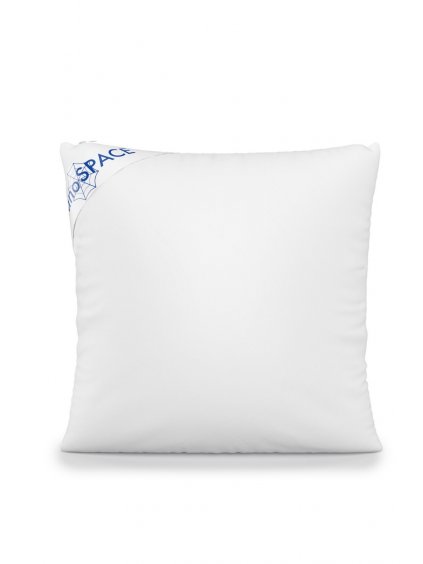
Anti-Dust Mite Anatomical Orthopedic Pillow with Memory Foam
Anatomical memory foam pillow with nanofibre membrane. Adapts to your head and neck contours, maintains natural cervical spine alignment, and blocks 99.9% of dust mites. OEKO-TEX® certified. 45 × 60 cm, height 12 cm.
156.00 €
View productMore anti-allergy pillows from nanoSPACE
Conclusion: your neck deserves better than a random pillow
Neck pain is not something you should simply accept as a normal part of life, and it is certainly not something that an over-the-counter painkiller before bed can solve. The root cause, in a surprising number of cases, lies in the very object you press your face into every night. A pillow that fails to maintain the natural alignment of your cervical spine sets off a cascade of consequences — from morning stiffness and headaches to numbness in your hands and chronic fatigue — that compound over months and years until they feel like an inevitable part of ageing. They are not.
The best pillow for neck pain is one that matches your body, your sleeping position, and the specific needs of your cervical spine. For the majority of people, that means an anatomical memory foam pillow at approximately 12 cm height, with a contoured profile that supports the natural lordotic curve, and a medium firmness that adapts to pressure without collapsing. Adding an integrated nanofibre membrane ensures that allergens do not silently sabotage your sleep quality and slow the healing process.
If you take one action after reading this article, make it this: evaluate the pillow you are currently sleeping on. Press it flat. If it does not spring back to its original shape, it has lost its structural integrity. Place it against a wall and lay your head on it in your usual sleeping position. If your neck bends noticeably to either side, the height is wrong. And if you have been waking up with neck pain, headaches, or unexplained fatigue for weeks or months, consider that the solution may not require a doctor's appointment or a course of physiotherapy — it may require a better pillow.
Investing in your sleep environment is investing in your health. The best pillow for neck pain is not a commodity to be purchased at the lowest possible price; it is a precision tool for spinal alignment that you will use for thousands of hours. Choose wisely, give your body the two weeks it needs to adjust, and pay attention to the results. Your neck — and your mornings — will thank you.
Frequently asked questions
What pillow is best for cervical neck pain?
An anatomical memory foam pillow with a contoured profile and a height of approximately 12 cm provides the most effective support for cervical neck pain. The viscoelastic foam moulds to the unique contours of your head and neck, distributing pressure evenly and maintaining the natural lordotic curve of the cervical spine throughout the night. Look for a pillow with a lower central section for the head and slightly raised edges to cradle the neck — this design keeps the spine in a neutral position whether you sleep on your back or your side. Adding an anti-allergy nanofibre membrane helps further by preventing dust mite allergens from disrupting sleep quality.
How should I sleep to avoid neck pain?
Back sleeping is the optimal position for cervical spine health, as it allows the head, neck, and spine to align naturally with minimal muscular effort. Side sleeping is also acceptable provided your pillow height correctly fills the gap between your ear and the mattress. Stomach sleeping should be avoided entirely — it forces the neck into extreme rotation (70–90 degrees) for hours, compressing joints and stretching ligaments. If you currently sleep on your stomach, transition gradually by using a body pillow to prevent rolling onto your front during the night.
What is the difference between an orthopedic and anatomical pillow?
The terms are often used interchangeably, but there is a subtle distinction. An orthopedic pillow is any pillow designed to correct or support body alignment — it is a broad medical category. An anatomical pillow is a specific type of orthopedic pillow that is shaped to follow the natural contours of the human anatomy — typically with a lower central section for the head and raised edges that support the cervical curve. In practice, the best pillows for neck pain are both orthopedic (designed for spinal health) and anatomical (shaped to match human anatomy), particularly when made from viscoelastic memory foam that adapts to individual differences in head and neck shape.
Can the right pillow help with migraines?
Yes, particularly if your migraines are cervicogenic — meaning they originate from the cervical spine. Up to 70% of headaches may have a cervical component, and poor pillow support is one of the most common aggravating factors. When the cervical spine is held in an unnatural position during sleep, the resulting muscle tension, nerve compression, and restricted blood flow can trigger headaches that radiate from the base of the skull over the top of the head. An anatomical pillow that maintains neutral cervical alignment can reduce or eliminate these triggers, often producing a noticeable reduction in headache frequency within two to four weeks.
How long does it take to adjust to a new pillow?
Most people need one to two weeks to fully adjust to an anatomical pillow, especially if their previous pillow provided very different support. During this transition period, you may experience mild discomfort or a sense of strangeness as the muscles and ligaments in your neck adapt to the corrected alignment. This is normal and expected — it is a sign that your cervical spine is realigning, not that the pillow is wrong for you. Orthopaedic specialists recommend committing to the new pillow for at least 14 consecutive nights before making a judgement. By then, most users report noticeably reduced morning stiffness and improved sleep quality.
Sources
- Cai, D. and Chen, H. (2016) 'Ergonomic approach for pillow concept design', Applied Ergonomics, 52, pp. 142–150.
- Chun-Yiu, J.P. et al. (2021) 'Effect of pillow type on cervical spine alignment during supine and side-lying positions', Clinical Biomechanics, 85, 105367.
- Gordon, S.J. et al. (2009) 'Pillow use: The behaviour of cervical pain, sleep quality and pillow comfort in side sleepers', Manual Therapy, 14(6), pp. 671–678.
- Fazli, F. et al. (2018) 'The effect of pillow height on cervical lordosis and neck pain', Medical Journal of the Islamic Republic of Iran, 32, p. 53.