
When women discuss facial oils in beauty forums, one particular observation appears almost universally: "It doesn't feel greasy." They're usually talking about a clear, lightweight liquid that seems to vanish into the skin upon contact. This is precisely why it has become the holy grail for those of you who have spent years avoiding facial oils entirely. Introduced to the cosmetic world as an emollient in the 1950s, squalane has slowly but surely taken over our bathroom cabinets, and today you'll find it in one in two products aimed at dry or sensitive skin.
However, there's a thick fog of marketing hype surrounding this ingredient, and several crucial facts are either entirely misunderstood in beauty blogs or conveniently omitted by manufacturers. Firstly, squalane and squalene are not the same thing. That single vowel change represents a massive chemical difference, one that dictates whether the oil will calmly soothe your face or actively clog your pores. Secondly, and perhaps more uncomfortably for the conscious consumer: you simply cannot tell from the ingredient label whether your squalane comes from a Mediterranean olive grove or the liver of a deep-sea shark. Because of international naming rules, both sources look completely identical on the back of the box.
As the Operations Director of a family-run skincare company, I spend my days looking at supply chains, ingredient lists, and the often frustrating gap between cosmetic science and marketing claims. Let's strip away the hype and look at the facts. We need to discuss what this ingredient actually does, what's claimed without a shred of proof, and how you can navigate the ethical minefield of its origins.
Key takeaways if you're short on time
- Squalane is not a humectant. It cannot draw water into your skin; it only softens the surface and slows down moisture evaporation. It must always be applied over hydration, never instead of it.
- The difference from squalene is entirely practical. Squalene (with an "e") oxidises on your face, and its peroxides block pores. Squalane (with an "a") is saturated and physically cannot oxidise.
- You cannot read the origin from the label. Olive-derived, sugarcane-derived, and shark-derived versions all share the exact same INCI name. You have to rely on the brand's voluntary declarations.
- Clinical trials on the ingredient alone are remarkably scarce. Its stellar reputation rests heavily on its chemical stability and decades of user experience, rather than exhaustive clinical human trials measuring hydration.
- It's exceptionally well-tolerated. Safety assessments confirm it's practically non-irritating, making it a staple for highly sensitive and atopic skin.
Squalene and Squalane: One Letter, Two Very Different Stories
To understand why this oil is so celebrated, we have to start with your own biology. Your body manufactures squalene naturally. It's the major lipid in human sebum (the oil your skin produces). Alongside wax esters, it is a substance found nowhere else in the human body. It is, quite literally, native to your skin.
But squalene has one fatal flaw when it comes to skincare: it's chemically unstable. Its molecular structure contains six double bonds, and in the world of chemistry, double bonds are vulnerable points of attack. When you expose your face to sunlight, squalene is the very first lipid in your sebum that begins to oxidise. A German team measured this directly in 2003, on sebum collected from volunteers' faces: after UVA exposure, squalene was depleted in proportion to the dose, and squalene monohydroperoxides formed in its place. Crucially, these peroxides appeared even at doses below the threshold that turns skin red — so you don't have to burn for this to happen.
This is where the plot thickens. Oxidised squalene behaves entirely differently from its fresh counterpart. A landmark paper from 1983 demonstrated that pure squalene practically doesn't cause comedones (blackheads), whereas its peroxides do. And they do so aggressively. Subsequent Japanese studies have confirmed this mechanism, showing that squalene peroxide clogs pores far more severely than many substances we traditionally view as highly comedogenic. Meanwhile, the unoxidised form caused no such disruptions.
Squalane is created by taking squalene and removing those vulnerable double bonds through a process called hydrogenation. The result is a fully saturated molecule that has no mechanism left to oxidise. It's not merely a "more stable alternative" in a vague sense; it's a form where the entire chemical pathway to becoming a pore-clogging peroxide has been physically barricaded.
It's worth noting that squalane isn't some artificial, lab-invented alien to your face. It's simply the saturated version of a molecule your own body already makes.
The Dark History of Sourcing and the Shark Problem
Historically, the cosmetic industry sourced this ingredient from the livers of deep-sea sharks. These magnificent creatures possess enormous livers—sometimes making up a third of their total body weight—filled with squalene to help them maintain buoyancy in the deep ocean. We must be highly precise when discussing this topic, as misinformation flows freely in both directions.
In 2012, the French marine conservation organisation BLOOM published an investigative report mapping the global market, bringing hard, uncomfortable numbers to light. The annual demand for shark liver oil was estimated at 2,000 tonnes, and roughly 90 per cent of that was destined for the cosmetics industry. Industry figures put it at roughly 3,000 sharks to produce a single tonne of squalane. The BLOOM report documented the brutal practice of "livering", where the liver is excised from the animal and the carcass is discarded back into the sea.
So, what's changed since then? We must evaluate the current landscape with intense scepticism. By 2014, data indicated that plant sources—primarily olive, rice bran, and sugar cane—supplied about 40% of the industry total. Whilst that was a step forward, it meant the majority of the global supply was still animal-derived at that time. Europe has largely shifted towards plant-based alternatives, but other massive global markets have historically lagged behind. The most frustrating part is the lack of recent, transparent data. The fact that we still rely heavily on figures from a decade ago speaks volumes about the opacity of the global supply chain.
Worryingly, it is simply not true that hunting sharks for this purpose has been globally banned, despite what some optimistic beauty blogs might claim. Whilst certain deep-sea regions and fishing methods face restrictions, the industry continues to operate.
Now, here's the most vital piece of information for you as a consumer. The International Nomenclature of Cosmetic Ingredients (INCI) is a global naming system designed to standardise how ingredients are listed on packaging. The rules require manufacturers to use these common names, but they don't require the declaration of origin. Therefore, whether you're shopping in London, New York, or Tokyo, olive-derived squalane, sugarcane-derived squalane, and shark-derived squalane are all listed with the exact same word: Squalane.
The only way to definitively prove the origin is inside a laboratory. Carbon isotope analysis can distinguish the source, because plants and animals incorporate carbon differently. The 2012 BLOOM report noted that testing origin was cheap and easy. Yet widespread testing isn't standard practice, and the report documented numerous instances where suppliers cheerfully sold shark squalane falsely labelled as plant-derived.
The only thing you can rely on is a voluntary declaration by the brand. Look for phrases like "olive-derived", "from sugar cane", the trademarked name Phytosqualan, or a strict vegan certification. If the packaging and the brand's website are completely silent on the source, you're completely in the dark.
The Rise of Sugarcane and Olive Alternatives
Thankfully, cosmetic chemistry has evolved brilliantly to offer sustainable alternatives. Olive oil has long been a traditional source. During the refinement of olive oil, a small unsaponifiable fraction is left over, which is rich in squalene. This is then extracted and hydrogenated. It's a wonderful way of upcycling a byproduct of the food industry.
Then there's the sugarcane route, which is a marvel of modern biotechnology and a phrase you'll frequently see in English-speaking markets. The process is fascinating: sugar cane is harvested and fermented using genetically modified yeast. This specific yeast consumes the sugar and produces a molecule called farnesene. In the laboratory, farnesene molecules are dimerised (linked together) and then hydrogenated to create pure squalane. It's a highly sustainable, scalable method that yields a remarkably pure product without touching a single olive grove or ocean habitat.
What It Actually Does for Your Skin — and What It Doesn't
This is where marketing departments often part ways with basic chemistry. Squalane is an emollient. It's a substance that fills the microscopic gaps between dead skin cells on your stratum corneum, smoothing the surface and slowing down the evaporation of water. It is not, however, a humectant.
Why does this matter? Because it's a pure, saturated hydrocarbon. It lacks any polar groups in its molecular structure, meaning it possesses absolutely no chemical mechanism to bind or hold onto water. When you read an advertisement claiming that "squalane deeply hydrates", it's a misleading shortcut that leads to poor skincare practices. If you apply it to a dry, freshly cleansed face instead of a hydrating serum, it won't deliver a single drop of water to your skin. It only makes sense layered over a hydrating cream or serum, never as a replacement for them.
We explored the fundamental difference between lacking water and lacking oil in our detailed guide on Dehydrated vs Dry Skin. Dehydration is exactly the scenario where relying on an oil alone will leave your skin feeling tight and uncomfortable beneath a greasy surface.
| Type of ingredient | Primary function | Examples |
|---|---|---|
| Humectant | Draws in and binds water | Glycerin, hyaluronic acid, urea |
| Emollient | Smooths the surface, softens, slows evaporation | Squalane, plant oils, esters |
| Occlusive | Creates a nearly impermeable physical shield | Petrolatum (Vaseline), beeswax |
| Barrier repair | Supplies missing structural lipids | Ceramides, cholesterol, fatty acids |
Squalane sits beautifully in the middle of the emollient spectrum. It's far lighter and more elegant than heavy occlusives like petrolatum, but it provides a longer-lasting cushion than fast-absorbing synthetic esters. Sensory panels consistently validate what women describe as its "dry oil" finish. If you're trying to nurse a damaged skin barrier back to health, pairing squalane with ceramides is a brilliant strategy. The ceramides act as the structural mortar between your skin cells, whilst the squalane provides a protective, breathable seal over the top.
The Honest Truth About the Science
I write this next section with a degree of reluctance, given that my company formulates and sells cosmetics containing this very ingredient. However, without absolute honesty, this article would just be an elongated, slightly more sophisticated advertisement.
If you search dermatological databases for clinical studies regarding squalane and human skin, you'll find a surprisingly small pool of data—perhaps 40 relevant papers. The vast majority of these examine its role as a penetration enhancer or a carrier for other active drugs. I must state plainly: there is virtually no robust clinical trial testing squalane alone on human hydration or barrier function.
Does this mean it's ineffective? Absolutely not. It simply means that its towering reputation is built on three different pillars: fundamental chemistry (the fact that it cannot oxidise), biological mimicry (its close relationship to native sebum), and the anecdotal experience of hundreds of thousands of users. That's a highly respectable foundation for a cosmetic ingredient, but we must be intellectually honest enough to admit it's not the same as double-blind clinical proof.
What is exhaustively documented is its safety profile. In cosmetic safety assessments, it consistently emerges as practically non-irritating. The Expert Panel for Cosmetic Ingredient Safety first assessed squalane back in 1982, and in 2023 it went back to the question — reviewing the studies published since, along with the concentrations actually used in finished products — and confirmed that squalane is safe as a cosmetic ingredient. For a cosmetic ingredient, that's a solid stamp of approval.
Pushing Back Against the Hype: Comedogenicity and Fungal Acne
Because it's so popular, squalane has become the subject of intense internet mythology. If you spend time on skincare databases or Reddit, you'll encounter two claims presented as absolute gospel. As an industry insider, I need to offer some polite, reason-based pushback on both.
First is the famous "comedogenicity rating of 1" (or sometimes 0, depending on which blog you read). The internet loves these neat little scores, but they're deeply flawed. These ratings originate from historical tests where ingredients were painted onto the inner ears of rabbits for weeks. Dr James Fulton, the pioneer of this model, admitted as early as 1984 that the rabbit ear was an imperfect analogue for human skin—it was simply the best tool they had at the time. Rabbit pores are far more reactive than human facial pores. Modern cosmetic chemists also know that a finished product containing a theoretically comedogenic ingredient need not be comedogenic itself, as formulation dictates behaviour. Squalane's reputation for not clogging pores shouldn't rest on an outdated rabbit test, but on the chemical reality we discussed earlier: it lacks the double bonds required to form pore-blocking peroxides.
The second pervasive claim is that it's "100% safe even if you have fungal acne or Malassezia concerns". Malassezia is a genus of yeast that lives naturally on human skin, and when it overgrows, it can cause fungal acne or seborrhoeic dermatitis. The internet theory goes that because squalane is a pure hydrocarbon without ester bonds (unlike typical plant oils), the yeast cannot feed on it. It sounds perfectly logical on paper. However, human skin is an infinitely complex ecosystem, not a sterile Petri dish. There's no good clinical evidence proving its safety in active Malassezia overgrowth either way. The honest answer—the only answer a responsible brand should give—is that we simply don't know for sure, and you should proceed with caution if you're prone to these conditions.
Finally, we must dismiss the outright fabrications. Squalane doesn't protect against the sun; it's not a UV filter. It doesn't boost collagen production, nor does it "detoxify" the skin. Observing antioxidant-like behaviour in an isolated cell culture in a lab doesn't translate to erasing wrinkles on a living human face.
How to Actually Use It in Your Routine
I'll admit straight away that this section relies entirely on practical formulation physics and user experience, as there are no peer-reviewed studies dictating the correct way to layer a face oil.
Physically, it makes the most sense to apply it as the very last step of your routine, ideally over a hydrating layer. Placing an oil over a water-based serum slows down the evaporation of that water. If you were to do it the other way round, you'd create a lipid barrier that makes it much harder for your water-based active ingredients to penetrate the skin. This perfectly aligns with how most women intuitively use it. A common and highly effective method is pressing a few drops into damp skin, or mixing a drop directly into your nightly moisturiser during the colder months.
How much do you need? A few drops are more than enough. It spreads beautifully, and applying more won't yield better results; it'll merely leave you feeling greasy. Because it's chemically stable, you don't need to worry about it going rancid in your bathroom cabinet like rosehip or hemp oil might.
You can combine it with virtually anything. It's so chemically inert that manufacturers frequently use it as a solvent for highly volatile ingredients like retinoids. There's no risk of conflict with exfoliating acids, vitamin C, or niacinamide—just remember to apply it after them. It's particularly brilliant after using acids, as the skin often craves a soothing, softening layer. If you're looking to build a robust routine for dry skin, this is your anchor ingredient. If you want the benefits of the oil but prefer a lighter, more sophisticated texture for your face, the Serum for Extremely Dry Skin - Skin Restore Serum 15 ml pairs squalane with taurine, formulated by NAFIGATE, a partner brand we trust deeply.
Who It Makes Sense for — and Who Should Skip It
It works magnificently for dry, sensitive, and reactive skin. It's brilliant for skin exhausted by harsh winter winds, for the body, the hands, and anywhere you desperately need to soften the texture. It also holds a unique position for those with acne-prone skin who still need an emollient, simply because it won't undergo comedogenic oxidation. It makes sense for anyone who has tried traditional plant oils and hated the heavy, suffocating feeling they leave behind.
Conversely, it makes no sense to use it as your sole product if your skin is severely dehydrated. It lacks both water and the structural ceramides your barrier needs. It won't serve you as a miracle anti-ageing solution; if that's your goal, you should look into anti-ageing alternatives that actually communicate with your cells. And a word of warning: "exceptionally well-tolerated" doesn't mean universally beloved. You'll always find individuals whose skin simply refuses to absorb it, leaving a tacky residue.
If you're struggling with atopic eczema, the rules remain exactly the same as with any cosmetic product. Squalane can offer immense relief from the mechanical tightness of dry skin and provide a protective layer against environmental friction, but cosmetics don't treat disease. Managing eczema belongs firmly in the hands of a medical doctor. We discuss supportive cosmetic care in our guide on ingredients for eczema-prone skin. For example, in our Natural Nurturing Body Oil AtopCare 200 ml, we deliberately paired olive-derived squalane with almond and oat oils, allowing the squalane to provide the elegant slip whilst the other oils deliver their specific fatty acids.
Where You'll Find It in Our Range
When we formulated our own range for very dry and sensitive skin, incorporating this ingredient was a non-negotiable decision. And we're entirely transparent about its origin. Our formulations use Phytosqualan, a verified plant-derived squalane extracted from olive oil. Given everything we've discussed about the obscurity of international labelling, we believe this is a fact you deserve to know without having to send an email to customer service. For a complete, supportive regimen, you might look at our Nourishing Skincare Set for Sensitive Skin AtopCare, which pairs the oil with a gentle wash and barrier cream.
Skincare with Squalane

Natural Nurturing Body Oil AtopCare 200 ml
Olive-derived squalane with almond, hemp and oat oils. For body and face.
View product
Nourishing Skincare Set for Sensitive Skin AtopCare
The same oil paired with a gentle wash and a cream, for skin that needs more than one layer.
View product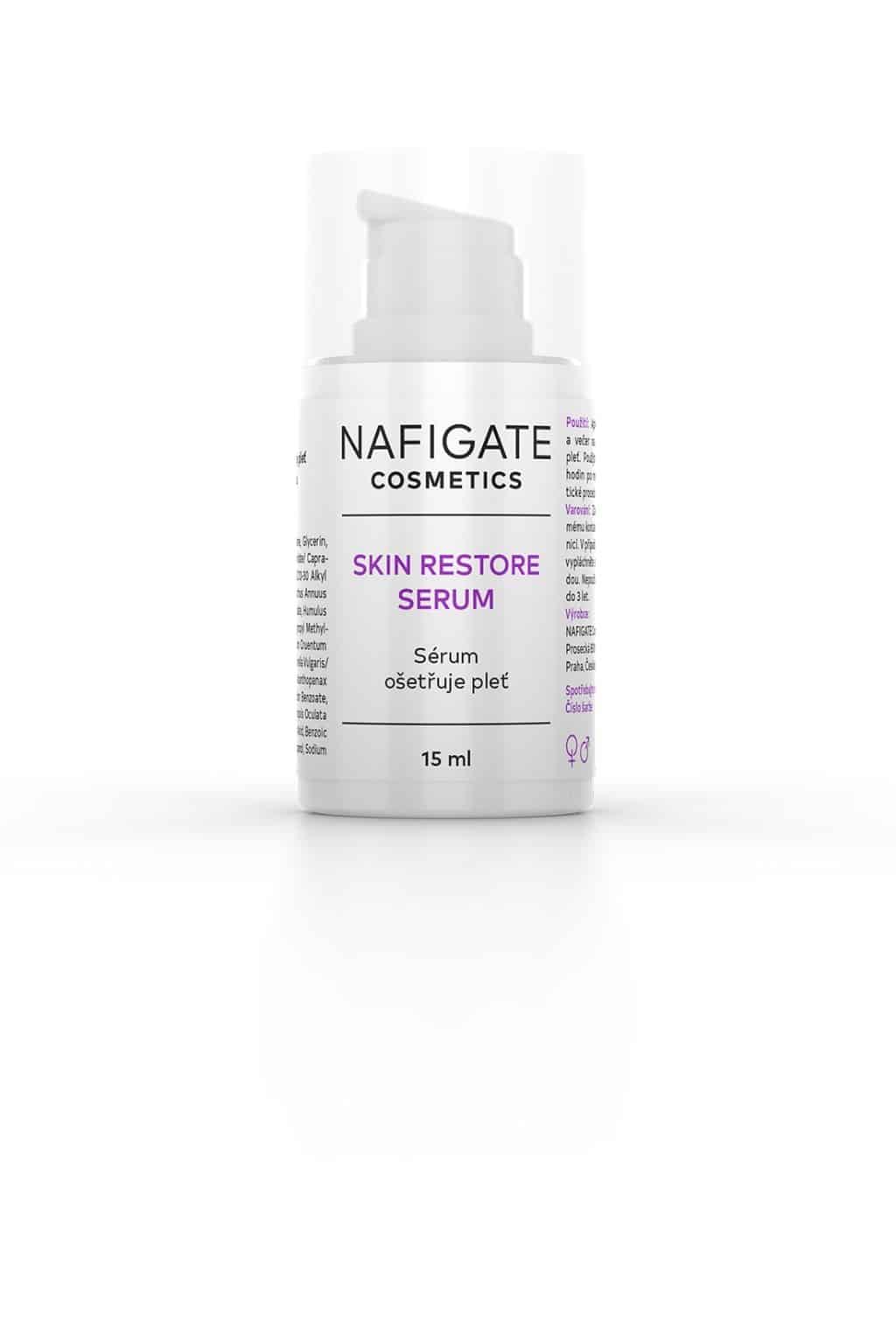
Serum for Extremely Dry Skin - Skin Restore Serum 15 ml
By NAFIGATE, a brand we chose for our range. Squalane together with taurine.
View productConclusion
Squalane is a wonderfully pragmatic ingredient without a miraculous fairy tale attached to it. It won't achieve half the things the internet claims it will. It doesn't hydrate, it doesn't erase wrinkles, and it certainly doesn't protect your skin from UV damage. What it does do, however, is reliably perform one essential task: it softens the surface of your skin and helps lock in the moisture that's already there. And it manages to do this in a highly elegant manner that's tolerated even by complexions that strictly reject any other form of oil.
If you take only one thing away from this article, let it be this: always question the source. Not because olive- or sugarcane-derived versions perform better on the skin than the shark-derived equivalent—chemically, they're virtually indistinguishable. You should ask because it's the one vital piece of information the back of the bottle is legally allowed to hide from you. And it's the one choice you make in your bathroom that has an impact far beyond your own skin.
Frequently asked questions
What Is the Difference Between Squalane and Squalene?
Squalene is an unstable lipid that your body produces naturally, and it's the major lipid in your sebum. However, when exposed to light and air, it oxidises, and the resulting peroxides clog pores. Squalane is created by removing squalene's double bonds through hydrogenation. It's saturated, highly stable, and physically incapable of oxidising. This is why you'll almost exclusively find the stable "a" version in cosmetics.
Does Squalane Hydrate the Skin?
Not in the way most people understand the word. It's an emollient, meaning it smooths the skin's surface and slows down the evaporation of water. However, it cannot draw water into the skin itself because its chemical structure lacks the ability to bind moisture. If your skin is dry, you must always apply it over a hydrating serum or cream, never as a substitute for one.
How Can I Tell if My Product Uses Plant or Shark Squalane?
Unfortunately, you cannot tell from the ingredient list alone. International INCI regulations require ingredients to be listed by their common names without specifying the origin. Therefore, olive, sugarcane, and shark sources are all listed identically as "Squalane". Your only reliable guide is the brand's voluntary disclosure. Look for explicit mentions of olive or sugarcane origins, the term Phytosqualan, or a trusted vegan certification.
Will Squalane Clog My Pores?
It's considered one of the lowest-risk oils available, though absolute guarantees in skincare don't exist. Its primary advantage over other oils is that it cannot oxidise—and oxidised lipids are a major driver of clogged pores. Be sceptical of claims citing a "comedogenicity rating of 1", as these numbers stem from flawed, historical rabbit-ear testing and don't accurately reflect how a finished cosmetic formula behaves on human skin.
Is It Safe for Fungal Acne (Malassezia)?
You'll read everywhere on the internet that it's completely safe because it's a pure hydrocarbon and yeast supposedly cannot feed on it. However, the honest answer is that we don't have robust clinical evidence to prove this definitively. The human microbiome is highly complex, and treating a medical condition like Malassezia overgrowth requires professional medical advice, not just internet theories.
Where Does It Belong in My Skincare Routine?
Generally, it should be the very last step in your routine, ideally applied over your hydrating layers. This sequence allows water-based ingredients to penetrate the skin first, whilst the oil forms a breathable seal over the top to prevent that moisture from evaporating. A few drops are entirely sufficient, and many find it works best when pressed into slightly damp skin.
Can I Use It Whilst Pregnant?
It's an inert hydrocarbon with no systemic activity, and expert cosmetic panels evaluate it as a highly safe ingredient. However, when selecting any skincare products during pregnancy, the standard rule applies: you should always discuss your routine with your doctor, particularly if the oil is blended into a formula containing other active ingredients.
Will It Go Rancid Like My Other Face Oils?
No, it won't. Rancidity is the result of the oxidation of unsaturated bonds, and because squalane is fully saturated, it lacks these vulnerable points. It has a significantly longer shelf life than typical cold-pressed plant oils like rosehip or hemp, and it doesn't require refrigeration or special handling, though keeping it out of direct sunlight is always good practice.
Sources
- Motoyoshi, K. (1983) 'Enhanced comedo formation in rabbit ear skin by squalene and oleic acid peroxides', British Journal of Dermatology, 109(2), pp. 191–198. PMID: 6223652.
- Chiba, K., Yoshizawa, K., Makino, I., Kawakami, K. and Onoue, M. (2000) 'Comedogenicity of squalene monohydroperoxide in the skin after topical application', The Journal of Toxicological Sciences, 25(2), pp. 77–83. PMID: 10845185.
- Chiba, K. and Sone, T. (1999) 'Skin roughness and wrinkle formation induced by repeated application of squalene-monohydroperoxide to the hairless mouse', Experimental Dermatology. PMID: 10597136.
- Ekanayake Mudiyanselage, S., Hamburger, M., Elsner, P. and Thiele, J.J. (2003) 'Ultraviolet A induces generation of squalene monohydroperoxide isomers in human sebum and skin surface lipids in vitro and in vivo', Journal of Investigative Dermatology, 120(6), pp. 915–922. PMID: 12787115.
- Fiume, M., Bergfeld, W.F., Belsito, D.V. et al. (2023) 'Squalane and Squalene', International Journal of Toxicology, 42(3_suppl), pp. 107S–109S. Cosmetic Ingredient Review Expert Panel. PMID: 37752766.
- Fulton, J.E. Jr, Pay, S.R. and Fulton, J.E. 3rd (1984) 'Comedogenicity of current therapeutic products, cosmetics, and ingredients in the rabbit ear', Journal of the American Academy of Dermatology, 10(1), pp. 96–105. PMID: 6229554.
- European Union (2009) Regulation (EC) No 1223/2009 on cosmetic products, Article 19 (labelling of ingredients).
- European Commission (2019) Decision (EU) 2019/701 establishing a glossary of common ingredient names for use in the labelling of cosmetic products.
- European Commission, CosIng database, entries for Squalane and Squalene.
- BLOOM Association (2012) The hideous price of beauty: an investigation into the market of deep-sea shark liver oil.