
Serums, toners, mists, acids — modern skincare offers so many products that it is easy to get lost in them. What goes on first? What in the morning and what at night? And does it all have to be there at all? The truth is that healthy skin does not come from dozens of bottles, but from the right order of a few well-considered steps. In this guide we will show you what a skincare routine looks like step by step — from makeup removal to your night serum — and how to put it together so that each product does exactly what it should. We will walk you through morning and evening care and explain how not to overdo it with active ingredients.

Key takeaways if you're short on time
- Order matters. Products go on from the thinnest to the thickest texture, so the active ingredients reach where they should.
- In the morning you protect, at night you renew. Your morning routine targets protection and antioxidants, your evening one cleansing and recovery.
- Cleansing and SPF are the foundation. Without thorough makeup removal and daily sun protection, the rest of your care loses its point.
- Don't pile on active ingredients. Alternate acids, vitamin C and other strong ingredients to give the skin time to recover.
- Less is more. A few steps done regularly beat ten products used once in a while.
Why the order of your skincare routine matters
All of skincare rests on one rule: thinnest to thickest. Watery products and serums go on first, because they penetrate the skin more easily; rich creams and oils go on last, because they form a sealing layer. Put the order the other way round and apply a cream before a serum, and the greasy film stops the serum from absorbing. The logic is simple: first what is meant to penetrate, then what is meant to seal.
It does not mean you have to own every conceivable product. Think of the order as a map of where each product slots in once you own it. Feel free to start with a few steps and add more over time — what matters is that whatever you use goes on in the right sequence.
The second principle is splitting your care into morning and evening. In the morning you are preparing the skin for the day — protecting it from the sun and free radicals. In the evening you cleanse it of makeup and impurities and support its overnight recovery, when the skin naturally renews itself. Some ingredients therefore make more sense in the morning, others at night. And before you dive into a routine, it pays to know your skin; our article on how to discover your skin type will help, because dry, oily and sensitive skin each need a slightly different approach at every step.
Morning skincare routine step by step
In the morning your routine has one main job: to prepare and protect the skin for the day. It need not be long, but never skip two steps: an antioxidant and sun protection.
1. Gentle cleansing
When you wake up, it is enough to rinse the skin with lukewarm water or a mild gel. Overnight, makeup and oil do not build up on the skin the way they do during the day, so morning cleansing can be light. Aggressive washing would only needlessly disrupt the protective film.
2. A brightening serum with vitamin C
The morning is the ideal time for an antioxidant. A serum with vitamin C neutralises free radicals, supports collagen production and gradually evens out skin tone and fades pigmentation. This serum contains a stable derivative of vitamin C, so unlike pure ascorbic acid it does not sting or oxidise into an orange tint. Vitamin C in the morning works as a shield against external stress — but note that it does not replace sun protection, it only complements it. You can read more about its effects, and about what works on hyperpigmentation, in a separate article.
3. Hydration
Hydration goes on top of the serum. A hydrating serum with hyaluronic acid saturates the skin with moisture and primes it for your cream and sunscreen. If your skin is on the drier side, finish with a moisturiser that locks the water into the skin.
4. Sun protection (SPF)
The last and indispensable morning step. UV is the main cause of skin ageing, collagen loss and pigmentation, so sunscreen with SPF is the absolute foundation of a morning routine — not a luxury but the single most effective anti-ageing step. Without it, all your evening care misses the mark.
Serums for your morning and evening routine
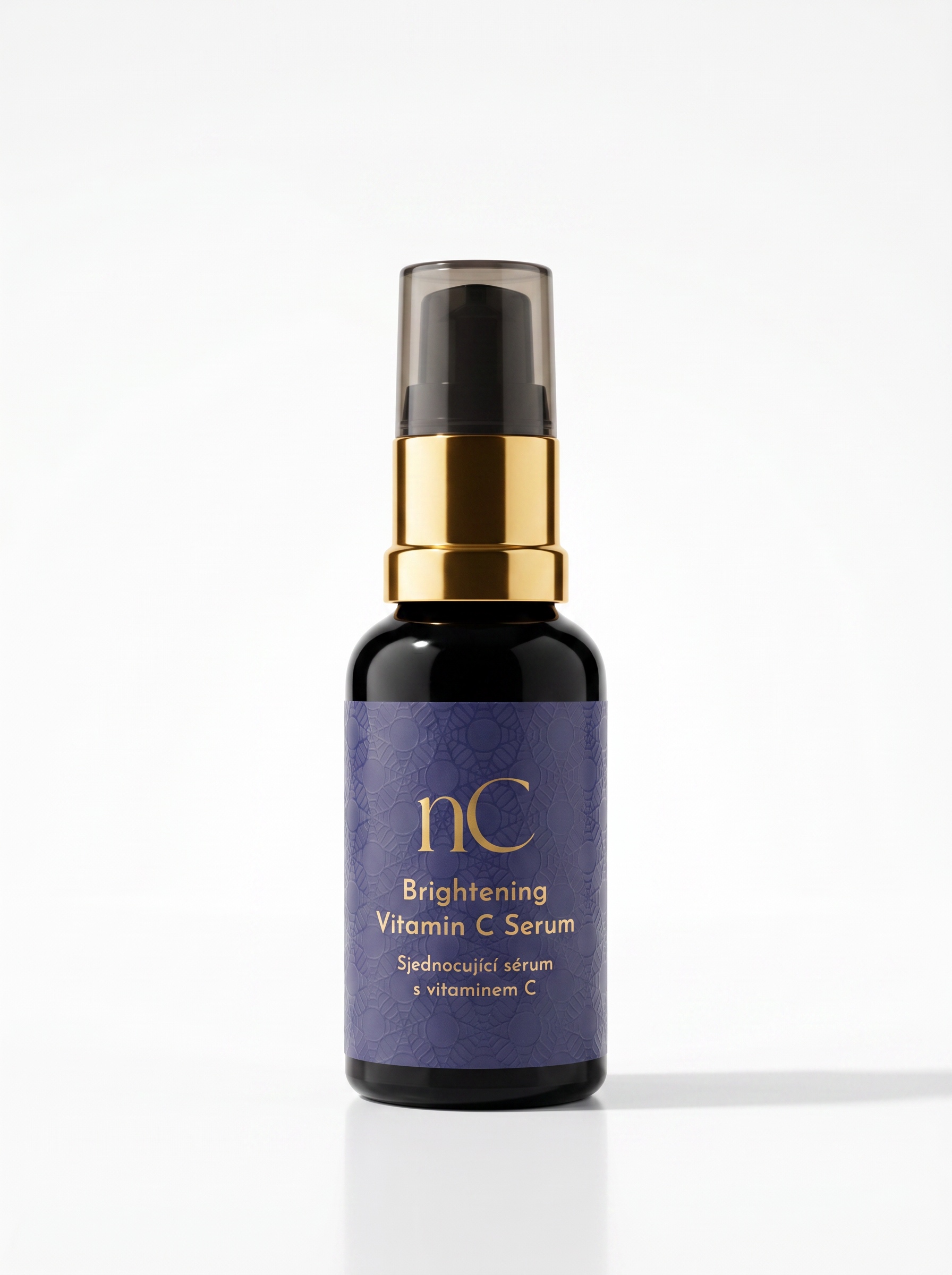
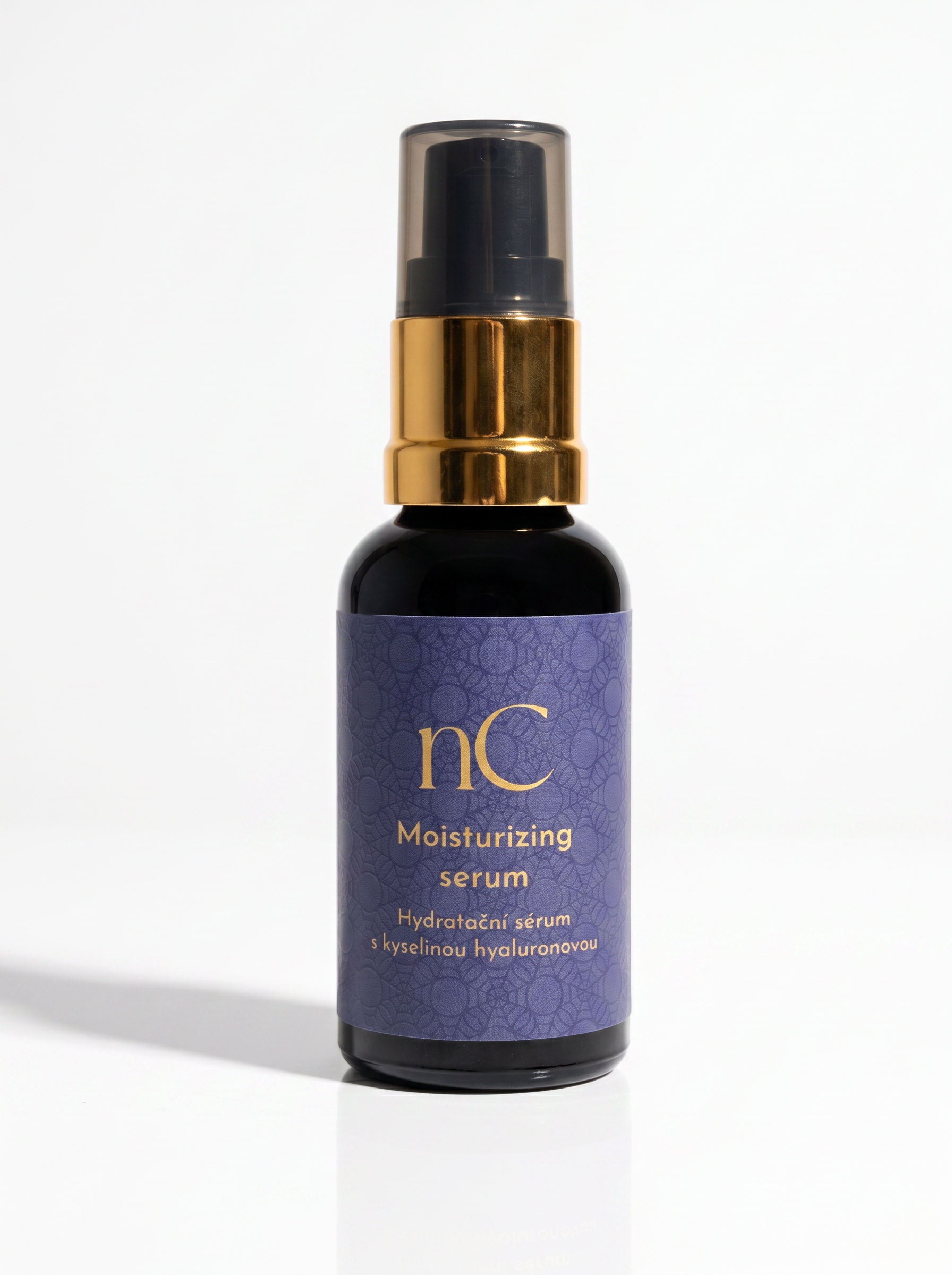
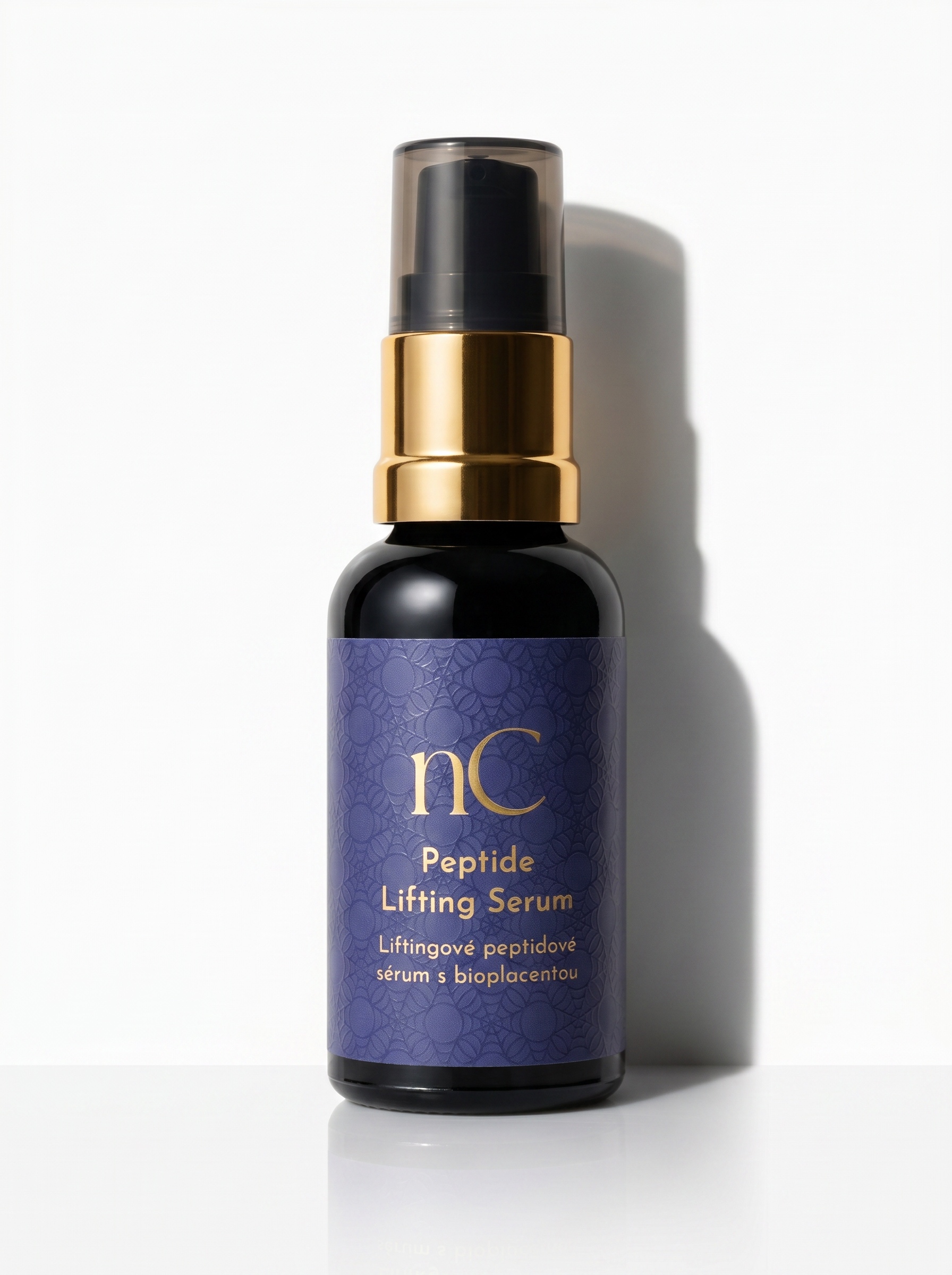
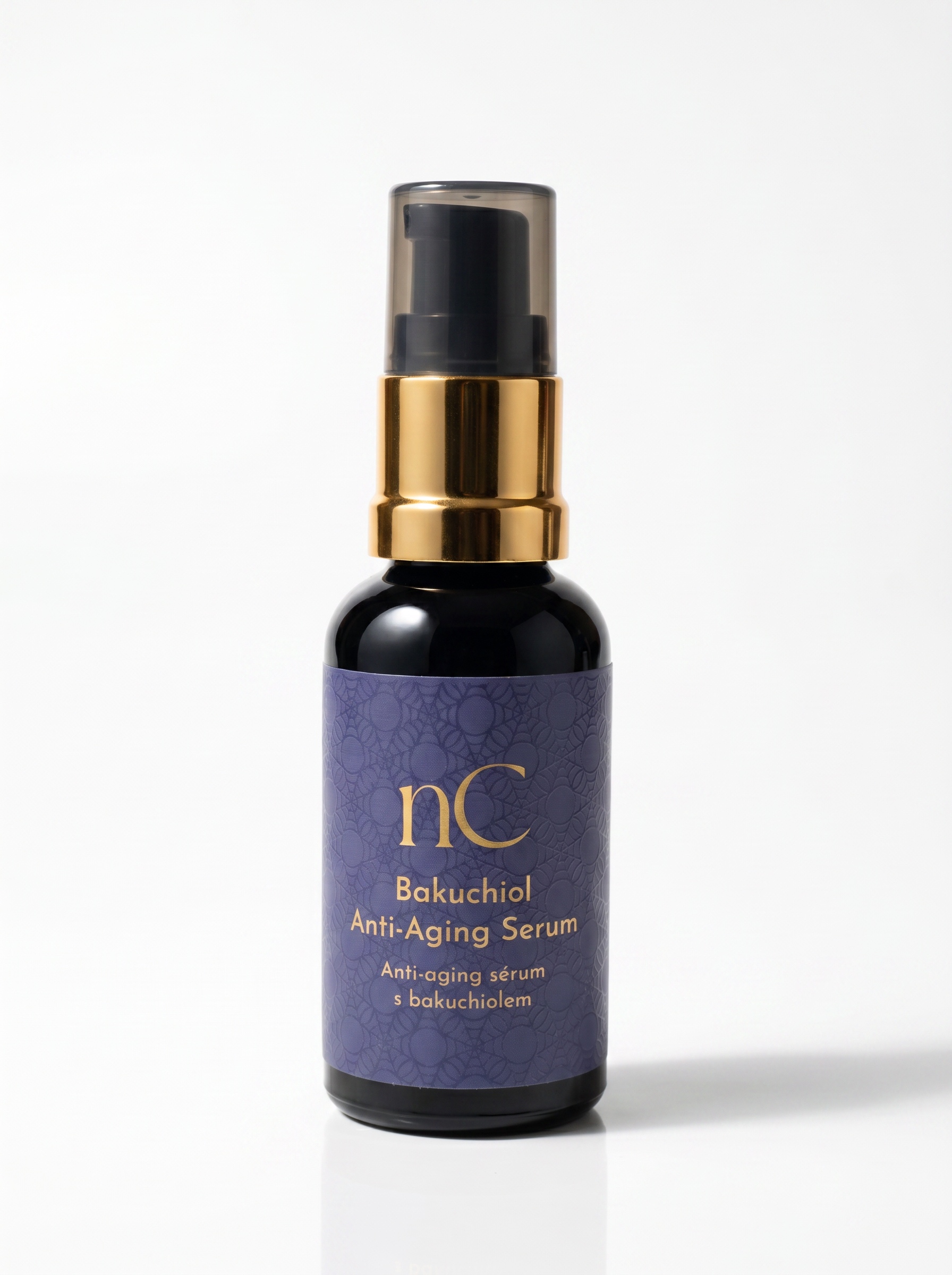
Evening skincare routine step by step
In the evening, cleansing matters more and the care is richer. The skin sheds the makeup and impurities of the whole day and gets room for actives that work overnight. Here the routine has more steps, but you can still manage it in a few minutes.
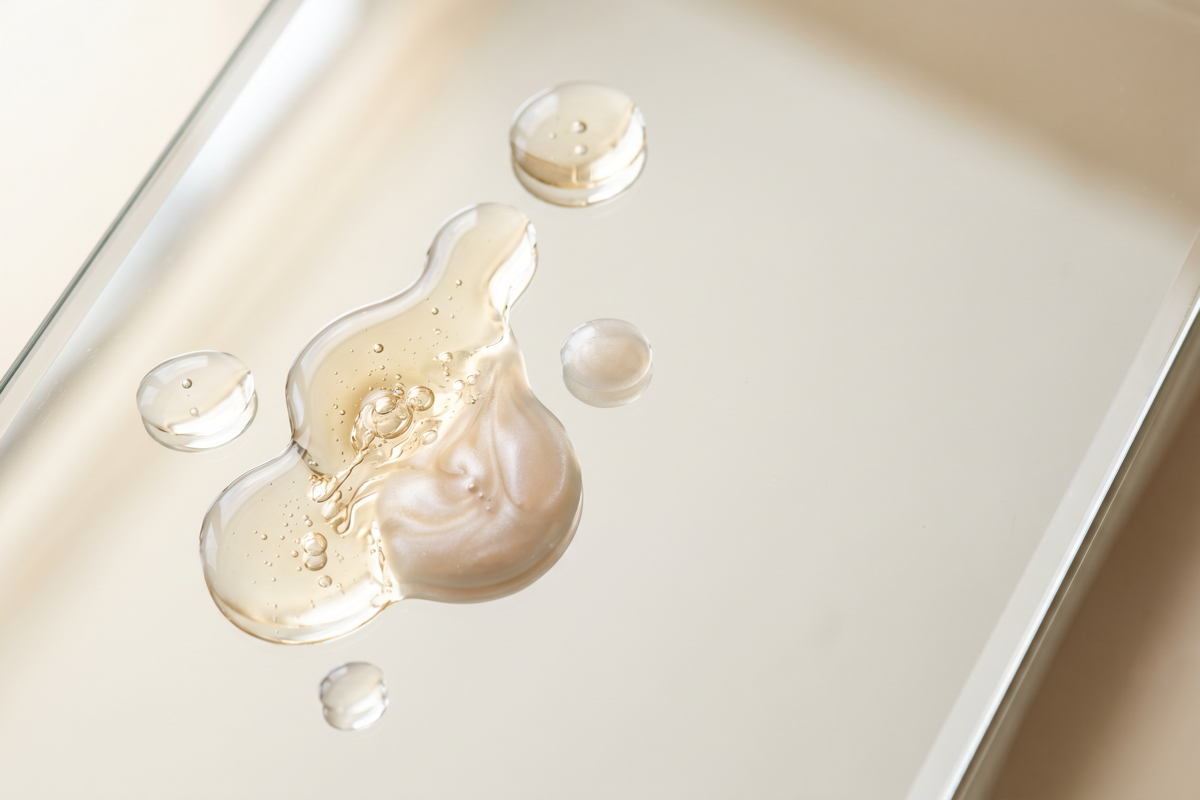
1. Makeup removal
The first evening step is taking off makeup. A cleansing milk dissolves makeup, oil and water-resistant sunscreen gently and without tugging at the skin. The glycerin in it also stops the skin from drying out. If you wear makeup or SPF, a double cleanse makes sense — the cleansing milk is followed by a cleansing gel.
2. Cleansing and exfoliation
The second step cleanses the skin more deeply. An exfoliating cleansing gel with AHA acids not only cleanses but, thanks to the AHAs, gently sloughs off dead cells and dissolves the plugs of sebum in the pores. Use this step a few times a week, not every evening — exfoliation should be gentle, not a daily habit.
3. Toner
After cleansing comes a facial toner with AHA/BHA/PHA. The gentle acids in it, above all the mild PHAs, smooth the surface of the skin and prepare it for the next steps without irritation. After an acid toner, don't forget SPF the next morning.
4. Facial mist
A light hydrating facial mist moistens the skin and preps it for serums — active ingredients absorb better into damp skin. Treat it as preparation and refreshment, not as final hydration.
5. Serums for what your skin needs
Now the active serums come in. For moisture you apply the hydrating serum with hyaluronic acid. For firming and smoothing there is the peptide lifting serum with bioplacenta, which gives an instant optical lifting effect on the surface of the skin. And for anti-ageing without the irritation of retinol, you reach for the night serum with bakuchiol. Don't apply all your serums at once, though — more on alternating them in a moment.
6. A cream to seal it in
The evening routine ends with a cream that locks the water and active ingredients into the skin and tops up its lipids. Without this final step, much of the work you've just done evaporates and the serums lose their effect. The drier your skin, the richer the cream you choose; oily skin will appreciate a lighter, non-comedogenic texture that does not clog the pores.
How not to overdo it with active ingredients
The most common mistake among beginners and enthusiasts alike is to throw every active at the skin at once. Acids, vitamin C, peptides and bakuchiol on the same evening are a reliable route to an irritated barrier. Alternating works well: one evening you devote to exfoliating acids, the next to recovery with hydration, another to a peptide or bakuchiol serum. That gives the skin time to recover between treatments.
The one-product rule applies too: introduce new products one at a time and give the skin two to four weeks before you judge how it responds. If you apply three new things at once and irritation appears, you won't know what caused it. A good routine is not a contest in the number of steps — it is more about finding a few things that suit your skin and sticking with them.
If you would like a concrete example of alternating, it might look like this: on Monday evening an exfoliating gel or acid toner, on Tuesday hydration and recovery, on Wednesday a peptide serum, on Thursday bakuchiol, and at the weekend just gentle cleansing and hydration. It is not dogma — the point is simply not to put every strong ingredient on the skin on the same night, and to keep an eye on how your skin feels.
Your skincare routine by skin type
The skeleton of the routine stays the same, but the emphasis shifts. Oily, acne-prone skin appreciates more thorough cleansing, exfoliation with acids and lighter textures; you will find a detailed guide in our article on the best products for acne. Dry skin, by contrast, needs less cleansing and more nourishment and sealing — we cover it in our piece on caring for dry skin. And sensitive skin calls for the gentlest possible products and a cautious approach to introducing anything new.
Whatever your skin, without cleansing and sun protection the rest of your care has nothing to build on. Those two steps are what every skincare routine rests on, no matter whether your skin is dry, oily or combination. The rest is simply fine-tuning to what your skin needs at the time.
Combination skin, oily in the T-zone and drier on the cheeks, is very common. Zone treatment works well for it: aim lighter care and more thorough cleansing at the forehead, nose and chin, and a richer cream at the cheeks. You don't need two sets of products for this — just apply one cream in a thicker layer on the drier areas. The routine then adapts to the fact that different parts of the face have different needs.
Common mistakes in a skincare routine
Probably the most common is over-exfoliation. When you cleanse and exfoliate the skin too often, the protective barrier breaks down and the skin starts to sting, feel tight and, paradoxically, get oilier. So keep exfoliation to a few evenings a week and watch how your skin reacts.
Equally widespread is skipping sun protection in the belief that evening serums are enough. They are not — without SPF the results of vitamin C, acids and anti-ageing serums fade and you risk pigmentation. Drying out oily skin with harsh products is common too, and it only leads to more oil. And the hardest of all is patience: the skin renews on roughly a monthly cycle, so results take weeks, not days. A good routine rewards perseverance, not one-off experiments.

Conclusion
A skincare routine need not be a science or a costly collection of bottles. Grasp a few principles: apply from the thinnest to the thickest texture, protect in the morning and renew at night, don't pile on active ingredients, and never skip cleansing and SPF. Build your care to suit your skin from this skeleton and stay consistent, and your skin will reward you with a healthy, balanced look. Because skincare is, in the end, less about perfection than about doing the simple things well, day after day.
Frequently asked questions
In what order should I apply skincare products?
The rule is thinnest to thickest. After cleansing, the skin gets a toner, then a mist, watery serums (hydrating, vitamin C), thicker serums (peptide, bakuchiol) and finally a cream. In the morning, finish the whole routine with sunscreen.
How many steps should a good skincare routine have?
There is no fixed number. A minimal working routine is cleansing, hydration and morning SPF — three steps. Anyone wanting to tackle specific concerns adds serums and exfoliation. More important than the number of steps is consistency and that the products suit your skin.
Can I use vitamin C and acids in the same routine?
Yes, but sensibly. Vitamin C suits the morning routine, exfoliating acids the evening. Above all, don't pile them on the same evening with strong serums — give the skin time to recover between treatments. After acids, always remember morning SPF.
Do I need a separate morning and evening routine?
Ideally yes, because each has a different goal. In the morning you protect the skin — antioxidant and SPF. In the evening you cleanse it of makeup and support overnight recovery with active serums. Some steps (cleansing, hydration) are in both; others make sense only in the morning, or only at night.
How long until I see results from a skincare routine?
Count in weeks. The skin renews on roughly a monthly cycle, so the first improvement in texture and hydration appears after about four weeks, while more pronounced changes in wrinkles and pigmentation come after two to three months. Perseverance and daily sun protection are essential.

Sources
- Milani, M. & Sparavigna, A. (2017) 'The 24-hour skin hydration and barrier function effects of a hyaluronic 1%, glycerin 5% formulation', Clinical, Cosmetic and Investigational Dermatology, 10, pp. 311–315.
- Dhaliwal, S. et al. (2019) 'Prospective, randomized, double-blind assessment of topical bakuchiol and retinol for facial photoaging', British Journal of Dermatology, 180(2), pp. 289–296.
- Kornhauser, A. et al. (2009) 'Applications of hydroxy acids: classification, mechanisms, and photoactivity', Clinical, Cosmetic and Investigational Dermatology, 3, pp. 135–142.